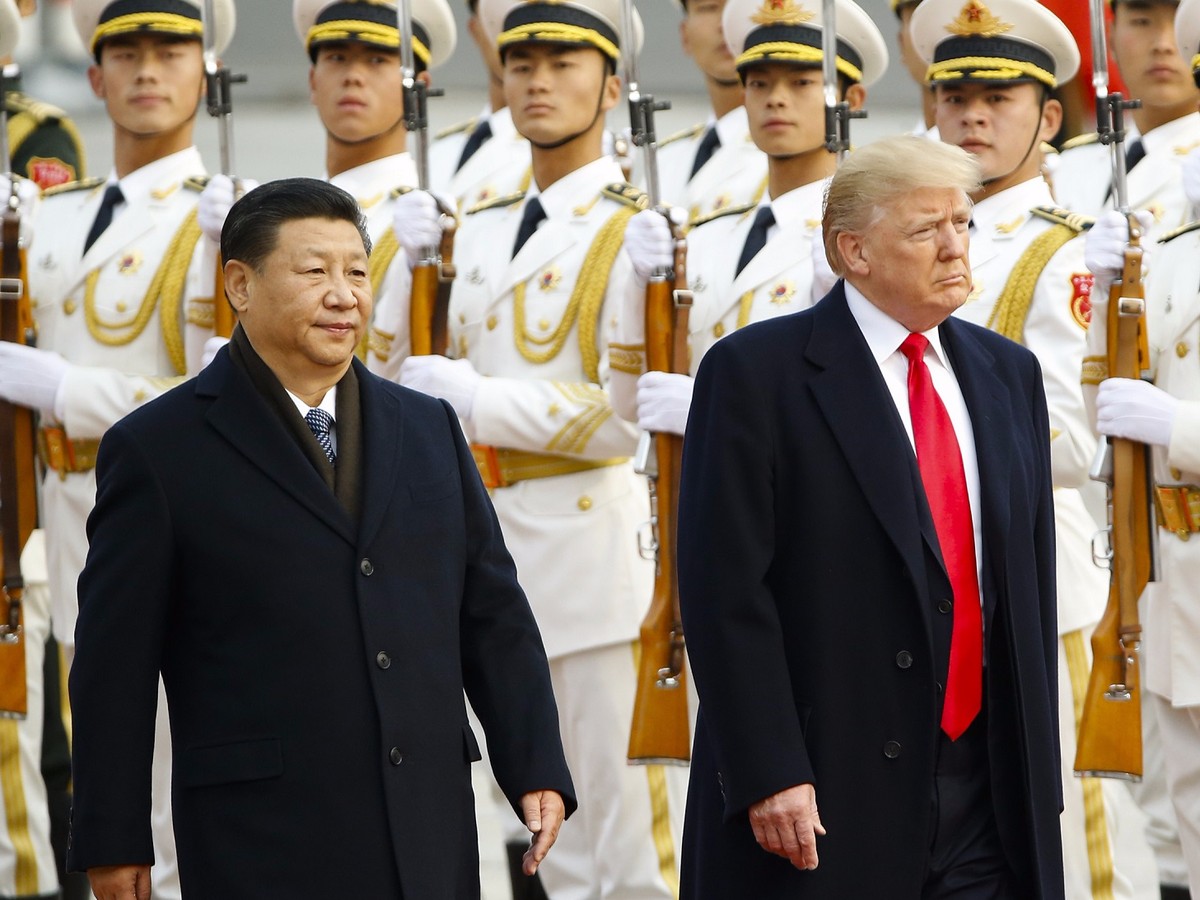
Additionally, China has pledged not to introduce planned restrictions on the export of rare earth metals, strategic raw materials necessary for the production of electronics and advanced military equipment, for the next year. As a result, average tariffs on Chinese goods will drop from 57 to 47 percent. — On a scale of 1 to 10, I rate this match a 12 – Trump said, summarizing the conversation with Xi Jinping.
Read also: Donald Trump announces a trade agreement with China. He also spoke on the issue of Ukraine
The US president added that the topic of Taiwan was not discussed during the meeting, and he announced his official visit to China for April next year.
Beijing plays rare earth metals with the US
The leaders' meeting was preceded by a period of growing tensions. In October, Beijing temporarily eased restrictions on rare earth exports, but announced they would be reintroduced in early November – just as the tariff truce with the US ended. This decision was perceived as a form of pressure on Washington.
In response, Trump threatened that will impose 100 percent tariffs on all Chinese exports to the USif Beijing does not withdraw its decision. This topic also dominated talks in Kuala Lumpur during the fifth round of trade negotiations. Although the United States announced “significant progress” at the time, Chinese negotiators believed that there were no real concessions on the American side.
Read also: General Motors is cutting jobs in Detroit. Slowdown in the electric car market
Rare earth metals are a group of seventeen chemical elements used, among others, in the production of smartphones, batteries, lasers, car components and new generation weapons. Their importance is so great that experts call them “21st century oil”.
According to the Goldman Sachs report “Managing Disruption Risk From Rare Earths and Other Critical Minerals”, Beijing uses its dominant position in the global supply chain as a tool of economic and political pressure. China today controls 69 percent. world extraction, as much as 92 percent refining and almost 98 percent production of magnets based on rare earth elements.
Analysts warn that the greatest risk of further export restrictions concerns samarium, graphite, lutetium and terbium – critical raw materials for the defense and semiconductor industries. Samarium, essential for the production of extremely resistant samarium-cobalt (SmCo) magnets used in the aerospace sector, remains virtually entirely under Chinese control.
Smuggling and sanctions in China
Interest in raw materials is also visible in the growing number of smuggling cases. Chinese services recently foiled an attempt to illegally export 25 tons of magnet powder — material that was supposed to go to the American company Lockheed Martin, which is subject to Chinese sanctions. The substance was smuggled in as “tile glue”. According to investigators, it could be used to produce components for up to 500 F-35 fighters.
From this year, China will be punished for smuggling rare earth metals capital punishmentwhich shows how much economic and strategic importance Beijing attaches to them.
A new stage of the trade war
Trump's Thursday announcement of the deal could mean temporary easing of tensions between Washington and Beijing, but experts warn that it is more of a tactical truce than a lasting agreement. The United States is still striving to limit China's dominance in high-tech sectors, and Beijing is striving to maintain its position as a global supplier of strategic raw materials.
The leaders' meeting on the sidelines of the APEC summit in South Korea is not only about trade and tariffs. This a duel for control over the technological future of the worldin which both fentanyl and rare earth metals have become pieces of the geopolitical puzzle.