From the Soviet hell, to the hell at home: the broken destiny of the Muscelian officer whom the country called an enemy


Aurel State was the only Romanian who had the courage to write about the horrors of communism during the Ceausist era. His life, a real hell that few would have resisted, can always become the subject of a movie script or a dramatic novel. A hero that the Romanians made fun of.
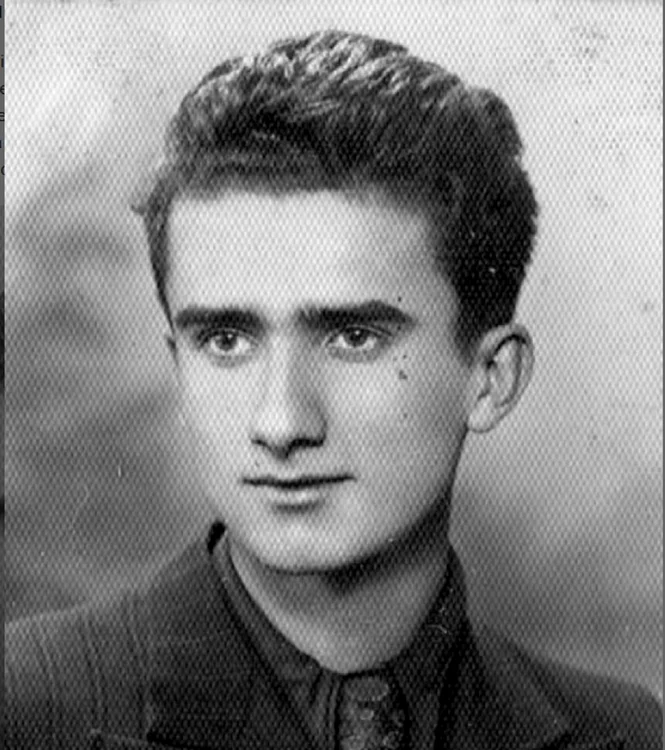
Aurel State PHOTO Publisher Manuscris
People are different and should not be judged for their choices. “Our differences do not separate us. They show us how rich the world is“, as Mircea Eliade said. Some prefer to lead a hedonistic life, to live in the moment, to accept compromises to satisfy their immediate pleasures and desires. Others, on the other hand, resist the most terrible tortures or even choose death for an idea, a creed, for what they perceive to be just and correct. Among the latter was Aurel State, a symbol of resistance in the face of oppression. He is the man who did not abandoned principles and convictions not even when his body was torn to pieces, not even in the face of death or betrayal of his countrymen.
More than that, he had the courage to talk about everything he endured because of the communist regime, either in the USSR or in Romania, in the midst of the Ceausist era. He is the author of the autobiographical book “Way of the Cross. Memories from the Front and from the Gulags”, a work that circulated illegally in communist Romania and was eventually published posthumously. Aurel State risked his life to tell the truth. His life, mostly a real ordeal, can always provide inspiration for the script of a dramatic film or a bestseller.
Decorated by Romanians and Germans in the hell of war in the East
Aurel State was born on April 29, 1921 in the town of Godeni, in a family of peasants from Muscelli. He was one of the four children of Ion and Elisabeta State. By training he was a teacher, following the courses of the Normal School in Campulung Muscel. Later, he enrolled at the Military School of Officers from Ploiesti.
After graduation, he voluntarily enlisted in World War II. Romania, led by Marshal Ion Antonescu, had joined Operation Barbarossa initiated by Hitler to conquer the USSR. The Romanians primarily wanted the liberation of Bessarabia and Northern Bucovina, kidnapped by the Russians, a year before. State goes directly to the front line and fights in the 1st Mountain Hunter Battalion, the elite troops of the Romanian Army. It stands out in the toughest battles, including Sevastopol. He is wounded four times, but each time he refuses sick leave and asks to return to the front, in the heat of battle. For his courage and heroic actions, Aurel State received the highest decorations both from the Romanians and from the Germans. More precisely, he is decorated with the Military Virtue, with the Order of Michael the Brave but also with the famous German “Iron Cross”.
“In 1942 he went to the front line, fighting in the 1st Mountain Hunter Battalion, the elite troops of the Romanian Army at the time. He distinguished himself in the battles for the conquest of Sevastopol and was decorated with the Military Virtue, the Order of Michael the Brave, the most illustrious Romanian war decoration, and the Iron Cross. Being wounded four times, he was sent to the country twice, but immediately which is being restored, demands a return to the battlefield and, after the fate of the Eastern Front is sealed, despite the fact that he is warned that he is going to certain destruction, he considers himself obliged to fight to the end for the causes he assumes, even if lost”states Anca Crivăț, in the prepared foreword to “The Way of the Cross. Memories from the Front and the Gulags.”
12 years of survival in the Russian hell
Aurel State finally ends up a prisoner in the Crimea on May 12, 1944, during the Soviet counter-offensive. Without weapons specific to the fight against tanks, stretched out on a huge front, the Romanian lines are broken. Some of the senior officers and commanders manage to save themselves, leaving in planes. The rest remained in the path of death and Russian tanks. Officer George Fonea, although he had a secured seat in one of the rescue planes, decides to stay with the soldiers.
“It is true that I cannot save anyone by choosing between life and death, but what will these wretches think for the rest of their lives, remembering that in the hour of judgment I had forsaken them?”he specified.
Among those who remained was Aurel State, who, as I have already stated, becomes a prisoner of the Russians on May 12, 1944. He is dragged along with other officers and soldiers of the Romanian Army to the Siberian gulag, that place of slow and painful extermination, through exhausting work, illness and all kinds of needs. State is sentenced by the Soviets to 25 years of hard labor, being considered a war criminal.
“I had fought exposed to the dead, like the adversary, the four wounds prove, but I had not given a slap to the defenseless, and yet, in the name of the justice of a great power, I was passed among the wicked”stated State in the “Way of the Cross”.
Aurelian Gulan, another officer captured by the Russians, also remembers him from that period. “A young second lieutenant, a child like me, with an angelic look, a biblical appearance”he specified. Aurel State, that 23-year-old with angelic eyes, will stoically endure the hell of the Soviet gulag. He passed by Oranki, Simferopol, Gorki, Donbass, Stalingrad, Vorkuta and Sverdlovsk. He was one of the few who managed to survive. After 12 years of ordeal he was finally sent to the country. It was 1956 and Aurel State was 35 years old. He had spent his entire youth in the Soviet camp.
Decorated officer called “enemy” of his own people
From the misery of the gulag, Aurel State returns to Romania at a totally inappropriate time. He was a Royal Army war hero, decorated including by Nazi Germany. And we were just “building socialism”. And this also involved the destruction of the elites.
The most valuable and implicitly dangerous for an aberrant, oppressive and illegitimate regime had to be “purged”, “reeducated”, “eliminated”. Aurel State also fell into this category. Although in all other European states, all former prisoners of war repatriated from the USSR were received as heroes. Less so in communist Romania. Being under the strict siege of the Soviets, the Romanian communists did not move in the front. Whoever upset the “friends” from the east had to be purged.
Aurel State, with decorations on his chest and after a fierce fight for survival, arrives home to be labeled as an “enemy of the people”. A file is fabricated accusing him of legionaryism. All based on a Safety investigation during the Carlist regime. A student at the time, State was suspected of having attended the gatherings of legionary youth organizations. There was no evidence at all. The communists, however, used that file. Nor did they care about evidence, rights and fair trial. It was the time of socialist outlawry, of the 50s.
Aurel State is arrested while in the TB hospital, treating a lung problem acquired in the gulag. He is accused of legionnaires, war crimes and hostile attitude towards socialism. Initially, he is taken to the headquarters of the Security, in the famous Uranus center, which was demolished to make way for the People's House. Here he fell into the hands of the “Internal Butcher”, as the head of the Criminal Investigation Service of the 8th Security Directorate, Gheorghe Enoiu, was nicknamed.
“The bones were shattered in me”
State is effectively trampled and disfigured to denounce as many former army colleagues as possible in the gulag. In order not to betray anyone, State takes a radical decision. He decides to commit suicide. “I started thinking and re-thinking the idea of leaving the scene, to prevent me from being used against people. Even if you denied knowing the person you were asking about, he still ended up being a suspect.”stated Aurel State in his book.
He takes advantage of being blown up, rips himself away from the guard, climbs a fire escape, and effectively throws himself off the floor.
Upon impact with the asphalt, State broke into pieces. Just under 120 fractures. But he survived. “The bones had crumbled in me as the pretzels on which you fell chased by the sledgehammers crumble in the sack. The bars and bolts were teffers! I would have turned to the 'only friend' – death – but the attempts to see my companion face to face exceeded the register of pain I carried instead of the body”stated State. He had terrible fractures that kept him on crutches for the rest of his life, in excruciating pain.
But he achieved his goal, the investigators did not get anything from him. He is sent to the Văcărești prison-hospital and then he is sentenced in a formal trial, to 18 years of hard prison, including the fact that he was a “war criminal”. In a country of paradoxes, it no longer surprises anyone that a decorated war hero will be considered both a “criminal” and a “traitor”. Obviously a traitor to the socialist system.
He did eight years of hard prison with a broken body, in the harshest communist prisons. He even stayed at Aiud where he was beaten and tortured to accept “re-education” and the communist regime. He never relented for a moment despite the inhuman suffering. He even went on hunger strike four times because of the inhumane conditions and treatment. He was finally released after Ceaușescu's 1964 pardon decree.
Ordeal ended only after death
After his release, Aurel State lived marginalized, permanently supervised by the Securitate. He was a German language teacher and lived in poverty in a studio apartment. Neither the gulag nor the detention in communist prisons in Romania defeated his resistance. In secret he wrote “Way of the Cross”. The manuscript reaches Germany, and Aurel State again pays the price of honesty. He is arrested, investigated, tortured. This time he does not end up being convicted. He dies on November 19, 1983. The official diagnosis was perforated ulcer.