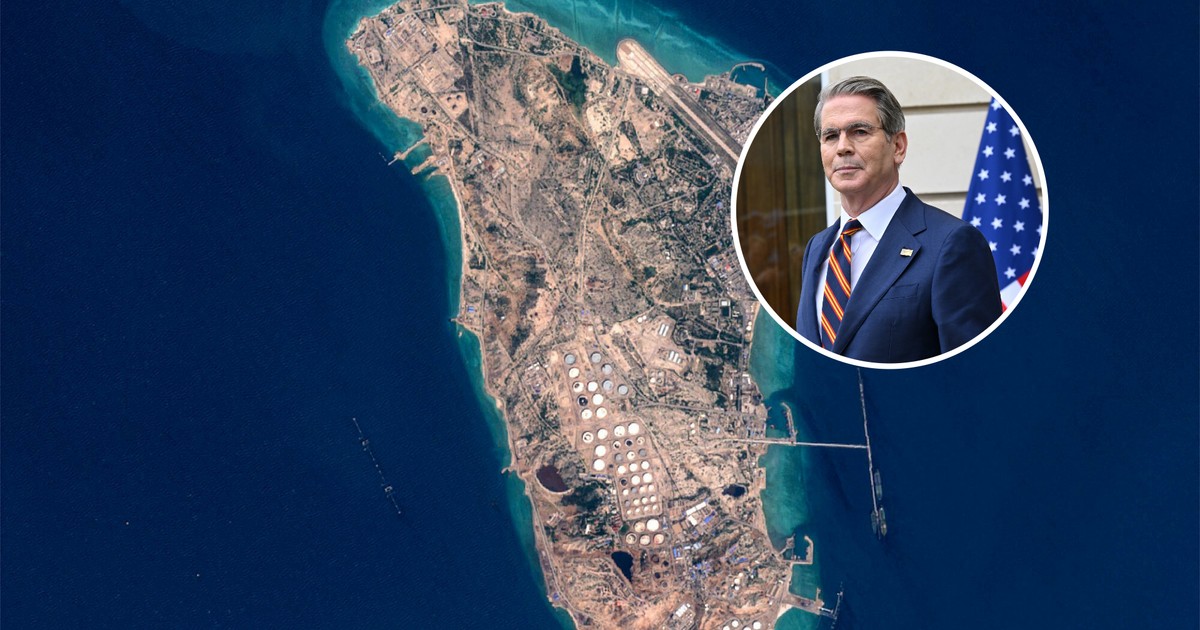
Donald Trump talks about possible tanker escort by the US Navy after Iran's closure of the Strait of Hormuz sent shockwaves through global energy markets. However, Europe is not the place where the effects of the supply blockade may be felt the most. Most oil is transported through the strait to China, although there are countries that will suffer much more from the blockade.
The rest of the infographic:
A senior commander of Iran's Revolutionary Guard said on Monday that the Strait of Hormuz had been closed and warned that any ship trying to pass through the waterway would be targeted, Iranian media reported.
The strait, located between Oman and Iran, is a key artery for global oil trade. According to the energy consulting company Kpler, in 2025 about 13 million barrels per day flowed through it, which constituted even about 30%. all marine oil flows.
Petroleum. China is the world's largest importer
The blockade of the Strait of Hormuz is putting China's energy security to the test, but stockpiles and alternative supply sources provide some buffer. “China is significantly exposed but more flexible,” said Kpler's Katayama.
According to Kpler, this country is the largest importer of crude oil in the world and buys over 80 percent. Iranian crude oily.
About 30 percent LNG imports come from Qatar and the United Arab Emirates, and approximately 40 percent oil imports pass through Hormuz, UBP estimates.
Increase in oil and gas prices
A prolonged closure of the Strait would likely lead to further increases in oil prices, with some analysts predicting the price will exceed $100. per barrel. On Tuesday, the price of Brent crude oil, the global benchmark, rose to over $80. per barrel.
According to Kpler, about 20 percent are also at risk. world exports of liquefied natural gas from the Persian Gulf, mainly from Qatar, transported through the Strait of Hormuz. Qatar, one of the world's largest LNG suppliers, halted production on Monday after Iranian drones attacked its facilities in the industrial cities of Ras Laffan and Mesaieed. Polish Orlen imports LNG from Qatar.
Southeast Asia
“In Asia Thailand, India, Korea and the Philippines are most vulnerable to higher oil prices due to high dependence on imports, while Malaysia would be relatively advantageous as it is an energy exporter,” Nomura wrote in a note on Monday.
Analysts say South Asia will face the biggest disruptions, especially in LNG supplies.
Qatar and the United Arab Emirates account for 99 percent. LNG imports to Pakistan, 72 percent to Bangladesh and 53 percent to India, according to Kpler data.
Due to limited flexibility in terms of storage and supply, Pakistan and Bangladesh are particularly vulnerable.
India face the highest total exposure in the region. More than half of their LNG imports are tied to the Persian Gulf. Similarly, according to UBP, approximately 60 percent India's oil imports come from the Middle East.
Korea and Japan
According to UBP, the Middle East supplies 75 percent. Japanese crude oil imports and approximately 70 percent Korean.
When it comes to LNG, their exposure to this raw material is lower than in South Asia. South Korea gets 14%. its LNG from Qatar and the United Arab Emirates, while Japan – 6%. , Kpler estimates.
Even without total shortages, the price implications could be severe. “Economies with a high degree of dependence on energy imports, such as Japan, South Korea and Taiwanare more vulnerable to supply shocks,” said Shier Lee Lim, chief macroeconomics and currency strategist for Asia-Pacific at payments platform Convera.