Dubai has become a global transport center, connecting the East and the West. It seemed too good to be true. However, the war with Iran has just shaken the city's business model to its core. Iran's retaliation against the US and Israeli attacks that began on February 28 has struck at the heart of Dubai – and shattered the halo of security that hung over the city. Now the metropolis is filled with a tense, eerie and unprecedented silence.
The Fairmont, a hotel on the Palm Jumeirah, an elegant, artificial development, went up in flames on the first day of the new war in the Middle East.
Palm Jumeirah in Dubaisnaptheframe / shutterstock / Shutterstock
An Amazon Web Services (AWS) data center burned down. The airport, home to Emirates, the world's largest international airline, and crucial to Dubai's tourism, was damaged and flights were suspended. Jebel Ali, the emirate's fast-growing airport and transhipment center, has suspended operations. Debris fell into residents' yards.
The key to Dubai's success was staying away from regional conflicts. Now the city's situation has changed dramatically. One factor deserves particular attention.
Even Hamas' attack on Israel in October 2023, the resulting war in the Gaza Strip, and the 12-day fighting between Iran and Israel last year did not do much to undermine confidence in the city.
Dubai, like the rest of the United Arab Emirates (UAE), has so far proven resilient in the face of turmoil. It is still too early to say what the long-term effects of the war with Iran may be. However, what was unthinkable just a few days ago has become a reality.
While most foreign residents remain local, some are leaving or plan to leave, at least temporarily — via Oman or Saudi Arabia, where airspace has remained open. The U.S. Department of State advised citizens to leave the region.
Businesses remain on site but are developing contingency plans. The question is whether the people and money that have fueled Dubai's rise as a global business center will continue to flow in as before.
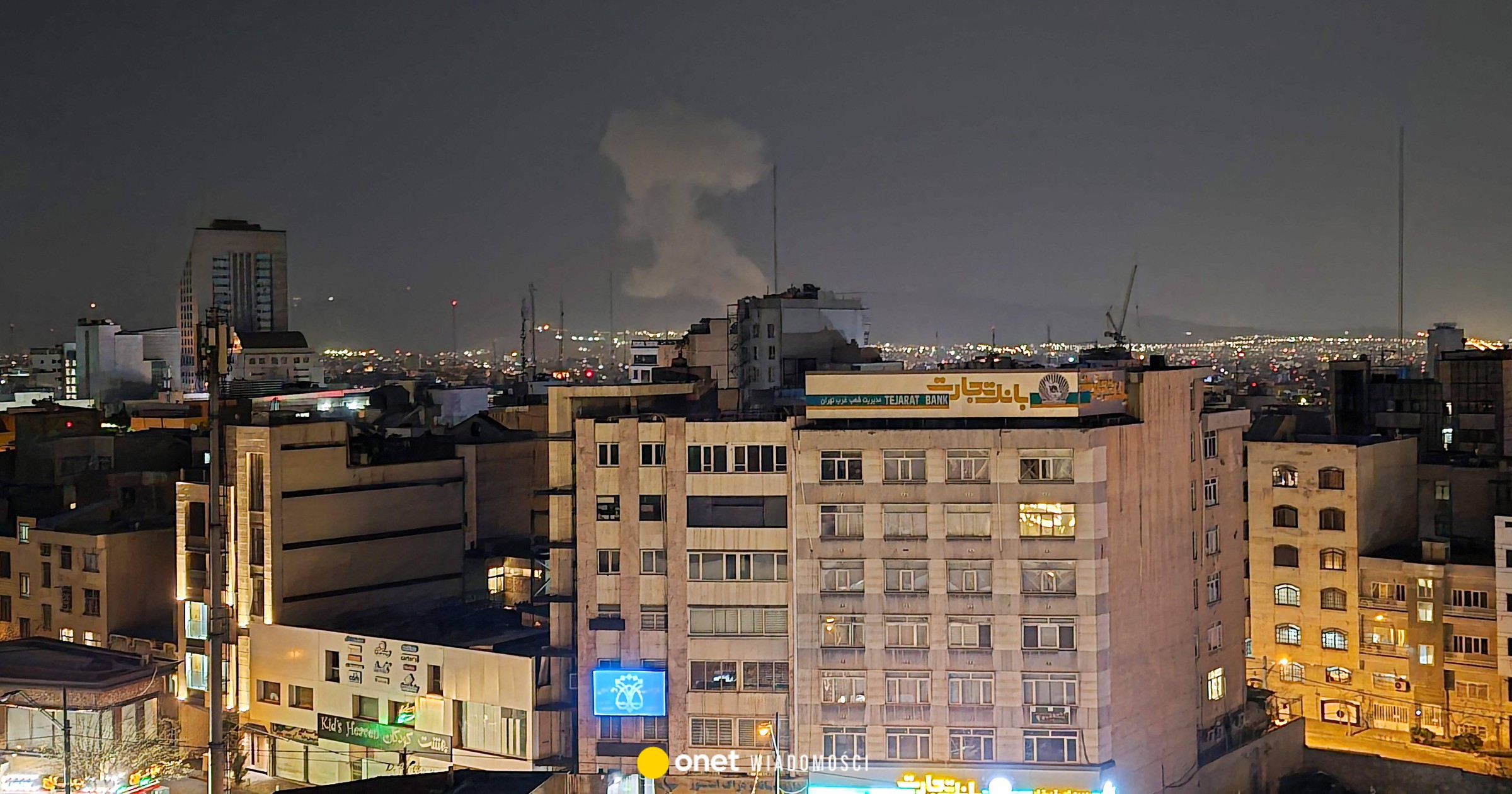
Smoke over Dubai after the Iranian attack, March 1, 2026 (illustrative photo)FADEL SENNA/AFP/East News / East News
Attacks change companies' calculations
For some time now, to attract people, Dubai has been issuing more long-term visas and making it easier for foreigners to buy houses. Last year, the emirate's population increased by 5.6%. — the fastest since 2019 — to 3.9 million. The number of millionaires is also growing rapidly, and with it there are companies willing to provide them with services. Last year, the then chief financial officer of Standard Chartered Bank called the bank's operations in Dubai a “model” for other wealth management centers.
The broadly understood financial industry in Dubai is also developing. In the first half of 2025, more than 1,000 companies opened branches in the financial center, almost a third more than a year earlier. Last year, JPMorgan, the largest bank in the US, also expanded its local operations in the city.
Dubai also attracts technology giants. There are at least 18 data centers here (including an AWS facility that was attacked after the outbreak of the war), accounting for half of all data centers in the UAE. In turn, the United Arab Emirates boasts more than half of planned investments in data centers in the Persian Gulf region.
The Emirates is betting on artificial intelligence, partnering with Microsoft and Blackrock on infrastructure investments worth $30 billion. (almost PLN 110 billion at the current exchange rate) and by purchasing shares in OpenAI, Anthropic and xAI.
Although this is only the beginning of the war, the attacks are changing companies' calculations. Few of them appear to have previously considered the risks of war in the United Arab Emirates.
It's hard not to notice the plumes of smoke
Christopher Coppock, head of geopolitical and economic risk analysis at consultancy Marsh, says companies in Dubai are now considering political risk insurance, which companies typically buy to protect themselves in emerging markets.
The price of such insurance is determined based on factors such as the risk of terrorism, war and strikes in a given country, as well as the sensitivity to danger of the insured activity and its exact location (for example, the proximity of a military base will involve additional costs). “From a corporate perspective, there is no way to undo what has happened,” Coppock says.
The article continues below the video
Any companies considering leaving or withdrawing from the emirate will need to consider alternatives and the strategic importance of Dubai. Some financial firms that relocated to Dubai after years of struggling with the pandemic in Hong Kong or Singapore may want to make a quick decision this time around. Dubai may have to act quickly to stop them.
Dubai authorities have made every effort to instill confidence. Most of Iran's drones and missiles were intercepted and there was little panic. Supermarkets such as the French chain Carrefour and the popular Spinneys chain among Westerners say they have sufficient supplies. Port operator DP World quickly resumed operations. The President of the UAE, Mohammed Bin Zayed, on March 2 appeared at the Dubai Mall, a gigantic symbol of the city's charm.
Officials say Dubai copes well with emergencies. The next big challenge will be how quickly we can calm down entrepreneurs, investors and residents. However, many matters remain beyond the authorities' control. They cannot predict how the war will turn out. They also cannot move Dubai to another location.
I’m Ashley Davis as an editor, I’m committed to upholding the highest standards of integrity and accuracy in every piece we publish. My work is driven by curiosity, a passion for truth, and a belief that journalism plays a crucial role in shaping public discourse. I strive to tell stories that not only inform but also inspire action and conversation.