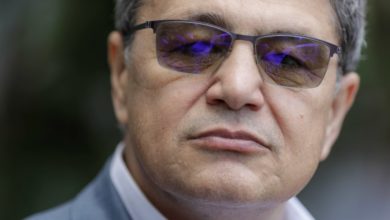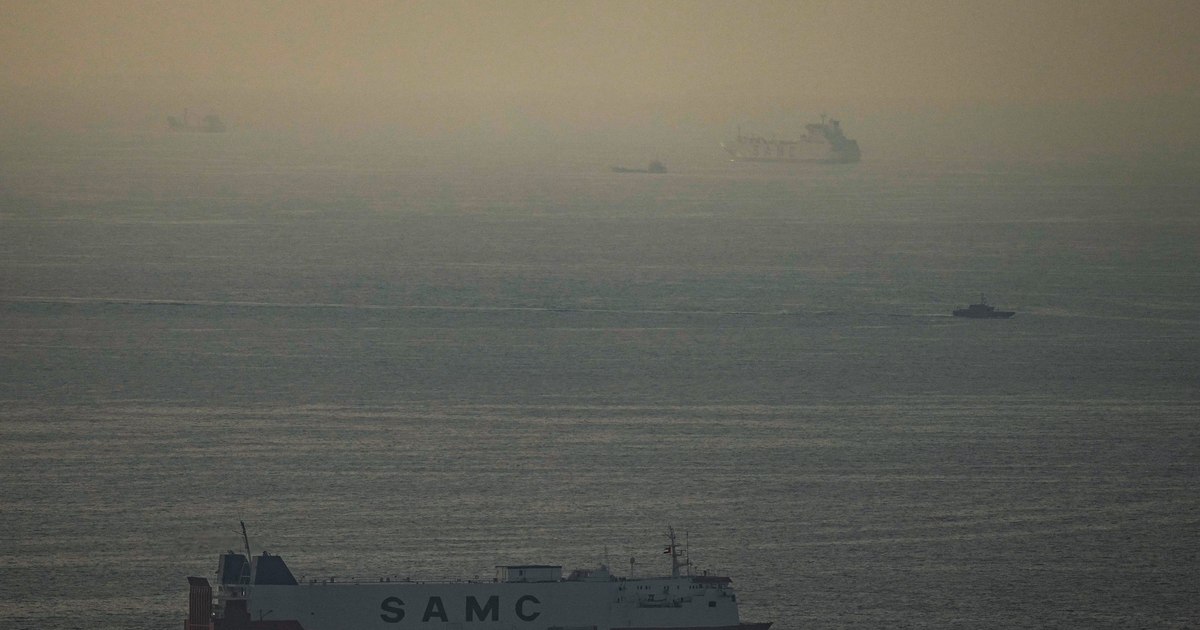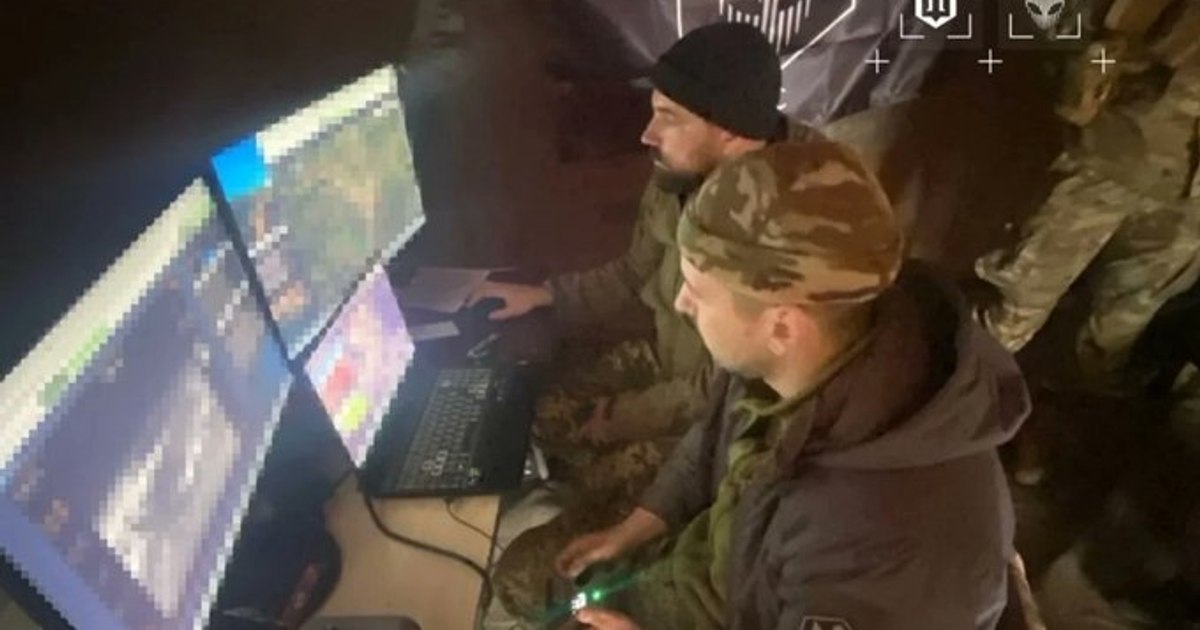
No weekend without a missile attack, no season without a new war, this seems to be the favorite motto of the period. To taste, it can also be seasoned with different layers of peace negotiations, in various formats, in holiday locations. War and siesta, all in one package.
Photo: Twitter / X
Peace is desired in Kiev.
Of course, we are talking about the one in the Near and Middle East, where a new war is starting after the 12-day, unfinished one last year, between Israel and the USA vs. Iran.
Some people do not like things half done, when the moment is ripe the action, the operation, the war are repeated, all for the clarity of completion.
If wars were purely mechanical, planes against planes, tanks against tanks, fighters against fighters, the world would be much simpler, easier to manage periods of peace and times of war.
Unfortunately, in today's wars, states present themselves with a mixture of military force, propaganda, ideology, half-truths, and outright lies that infinitely complicate what used to be a chivalrous duel with all guns blazing.
Wars end thus prematurely, or last much longer than the average lifetime, the end is not with documents signed in public, in international forums, everything is provisional and temporary, you cannot know today where tomorrow's war will start.
What is complicated also becomes expensive, and the amount that covers the costs of wars fought in several spaces is the same and is limited.
A war in the Middle East sends chilling waves of financial and logistical uncertainty to KievUkraine has experienced this before, I was saying, last year, in June.
I was writing, then, also on this platform, about the consequences of a conflict in the Near East on the situation in the war in the East:
For Russia, the war between Iran and Israel is a great chance that President Trump will no longer be interested at all, if not at all, in what is happening on the banks of the Dnieper, just to be able to extract the USA from the Russo-Ukrainian wasp.
For Ukraine, it's still a big disappointment.
In Kiev, peace is desired, far away, because Ukraine does not want to experience again the second position, perhaps even lower, in the top of Washington's security priorities.
We are in a time when much of the public discourse is about threats, military budgets, military alliances and partnerships, hybrid warfare, drone warfare, even expanding the number of states with access to nuclear technology with military uses.
All well and good until the practical test.
When the money, the equipment, the ammunition start to be distributed, when the priorities are reaffirmed.
Those who have part, have, those who don't, patience.
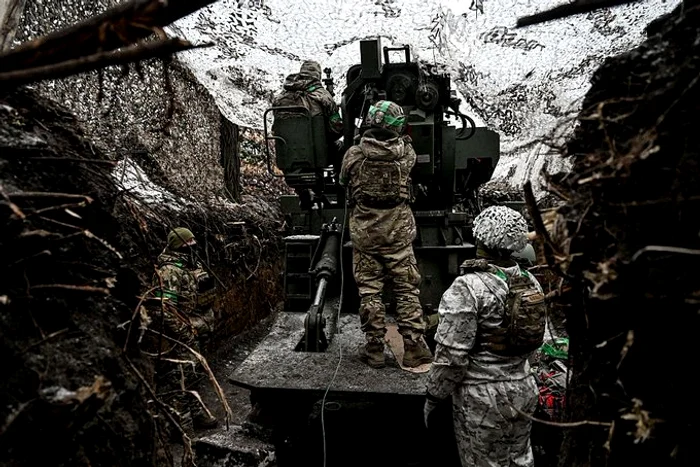
Photo: Twitter / X
Otherwise, developments seemed to be going well for Ukraine.
Although under prolonged fire from Russian missiles and drones, directed mostly at the energy and industrial infrastructure, the country has found solutions to keep a reasonable level of its own war production.
It is true, by outsourcing it, which allows some interpretations, but the result is that in several corners of partner Europe, joint enterprises producing equipment have appeared, in which there is also an important human, probably also technological, Ukrainian component.
A drone factory has been inaugurated in the UK, and to top it off, it has been announced by the local Ukrainian diplomatic representative, Ambassador Valery Zalujnîi, as a subsidiary of Ukrspecsystems.
He also detailed that this factory will produce types of drones already used in the war in Ukraine, Shark, Mini Shark 2025 and PD-2, which have proven their effectiveness on the battlefield.
The design and technological development part will remain in Ukraine, only the actual production being located, for reasons of “Oreșnik”, across the English Channel.
According to the Ukrainian diplomat, former general, but did you know that, good writer of strategic essays, this creates the “second loop of resilience”, the first being the one on the national territory itself.
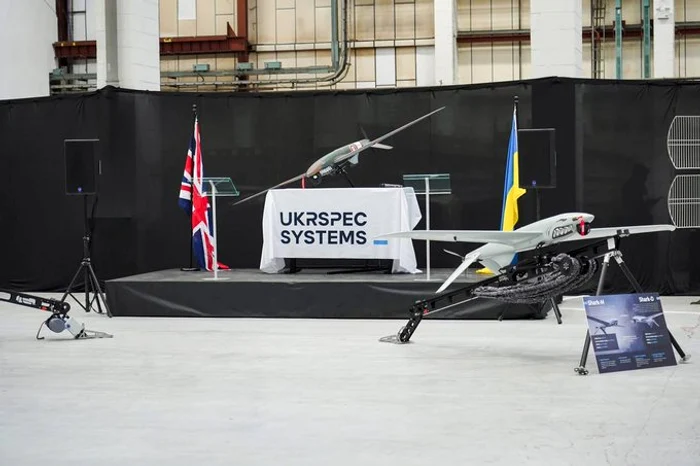
Photo: Twitter / X
Look, the opposite can also happen in war, it doesn't hurt if the partners also learn what it's like to do assembly work.
Another example of joint production on the territory of a partner state is the solid rocket fuel plant located in the Danish town of Vojens.
Also Denmark, one of the most loyal supporters of Ukraine, offered 33 million euros to improve the training conditions, the location is not specified because it is on the territory of Ukraine, all the two ministers of defense, Mihailo Fedorov and Troels Lund Poulsen, could say was that the modernization operation will take place through the charitable organization(!) “Come Back Alive” which, it is stated, “invests systematically in training the Ukrainian military”.
A recently inaugurated factory in Munich, Germany, just before the well-known Security Conference, will also produce drones.
Present at the inauguration, President Zelensky specified that, by the end of this year, there will be 10 such joint projects of Ukraine with European partners.
But with two or three flowers, and those grown in other people's gardens, it is not spring.
War is a complicated and expensive enterprise with many unknowns and an uncertain outcome.
Add to this a parallel war to which the world's attention and a large part of its military energies will shift, and things become complicated for Ukraine.
For Ukraine, the new US/Israeli war against Iran comes with bad news, but also good news.
The bad news is what I started to say, any conflict in which the US is involved, diminishes the possibilities of supporting Kiev with military equipment.
Even though Washington has recently taken some steps back in terms of direct support to Ukraine, some US weapons systems continue to be the basis of equipping Ukrainian forces, sometimes by purchasing them from the Europeans and transferring them to Kiev.
But when the deposits from the primary source are also emptied, the situation turns blue.
Modern wars often stop not because of a lack of combatants but when logistical resources, primarily weapon systems and ammunition, run out.
The good news, although perhaps not the most appropriate characterization, is that the two wars are more different than similar, resulting in only a partial overlap in their characteristics.
And their needs for equipment and weapon systems.
While the Ukrainian conflict is more land-based, the one in the Middle East is between air forces, between missile forces, between radar structures, possibly between naval forces.
That would imply that, at the end of this war, which will be this and when this will be, there will be no more missiles in the US warehouses to be sold and transferred to other theaters of operations (in any case, the USA was not very generous in this regard, and when it gave, it did so by imposing many conditions), probably no anti-aircraft systems (yes, the lack of, for example, the Patriot systems will be felt here).
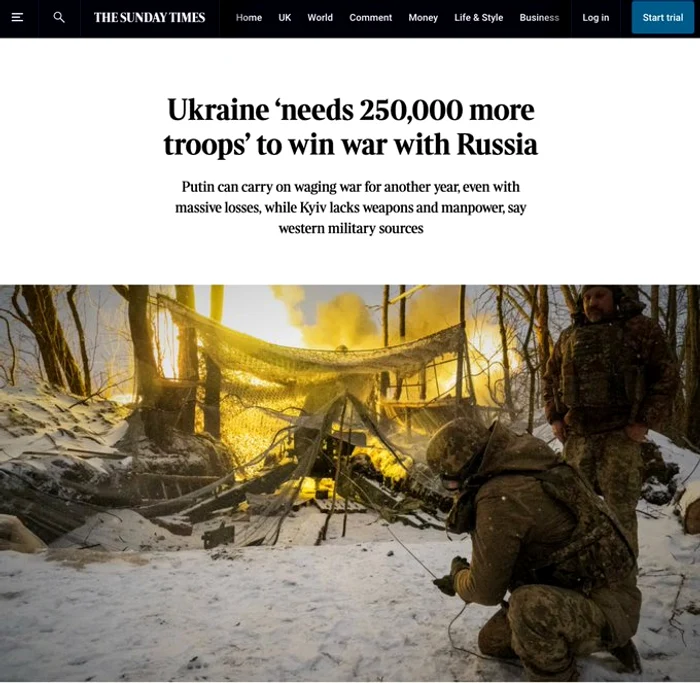
Photo: Twitter / X
Kiev had a choice to support the US in its attack on Iraneven as it watches with concern as valuable military resources are wasted on other theaters of operations.
In his message, President Zelenski shows some of the reasons for this positioning, the “shahed” drones – 57,000 of them used against Ukraine -, Russia and terrorism, in that order, and hopes that this conflict will not expand.
As extensive as it is at the moment, it will also be difficult.
The message also refers to the activity of the Ukrainian team of negotiators who have just reported the results of the last meeting and are preparing for a new round of negotiations.
A return to Abu Dhabi was expected, but the area has become a bit unsafe, you can't really see the airports anymore because of the smoke.
In the end, what's the rush, peace is just the interval between two wars, if we're still used to living alertly, what's the point of changing our habits?
There is a siesta of peace and one of war, in the first you enjoy the existence of many things, in the second you try the experience of their absence, but both can be tasted with equal pleasure.
According to different media sources (Wall Street Journal / columnist Boyan Panchevskiy, The Guardian / Bastian Giegerich, IISS director) the prolongation of the war in Ukraine is inevitable, even until the year 2029 (Boyan Panchevskiy), anyway beyond the year 2026 (Bastian Giegerich).
President Zelenski also has his own dissatisfaction with the current situation, and he made it public in an interview with British publicist Piers Morgan.
The current situation in which these negotiations are taking place, the proposals that are being made, some coming from the main partner of Kiev, seem to have only the purpose of his change from office: “I think our partners have to answer one question: what do they want? Do they really want elections or do they just want to replace me? Because the Russians just want to replace me”.
It's a legitimate question, partners should decide.
The negotiations are heading towards a dead end, the positions of the parties are not approaching a compromise line, whoever could put pressure on at least one of the parties has their hands busy with the reins of a new war in the Near East.
So it's time to get used to what we have and not want more than our everyday war.