

publication
2025-10-29 14:00
Artificial intelligence is changing the tools of fraudsters. Thanks to generative models, criminals create voices, texts and fake sites faster than ever before. This allows them to operate on a larger scale and with greater effectiveness.
Artificial intelligence did not invent fraud. However, it made them easier to make. Traditional attacks such as
phishing Whether investment fraudgained wind in their sails. Instead of writing hundreds of messages by hand, fraudsters use text generators that create refined, personalized emails in just a few minutes. Instead of setting up one fake site, they can instantly launch dozens of them with minor content variations to bypass the filters. This is not just a theory. Reports from recent years show a clear increase in the use of AI tools in this type of attacks.
Automating criminals' work has three main effects. First, it scales up. Instead of single campaigns, you can launch hundreds of attack variants simultaneously. Secondly, it increases accuracy. AI models can analyze public profiles or social media posts to tailor a message to a specific victim. Third, it improves credibility. Generated voices and deepfake videos look and sound more and more realistic.
How fraudsters use AI step by step:
- Target recognition. Automations collect public data. The analysis is fast and cheap.
- Content creation. The generative model writes emails, text messages, and website descriptions. Content can be personalized en masse.
- Media generation. Artificial intelligence can clone a voice or generate a short video with the “speech” of a fake CEO or celebrity.
- Implementation of scale. Scripts automatically send messages, launch landing pages and monitor which variants work best.
- Laundry and funds transfer. Profits are siphoned off quickly through many small accounts and payment services.
Today, AI can appear at any stage of an attack. These are not just “better emails”, but complete, automated chains of fraud.
Voice and video deepfakes – a threat to banks and customers
They have the most media effect
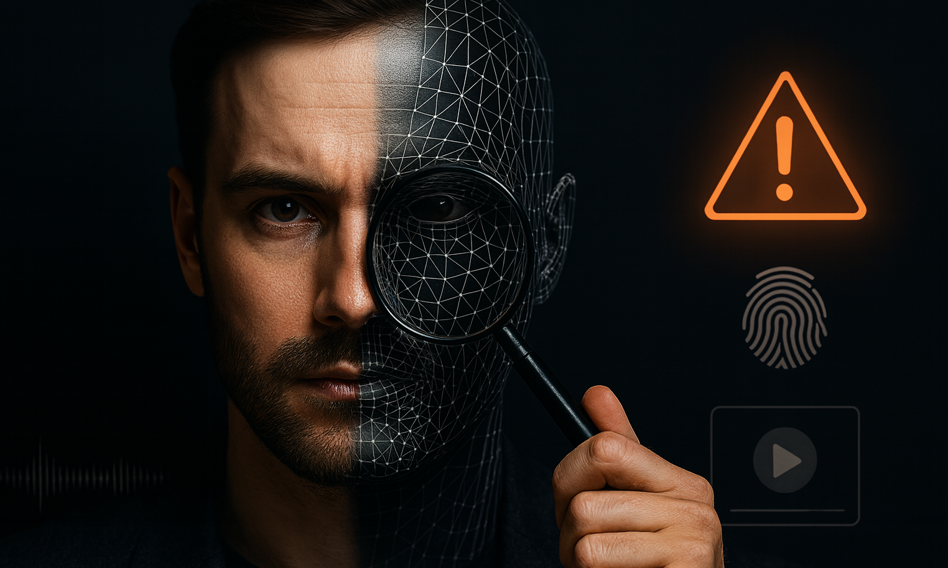
voice clones and deepfake video. Criminals record conversations with victims or create fake facial and voice recordings that look like real ones. In practice, this means that a fraudster can “call” a bank manager or a customer and convince him that he is actually talking to a trusted person. This may change security rules based on voice verification or simple telephone confirmations. According to CSIRT KNF: the number of malicious domains and campaigns impersonating financial institutions is growing, and recordings and false statements using AI are increasingly appearing.
Does AI make fraudsters “more effective” than humans?
Yes and no. AI does two things: increases efficiency and lowers the barrier to entry. Organized groups can benefit the most because they have the infrastructure and know-how to scale their activities. Small “operations” also become easier for a single technical operator. This means an increase in the number of attacks and greater overall losses for the market. On the other hand, many AI tools generate traces and repeats that security professionals can analyze and block. However, the pace of development of detection tools lags behind the creativity of attackers. Industry reports indicate that institutions often fail to keep up with investments in deepfake detection and staff training.
Specific example: false advertising and investment campaigns
A few days ago, foreign media wrote about a group of criminals who extorted millions of dollars, including: in Brazil. Using AI, they created deepfakes of advertisements with the image of a famous model and other celebrities that encouraged fake investments. The effect was that victims trusted the message and donated funds. This shows that AI not only improves the technical side of the attack, but also its psychological power.
Older, less experienced users and people with limited access to reliable information are most at risk. Victims who are looking for “quick” investment news or who end the conversation with one confirmation are easy targets. In Poland, sector reports show that investment attacks and phishing attacks related to finances constitute a large part of detected campaigns, and the losses can be significant.
What are financial institutions and regulators doing?
Banks and insurers are investing in AI on their side, creating systems that detect payment anomalies and risk assessment models. Financial industry companies are increasingly using anti-fraud models based on machine learning. Regulators and teams such as CSIRT KNF monitor and report thousands of malicious domains.
AI gives criminals new opportunities. Automation accelerates and increases the scale of fraud. At the same time, it is also a defensive tool if institutions invest in AI scam detection systems and education. The most important thing for the user is to maintain healthy skepticism and check information through other channels. As national and international reports show, it is an arms race between the creativity of criminals and the ability to defend institutions. It's a fight between technology and technology.


