Analysis of the risks of a US-led war in Iran explains Trump's dramatic warning to Americans


Donald Trump has warned Americans that some US soldiers may lose their lives in the intervention in Iran. Experts also say the risks of a large-scale operation are high, writes the New York Times.
An attack on Iran could draw the United States into a protracted conflict, as the regime in Tehran has extensive military capabilities and a network of regional forces, some experts and observers warned before Saturday morning's attack.
Iran has one of the largest stockpiles of missiles in the Middle East, although the number of missiles has definitely decreased after the 12-day war with Israel last year. Its arsenal also includes drones and anti-ship weapons.
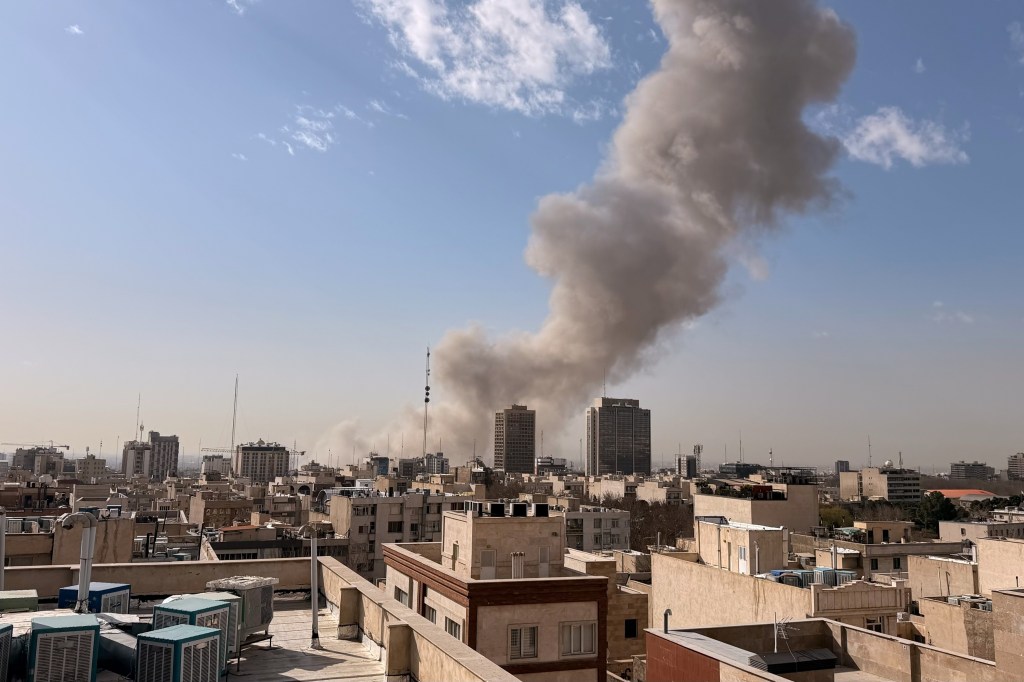 LIVE Trump to Iranians: “There will be bombs everywhere. It may be your only chance in a generation to get rid of the regime.” The United States and Israel attacked “coordinated”: Explosions in Tehran and several cities / Iran also launched missiles towards Israel – VIDEO
Tehran can therefore try to strike US bases at great distances, but also US naval forces in the region.
“There is no cheap, easy, and clean military option in the case of Iran,” Ali Vaez of the International Crisis Group, an organization focused on conflict resolution, told the New York Times. “There is a real risk that some Americans will lose their lives,” Vaez said.
Trump admitted in a video statement posted Saturday morning that some US service members could lose their lives.
“The lives of brave American heroes may be lost and we may have casualties — which often happens in war — but we're not doing this for the present. We're doing this for the future, and it's a noble mission,” the president said.
Strikes on US bases and Israel
Iran's medium-range ballistic missiles can travel more than 1,900 kilometers, a distance that covers US bases as far away as western Turkey and the Middle East, including Israel and the Gulf states.
Tehran's strategy “is to quickly escalate and export instability to multiple theaters of operations so that the costs are distributed,” Sanam Vakil, director of the Middle East and North Africa program at Chatham House, a public policy institute, explained to the New York Times.
The Gulf states, which host a number of US bases, are therefore concerned that any US military attack could lead to retaliation against them.
In January, Saudi Arabia and the United Arab Emirates, close US allies, said they would not allow the United States to use their airspace for attacks. Whether this stance will ultimately protect them from Iranian retaliation remains to be seen.
An Iranian counterattack could also hit major cities in Israel. The Israeli military used interceptors to shoot down most of the Iranian missiles during the June war.
However, the stockpile of interceptors is running low after more than two years of conflict with Hamas and Hezbollah.
Dozens of Iranian ballistic missiles have already left for Israel, according to reports.
“Axis of Resistance”
Iran also coordinates an “axis of resistance” that uses proxy forces in the Middle East, including the Houthis in Yemen and Hezbollah in Lebanon. It built and armed these groups to expand its influence and challenge adversaries in the region.
Many of these forces have been severely weakened, but experts believe they could strike back against US and Israeli forces, creating multiple fronts and escalating the conflict beyond Iran's borders.
At least one Iran-aligned group in Iraq has pledged support for Tehran in the event of a US attack.
Removal of the regime
The Iranian government is a theocracy in which the supreme leader is the primary authority. It is enforced by the Islamic Revolutionary Guard Corps, an estimated 150,000-strong branch of the armed forces that protects and promotes the regime's authoritarian agenda.
In Venezuela, the United States captured President Nicolás Maduro and his wife in a well-coordinated raid that lasted just over two hours.
 INTERVIEW “In its current form, the Iranian regime will not survive for long.” What's next for Tehran under threat from Trump's army and weakened by blood-soaked protests
But in Iran, removing the regime would be much more difficult. Real power in Iran is determined by ideology, supported by radical politicians and reinforced by a complex power structure that has been consolidated for nearly half a century, experts explained.
Also, Tehran is about 650 kilometers inland from the Persian Gulf. This would make an eventual operation to capture the leaders more difficult.
“Unprecedented Chaos”
There are also questions about what might follow after military intervention.
In a video message sent on Saturday morning, Trump called on Iranian protesters to reclaim their country after the US bombing campaign ends.
The consequences of the removal of the regime in Tehran depend on how it happens and who the main actors are.
“Simply removing the leaders through an American and/or Israeli military intervention would produce unprecedented chaos and leave a country of more than 90 million people, with immense natural resources, with a particularly important geographical position, and with significant diversity, completely ungoverned,” warned Raul Pintilie, a researcher of Middle East conflicts, recently in an interview with HotNews.
“This scenario would have serious consequences for the entire region – from those of an economic nature to those related to a possible wave of refugees that neighboring countries will face,” he said.
Closing the Strait of Hormuz
Iran has previously threatened to close the Strait of Hormuz, blocking one of the world's most important maritime energy transport routes. About a fifth of the world's oil and liquefied natural gas transits this channel.
Any disruption in the strait would cause energy prices to skyrocket, Claire Jungman, director of maritime risk and intelligence at Vortexa, a company that monitors oil and energy trade, told the New York Times.
Iranian forces have been conducting military exercises in the strait in recent days, which some experts say is a signal that it could close the waterway if war breaks out.
But closing the canal would also affect Iran, limiting its ability to export oil to major customers such as China.