US-Denmark confidential negotiations for three bases in Greenland: Americans want “sovereign territory” in the south of the island

The talks between the two countries, which are also attended by representatives from Nuuk, come as a diplomatic solution to Donald Trump's threats to occupy Greenlandic territory by force, according to the BBC.
Washington and Copenhagen are in constant dialogue over expanding military facilities in Greenland, with talks making significant progress recently, according to several officials familiar with the negotiations.
The central objective of the talks is the establishment of three new bases in the south of the island, facilities that would be officially designated as “sovereign US territory”. President Trump said in January that the US should “hold” Greenland to prevent Russia or China from taking it over, saying this could happen “the easy way” or “the hard way”.
The White House confirms that the administration is engaged in high-level talks with Greenland and Denmark, but declines to comment on the details of the negotiations. An official told the BBC there was optimism about the direction the dialogue was heading.
For its part, the Danish Ministry of Foreign Affairs confirms that discussions are taking place with the US, expressing its readiness for the establishment of additional bases: “There is a diplomatic dialogue in progress with the United States”, said a spokesman, but did not provide further details.
Details of bases and locations
The bases would be located in southern Greenland, with a focus on monitoring Russian and Chinese maritime activities in the strategic GIUK Gap area (the maritime corridor located between Greenland, Iceland and the United Kingdom).
The final number of bases could change, and one of the new facilities would be located in Narsarsuaq, on the site of a former US military base that housed a small airport, the sources cited by the British publication also stated.
Analysts say any other new bases would likely be located on land that already has infrastructure, such as airfields or ports, that could be upgraded at a lower cost than building new facilities.
Diplomacy behind closed doors
Despite Trump's threats, the countries have been actively working in recent months to reach an agreement. Teams from the three countries have met at least five times since mid-January, with talks confined to a small working group that has made progress away from the world's eyes.
The diplomatic effort is being led by Michael Needham, a senior US State Department official, who has been tasked with crafting an agreement that would respect Denmark's limits on protecting its borders.
Among the counterparts participating in the negotiations are Jesper Møller Sørensen, Denmark's ambassador to the US, and Jacob Isbosethsen, Greenland's top diplomat in Washington.
Trump's special envoy to Greenland, Republican Louisiana Governor Jeff Landry, did not participate in the negotiations and is virtually absent from the diplomatic process.
“The assumption was that he was going to be more of an enthusiastic supporter of the idea that we could just show our strength and take Greenland as a security asset,” said a close Landry ally, who asked not to be named. Landry “never participated in any of the actual discussions.”
Arctic security experts and several officials explained to the BBC that US interests in the region could be advanced without using such harsh language against a NATO ally. “Why threaten an ally with a military operation or an invasion when what you want can be negotiated quite easily?” pointed out a former senior US defense official.
On the other hand, there are voices that praise the current cooperation between Washington and Copenhagen, emphasizing the geopolitical stake. Reserve General Glen VanHerck, former head of NORAD, told the BBC: “Wherever the US and our allies leave a vacuum, that vacuum is often filled by China and Russia.”
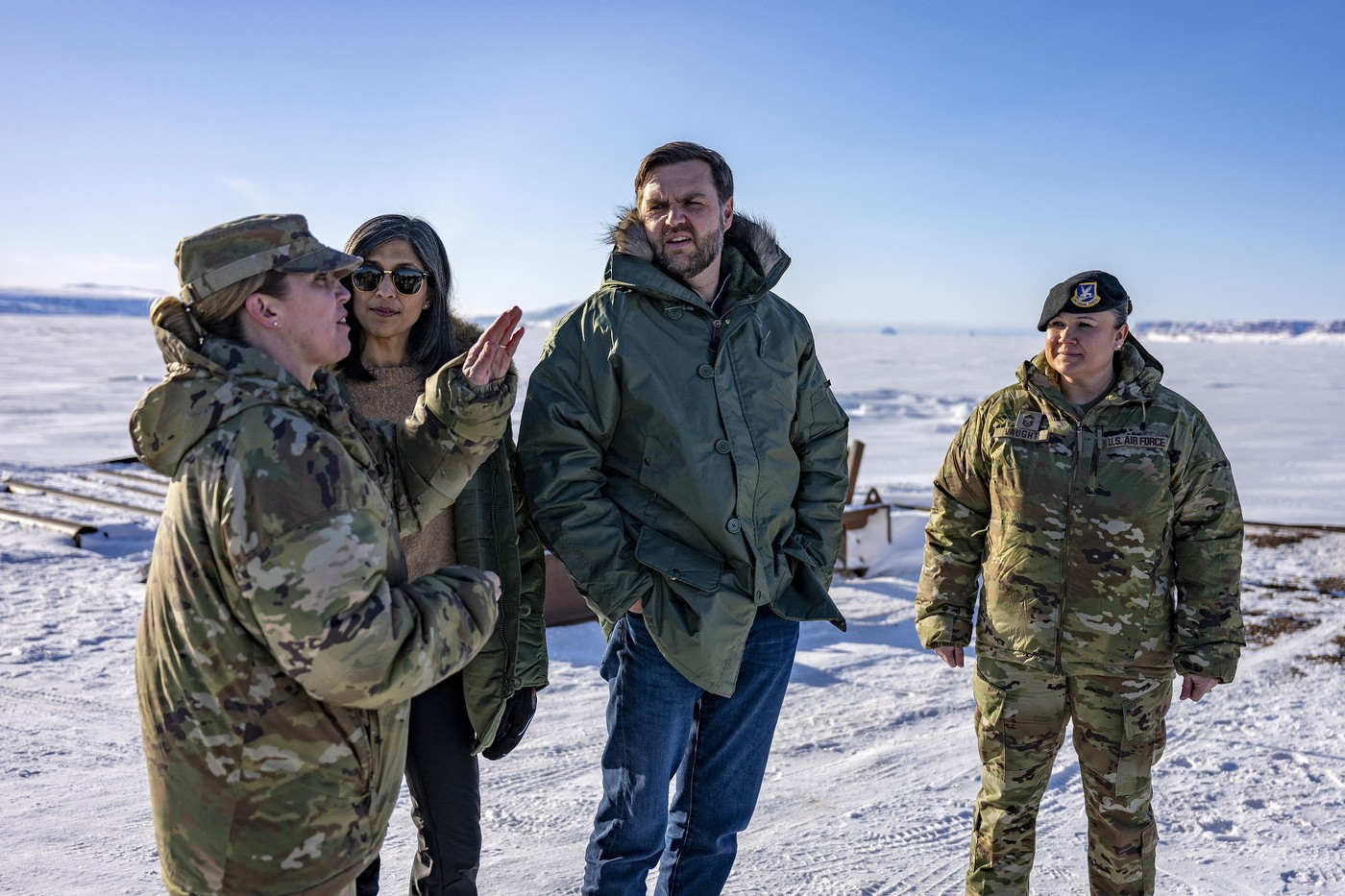
The US currently has only one military base in Greenland, compared to about 17 military facilities at the height of the Cold War. Pituffik Space Base is located in northwest Greenland – it monitors missiles for NORAD, but is not configured to conduct maritime surveillance.
Negotiators are currently trying to compromise the 1951 security pact, which gives the United States wide latitude to expand military operations, subject to the approval of the Danish government.
Although Trump's renewed interest earlier this year sparked a diplomatic crisis, Denmark has never rejected a US request to expand its presence in this strategic area.