ANAF's “black list” becomes secret. Romanians will be exposed to inspections without any warning


The government proposes that, until December 31, 2026, taxpayers will no longer be able to officially request from the National Tax Administration Agency (ANAF) the communication of the tax risk class or subclass. The measure is included in a draft emergency ordinance under public debate. An expert consulted by “Adevărul” explained how taxpayers can be affected by the suspension of the right to ask to be told what risk class they fall into.
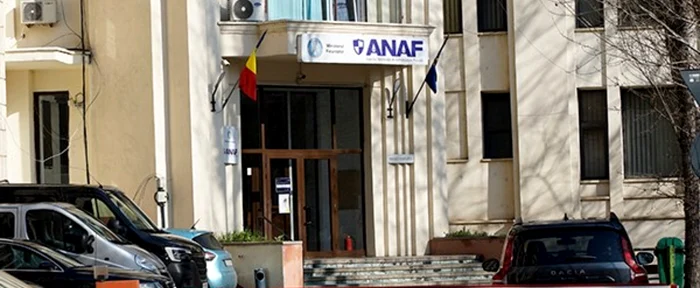
Romanians can no longer ask ANAF to tell them in which fiscal risk class they fall. Archive photo
Currently, ANAF periodically performs risk analyzes for each taxpayer, natural or legal person, based on submitted declarations, outstanding debts, payment history and other relevant tax information. Following these analyses, the institution establishes a tax risk class or subclass. This classification is not a penalty and does not automatically lead to an audit, but is an internal tool used to decide which taxpayers are audited more often. Those considered higher risk may be selected more frequently for inspections or background checks.
Through previous amendments to the Fiscal Procedure Code, it was established that, from January 1, 2026, taxpayers would have had the right to officially request the communication of the fiscal risk class, and ANAF would have been obliged to transmit the answer through a means that would ensure proof of receipt.
However, the new project postpones the application of this provision until the end of 2026. Thus, during this period, taxpayers will not be able to officially request this information.
The Ministry of Finance motivates the suspension by the need to complete the digitization process of the IT systems. The intention is that tax risk class information will be available directly in the Virtual Private Space (SPV), the online account through which taxpayers already communicate with the Tax Office. In this way, instead of sending written requests and waiting for an official response, taxpayers would be able to consult directly in the SPV their classification, once the systems allow it.
The authorities also point out that the law currently does not limit the number of requests that can be submitted. Therefore, a taxpayer could send repeated requests, and ANAF should respond to each one, with confirmation of receipt. According to the initiators, this could lead to a large volume of mail and an additional burden on staff.
The project does not change the way the risk analysis is carried out nor the classification criteria. The right of taxpayers to officially request the communication of the tax risk class is only temporarily suspended, until December 31, 2026.
How taxpayers may be affected
An expert consulted by “Adevărul” explained how taxpayers can be affected by the suspension of the right to ask to be told what risk class they fall into.
“We support the objective of digitizing and displaying in the SPV the classification of fiscal risk, but the full suspension of art. 7 paragraph (10) creates uncertainty and may reduce voluntary compliance: taxpayers no longer have access to information to preemptively correct any errors or data inconsistencies (all the more so as automated systems can generate imperfect classifications)”business consultant Gianina Crăciun told “Adevărul”.
According to her, the measure should be strictly limited to the method of communication (moving to the SPV), preserving the taxpayer's access to the information and providing for a clear and fast mechanism for rectification/clarification of the classification before it produces operational effects.
In this context, the specialist shows, the recommendation for taxpayers is to adopt a preventive approach and to strengthen their internal tax compliance mechanisms, even in the absence of direct access to risk classification.
Recommendations for taxpayers
1. Periodic review of the fiscal situation
It is important to constantly check the declarations submitted, the tax vector and the consistency of the data reported, to reduce the risk of mismatches that can influence the risk classification.
2. Active monitoring of SPV communications
In the absence of a direct request for employment, SPV becomes the main channel of interaction with ANAF. Regularly checking notifications and messages can prevent the accumulation of unclear situations.
3. Strengthening internal controls and compliance procedures
The implementation of internal checks (reconciliation of accounting data, verification of outstanding obligations, correlation of SAF-T reports, e-Invoice, e-Transport) can reduce the risk of unfavorable classification.
4. Quick correction of identified errors
The transmission of rectification statements or the clarification of possible inconsistencies must be carried out as promptly as possible, in order to limit their impact on the fiscal profile.
5. Documentation of the relationship with partners and relevant transactions
In the context of automated assessments, the traceability and correct documentation of transactions becomes essential to support the tax position of the taxpayer.
6. Proactive dialogue with the tax authority
In situations where uncertainties arise, taxpayers should use existing mechanisms to request information or clarifications, to avoid the accumulation of perceived risks.