The Germans were wrong about Russia. They are repeating the same mistake with China [OPINIA]


Klaus Geiger is the editor of “Die Welt” writing about business and finance.
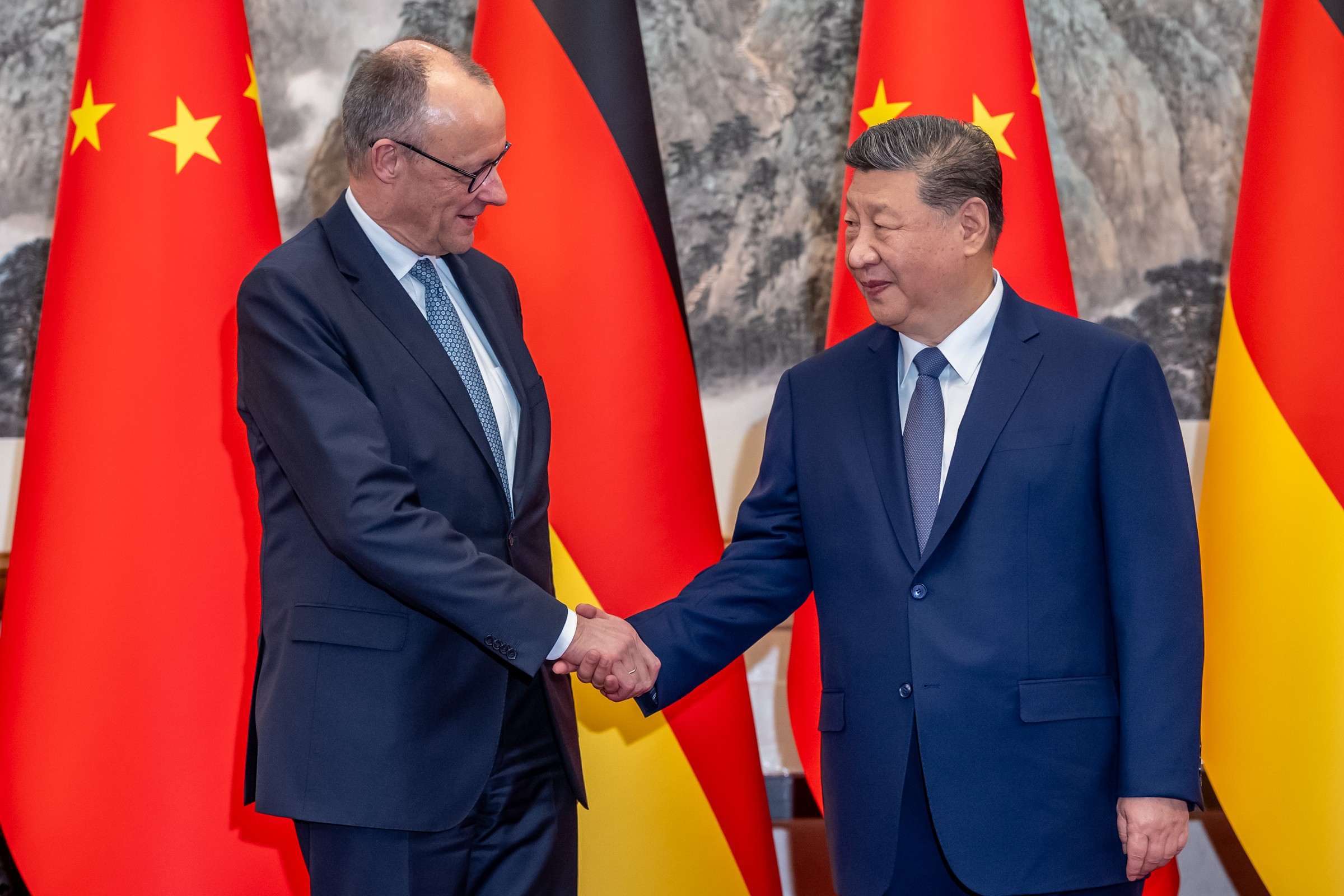
On February 25, 2026, Friedrich Merz met with Chinese leader Xi Jinping in Beijing. Some aspects of their statements sounded too similar – the “strategic partnership” between the countries should be expanded, there is a large “potential for further growth of both economies.”
However, the similarities do not end there.
Goal: reducing risk
Whether it's Russia in the past or China today, no country in Europe has stuck to its course as strongly as Germany. Nord Stream 2 was initially called a serious mistake by Eastern European countries, and later the European Commission and French President Emmanuel Macron distanced themselves from it. Germany openly criticized Russia for political wrongdoings, but nevertheless continued to pursue its energy interests. In 2021, Germany's dependence on Russian natural gas increased to around 55%. — the highest level ever achieved under Putin in Russia.
It is similar in the case of China: the federal chancellor openly talks about the growing rivalry with Beijing – both political and economic. However, he introduces actual course corrections towards the People's Republic of China carefully and often only verbally or with minor mentions in strategic documents. In 2019, the EU declared China a systemic rival, and in 2023 – also under the influence of the war in Ukraine and the mistakes made towards Russia – the German government published a new strategy towards China.
His goal was to reduce the dependence of the German economy on China. Still direct investments by German companies in China are increasing — last year they amounted to EUR 7 billion (PLN 29.5 billion), which is an increase of approximately 50%. compared to the previous year. Imports from the People's Republic of China increased by almost 9 percent, while exports from Germany dropped significantly.
Walking on a thin line
In both the current situation of China and Russia before 2022, it must be said that the regime on the other side has dropped its mask and largely revealed its aggressive, imperialist goals. The dangers are obvious, but Germany, the world's third-largest economy, is so heavily dependent on trade with a given autocracy that the political price of a clear change in strategy would be high – so much so that no one would find the strength to afford it.
In his New Year's speech, he said that the unification of Taiwan with mainland China is “the trend of our times” and something “inevitable.” Xi Jinping has instructed the Chinese People's Liberation Army to achieve “modernized capabilities” in 2027, precisely on the 100th anniversary of its founding. In Western military circles, an attack on Taiwan in 2027 is considered a realistic option.
At the same time, Trump's tariff policy has cut off China from the US market. That's why China produces too many cars, which it now tries to sell in Europe – with the help of huge state subsidies.
A fragile balance
German and European companies are less and less able to compete with the low prices of companies from the People's Republic of China. German companies are moving their factories to China in large numbers – not only to better compete with Chinese competitors on the domestic market (a relocation strategy known as “China for China”), but also to export products from China cheaper to the world market (“China for the world”).
At the same time, there are more and more voices in European countries accusing Friedrich Merz of focusing too much on German economic interests in his policy towards Beijing. This is reminiscent of European partners' warnings about Nord Stream 2. However, this criticism met with no response at the time – and it is the same today.
Meanwhile, Friedrich Merz is trying to strike a balance in China: protect domestic companies while keeping the Chinese market open. Germany was also balancing dangerously with Russia — despite the political radicalization of the Kremlin, they tried to maintain relations with it, which they considered necessary for economic survival.
When Russia attacked all of Ukraine, Germany suddenly lost its fragile balance. The activities of German companies in China – like Russian energy – are such an important pillar of German prosperity that one can rightly fear that in this case too Berlin lacks the political strength to truly change course.
However, there is a significant difference. The political costs of the shock caused by China's invasion of Taiwan, requiring a quick and radical reorientation, would be much higher for Germany than those related to the need to distance ourselves from Russia. For now, however, they are hypothetical and concern the future. This may be very similar to the future after Russia's aggression against Ukraine.