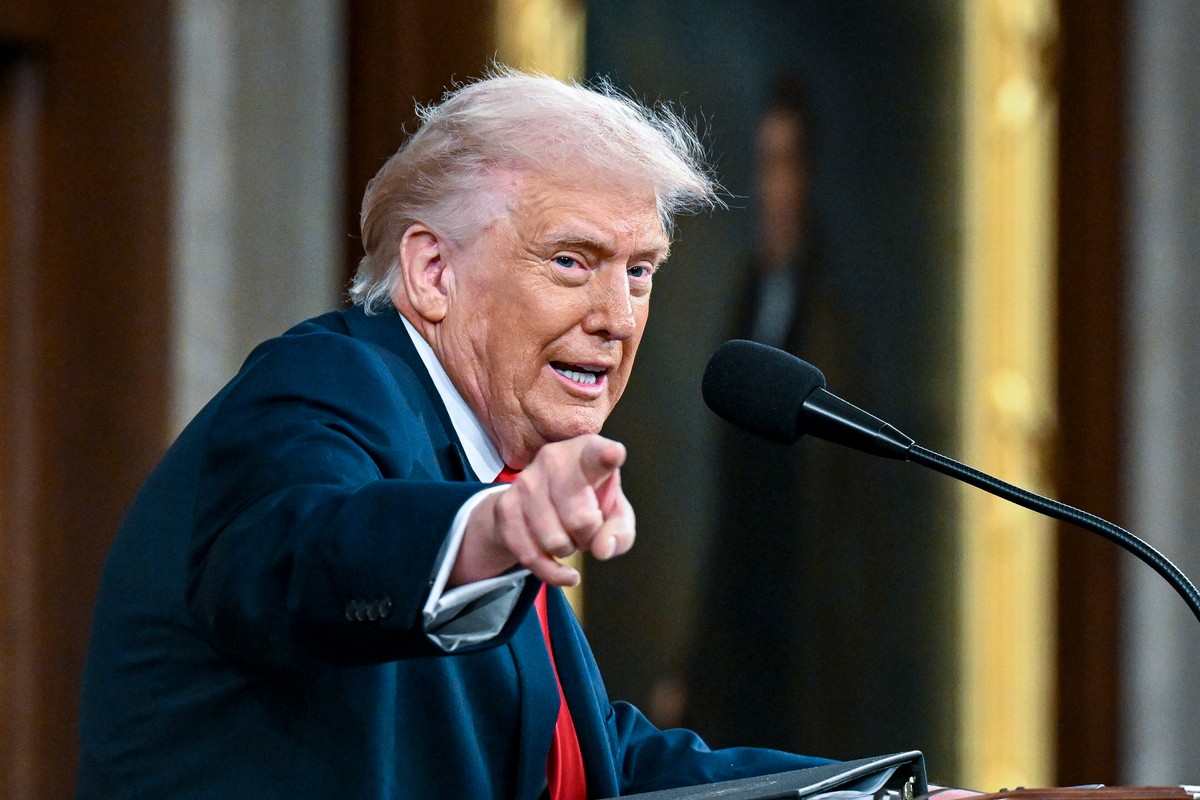
In a two-hour speech to the joint houses of Congress, Trump touched on a range of topics, including the military budget, consumer prices and tariffs, highlighting the successes of its economic agenda.
The speech contained few new policy proposals, but was full of Trump's flagship slogans: lowering crime, dismantling the DEI (diversity, equity and inclusion) framework and strengthening borders. He presented awards to veterans, spoke about voter ID fraud and called for further restrictions on transgender rights.
See also: Trump advisor and author of the famous “Laffer curve”: the Polish government is crossing the border [TYLKO U NAS]
Here are the key takeaways from the 2026 State of the Union address.
1. Lower prices for consumers
Trump devoted much of the speech to his economic agenda, highlighting the administration's efforts to lower prices for consumers.
— From trade to health care, from energy to immigration, everything has been stolen and manipulated to siphon wealth from the productive, hard-working people who power our country — Trump said, adding: Now we are the hottest country in the world.
The president blamed Democratic lawmakers for high inflation, which continues to exceed the Federal Reserve's 2% target. He said his policies have lowered the costs of housing, health care and energy — though the actual financial situation for many Americans is more complex.
Trump talked about tax breaks in the One Big Beautiful Bill Act, the so-called Trump Accounts, a recently announced plan to increase transparency of health care costs and actions to improve access to mortgage loans. He also defended the White House's tariff policy despite what he called a “disappointing” Supreme Court ruling last week.
One thing is clear: Trump wants America to perceive the economy as “speeding up.”
2. AI companies should bear energy costs
Trump said the energy demands of AI data centers could “unfairly” raise energy bills for Americans.
He proposed the so-called obligation to protect energy consumers who would require technology companies to provide their own energy needs and “build their own power plants.”
“We are telling the largest technology companies that they have an obligation to provide their own energy sources,” Trump said.
“They can build their own plants as part of their facilities so that no one's prices go up, and in many cases, electricity prices in communities go down,” he added.
Read also: We are entering the “second wave” of AI. This is what this term means
He also noted that The US has an “old power grid” that “could never cope” with such demand.
3. Tax policy to change
Donald Trump mentioned several tax tools intended to ease the burden on American households, including about no tax on tips and overtime, a tax incentive for consumers buying U.S.-made cars, and tax-free investment accounts named after him.
In these proposals, Trump framed the affordability problem as a revenue issue that could be solved through tax breaks, rather than mechanisms such as direct price controls.
4. Customs, customs, customs
The US president — as expected — praised his tariff strategy as a one-size-fits-all solution, even going so far as to say that it could replace the US income tax system.
He said tariffs are a huge source of revenue, bringing in “hundreds of billions of dollars” and could also attract jobs and investment to the US. He also called it a diplomatic tool that he used to end wars and stated that customs revenues could “largely replace the modern income tax system.”
Trump also described the recent Supreme Court ruling that blocked his sweeping policy as “unfortunate,” saying it in the presence of judges who traditionally attend the address. Present were Chief Justice John Roberts and Justices Elena Kagan, Brett Kavanaugh and Amy Coney Barrett.
Of those present, Roberts, Barrett and Kagan voted to declare Trump's tariffs illegal.
5. Congress should pass the Stop Insider Trading Act
Trump has thrown his support behind the Stop Insider Trading Act, saying members of Congress should not be able to “unfairly profit from insider trading.”
This is a GOP-sponsored bill introduced by Rep. Bryan Steil of Wisconsin that would place restrictions on stock trading by lawmakers and their spouses.
The moment drew bipartisan applausewhich the president commented on by saying he was “impressed” that Democrats supported the proposal.
Debates over insider trading by members of Congress and violations of the STOCK Act — a federal law designed to prevent conflicts of interest and insider trading — date back to before the second Trump administration.
6. Trillion military budget
Donald Trump said the administration has approved a $1 trillion military budget for next year.
– We have the strongest army in the world. I rebuilt the military in my first term. We will continue this. We just approved a trillion-dollar budget; we have no choice, he said in his speech.
See also: Nuclear weapons in Poland? From a legal point of view, the situation is clear
This amount is lower than what Trump mentioned in January. In a post on Truth Social in January, he wrote that he had decided to raise the military budget in 2027 from $1 trillion to $1.5 trillion to protect the U.S. in “very troubled and dangerous times.”
He added that the higher budget in 2027 would be financed from customs revenues.
The above text is a translation from the American edition of Business Insider