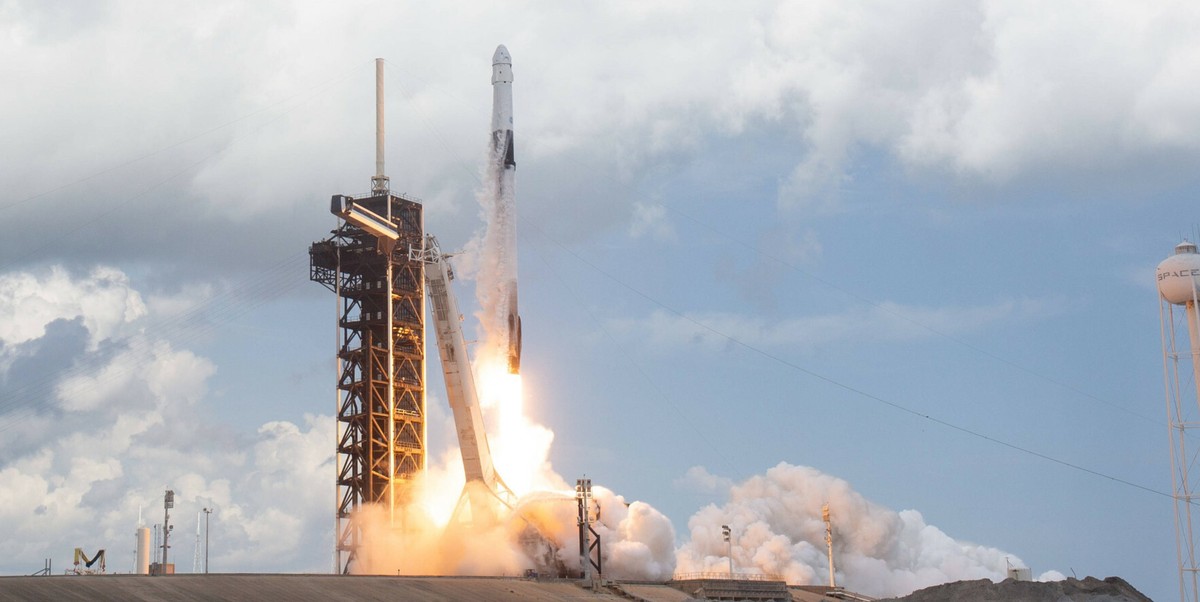
Falcon 9 was on Thursday from Platform 39a in Kennedy Space Center 28 Starlink satellites in the Starlink 10-11 mission. However, B1067 came to the fore, i.e. The lower part of the rocket with engines, which performs the hardest work at the start, then disconnects and lands so that it can be used again. She started for the thirty time and returned to service, sitting on the barge “A Shortfall of Gravitas” about 8.5 minutes from the start. This is the first case in history when the orbital booster reaches the limit of 30 flights.
The record start was part of the “dwupaku” in Florida. The day before, SpaceX launched another batch of Starlinks from the neighboring SLC-40 platform. This summer B1067, however, is the leader of the fleet and a symbol of the maturity of the reusable programwhich Elon Musk depended for years. According to data from the start, it is already 122. A successful landing on Barka Asog and 495. Recovered booster in the company's history. It should be emphasized that these are numbers that seemed unattainable a few years ago with such projects.
What exactly is B1067? This is a train horse of NASA projects and commercial clients. He has, among others Two flights with astronauts (Crew-3 and Crew-4), two CRS flights to ISS, telecommunications missions (Turksat 5B, HotBird 13G, O3B MPower, Satria, Telkomsat Merah Putih 2, Koreasat-6A, Galileo L13), as well as 18 starts within the StarLink network. The previous, 29th flight of July 2 was also 500. Falcon 9 in history – just over eight weeks later the same copy raised the bar to thirty.
Check also: Starlink Elona Muska will gain a rival. Amazon will go to orbit – he will take thousands of satellites
Re -flights are a business benefit for SpaceX
The scale and pace of expansion of Starlinek explain why such an extreme level of reuse has business and operational sense. Thursday 28 satellites joined the largest constellation ever submitted. According to the base led by Astronoma Jonathan McDowell, there are already over 8.2 thousand in circulation. operating solutions, and the numbers change from week to week with subsequent parts.
Further part under video material:
Until August 28, Spacex in 2025 already sent over 1.8 thousand to orbit. “V2 Mini” in 74 missions. Only a low -marital -ranking and high repetition system He is able to keep such logistics in check.
The record of the record lies consistent improvement of machines and processes. When Block 5 debuted in 2018, SpaceX talked about the target of at least 10 flights for one booster without major repairs. Seven years later, this minimum was transformed into a routine, and the limit of 20 flights was moved further – to the present 30. At the same time the ground service time was shortened. Flight spacing fell in 2025 to about nine dayswhich increases the flexibility of the schedule and the use of the fleet even more.
See also: Elon Musk forecasts SpaceX revenues. “More than the entire NASA budget”
The number “30” is not everything
Achieving SpaceX is of meaning beyond the number “30”. First of all, it changes the economic account of space. Multiple use is no longer a curiosity but industrial practice. Thanks to this, production costs are broken down into dozens of missions, and Instead of wasting time to build subsequent copies, the team optimizes inspections, tests and logistics. This reduces the price per kilo of cargo and allows you to plan more ambitious start manifestos without a clear improvement in investment outlays.
Secondly, it translates into operational reliability. The booster, which lands thirty and again, is a carrier of thousands of elements of data on the behavior of the structure – it is fuel for prognostics and predictive maintenance, which reduce the risk in subsequent projects. And third, creates a bridge for full reusable. Falcon 9 is currently losing the upper degree (the second, smaller part of the rocket), but the culture and procedures, which amounted to B1067 to thirty, are explicitly transferred to the Starship program, whose target idea – flight, landing and re -start in less than an hour – it requires just such discipline and experience.
The B1067 record is also part of the wider picture of this year. SpaceX maintains the Falcon 9 start schedule, while pushing the Starship program forward, which this week completed the tenth successful test flight and, according to the company, met all the most important goals, approaching the operational phase. There is a feedback between both rocket families. Falcon finances, teaches and powers the development of Megaraketa, and the first successes of Starship cure the path to even cheaper orbital infrastructure.
Starship does not have regular flights yet with the same copies again, but experience and data from Falcon 9 directly shape its construction and procedures.
Read also: Sławosz Uznański-Wiśniewski returns to Earth. After passing through the atmosphere, the capsule will develop parachutes
New economy of orbital businesses
There is also a dispute about the scale and impact of such activities on the environment and the edge infrastructure. This discussion takes place even on the west coast of the USA, where the state authorities inhibit plans to expand its activities in Vandenberg. It shows that “Economics of Orbit” will have to reconcile the rate of innovation with regulations and social acceptance. However, the technical fact remains indisputable. Repeated, multiple flights of the same rocket have ceased to be an experiment, and became the basis for mass construction of infrastructure in low orbit.
When the 29th flight B1067 appointed a symbolic “five hundred” Falcon on July 2, some commentators asked where the limit of the durability of SpaceX solutions lies. Thursday's start and landing are not so much to set a new record, but they shift this border beyond the horizon of previous assumptions. From the perspective of satellite operators, this means greater availability of starting windows and greater resistance of the supply chain. From the perspective of end users – faster thickening of communication networks and services based on orbital infrastructure.
For the whole market, it is a higher entry threshold for competition, which will have to match not only technology, but also to organize the process to compete at the expense and reliability.
Author: Grzegorz Kubera, Business Insider Polska journalist