Interview from the front in Ukraine. “One boy didn't survive and just then his phone rang and the word 'Mom' appeared on the screen. Ukrainian woman voluntarily enlisted in the army, message after 4 years of war

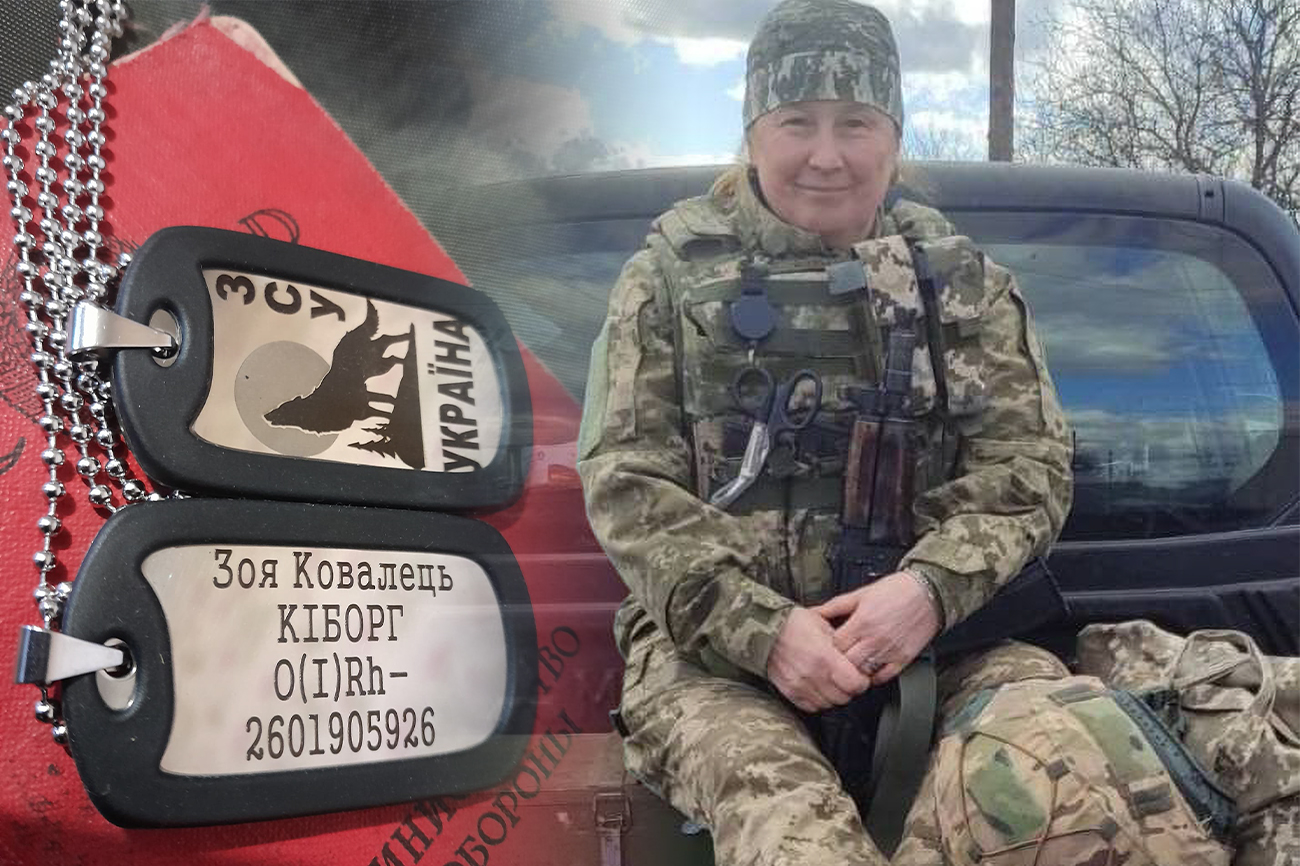
“These are very difficult times. I'm older and relate everything to myself: when a young man dies, I think about how his mother would have felt”, Zoia Kovaleț tells, in an interview for the HotNews audience. He is 54 years old, from the Ukrainian town of Kherson, and voluntarily joined the Ukrainian Army. The lived experiences inspired her to write poems with suggestive titles: “For the holidays for the fallen boys”, “If I had a supernatural power” or “I'm going to die”.
- From the front, near the border with Russia, Zoia Kovaleț gave an interview to the HotNews audience, in which she talks about the life she lived under the Russian occupation, how she was betrayed by a neighbor, but also how she ended up on the battlefield, where she tries to save the wounded soldiers. “I have an unquenchable thirst for revenge,” says the woman.
Zoia Kovaleț was working as a paramedic in a small village before February 24, 2022, when Russia invaded Ukraine. After her town was occupied, and she lived for two months under the occupation of Russian troops, she left, got a job in a re-purposed military hospital, and from June 2023 joined the army. Today, fighting near the Russian region of Kursk.
“That's when I knew something had happened”
– How was your life before February 24, 2022? What do you do?
– I lived in the Kherson region (no- in the north of the Crimean Peninsula, currently partially occupied by Russia), in a small town called Vîsokopillia. I worked for the last two years in a neighboring village, also small, as a paramedic at the medical point. Basically, I was leading a normal life, of an ordinary person.
– You live in an area that has had challenges from Russia before. You thought Russia would launch a full-scale invasion on the morning of February 24th?
– It seems to me that no one was thinking about it. It was so unexpected it was hard to believe. Even when I felt the combat actions on my own skin, I still could not fully realize that this had happened.
– What do you remember from the morning of February 24?
– It seemed like an ordinary morning. I woke up, did all my chores and had to go to work. I was driving my own car and when I got out on the neighboring street I noticed a queue of several kilometers at the gas station. Then I understood that something had happened. I started asking people why there is such a queue, and they told me: war. And even so, it was not clear to me: which war, why war? It was a very big shock.
“There were certain suspicions about those who had gone through the occupation”
– Today you are at the front. How did you get there?
– I cannot name the exact locality where I am, but it is near the Kursk region. In March (2022 – no), our town was occupied and remained under occupation for half a year, but after two months I managed to leave.
In these two months I saw a lot of things. And that's exactly why, literally a day after I arrived in the nearest city to us, I started working in a hospital rebranded as a military hospital.
I submitted the documents to the military commissariat. They didn't take me immediately, because there were certain suspicions about those who had gone through the occupation, unless they had been recruited (by the Russian army). Maybe that was the reason, maybe another, it's not that important.
They didn't take me immediately, but later I got a call and was told that the country needed infantry. “Okay,” I said, “then we go to the infantry.” So I took the training in a training center.
Several individuals who were retrained and trained in tactical medicine were selected to serve directly as combat medics. Thus, I ended up in medicine, one might say, somewhat by chance, but the fact that I had medical studies was an advantage for me.
– Now you have a weapon in your hand, are you a full-fledged fighter, do you directly participate in combat actions?
– Yes, of course.
“There was an unquenchable thirst for revenge”
– Being a woman, how did you make this decision to go to the front?
– You know, it didn't take any effort to make this decision. I already mentioned that I was under occupation, that was one of the causes. I have lost many friends, both civilian and military. That's why there was no question for me not to join the Armed Forces of Ukraine. There was a desire to be useful, there was an unquenchable thirst for revenge, so, I repeat, there was no dilemma either.
– Are there other women around you, in the military environment?
– Of course, we have many women: in administrative positions, nurses in the medical wards, women doctors, health instructors, women in the evacuation crews. There are quite a few.
– Your service, in fact, began by transmitting information about the movements of the Russian military?
– Yes. The polyclinic and the hospital were nearby, and the hospital park adjoined our block. When the enemy soldiers came in, they set up right there. I could see their movements, the anti-aircraft installations. We communicated with each other and passed on the information. I could call and transmit what I saw – number, location. The information was going straight to our guys.
– You were denounced by one of the citizens. Haven't you lost faith in people?
– Everyone has their own level of moral consciousness. We can't get inside someone's mind to understand what drives them. From my close circle, no one betrayed me. There was one case – a neighbor, I was not a friend. He asked for help, was in my apartment, and later reported me to a soldier of the enemy army. It was unexpected and incomprehensible to me.
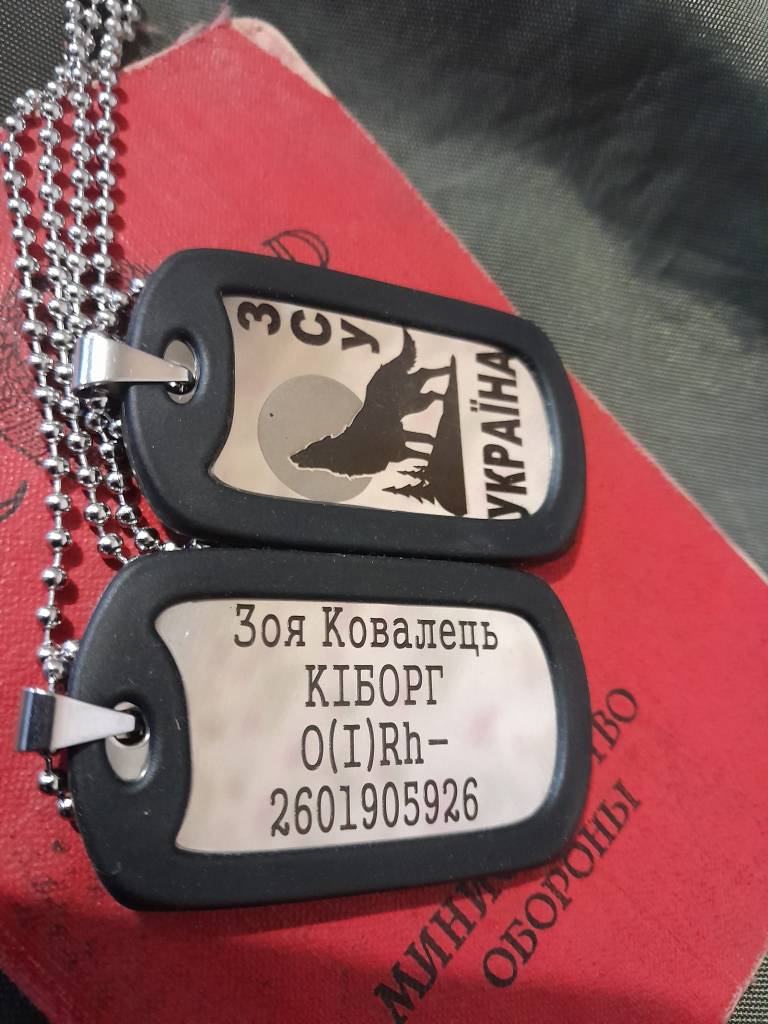
– Your code must be explained: “Cyborg”. Where does a woman get such a strong call sign?
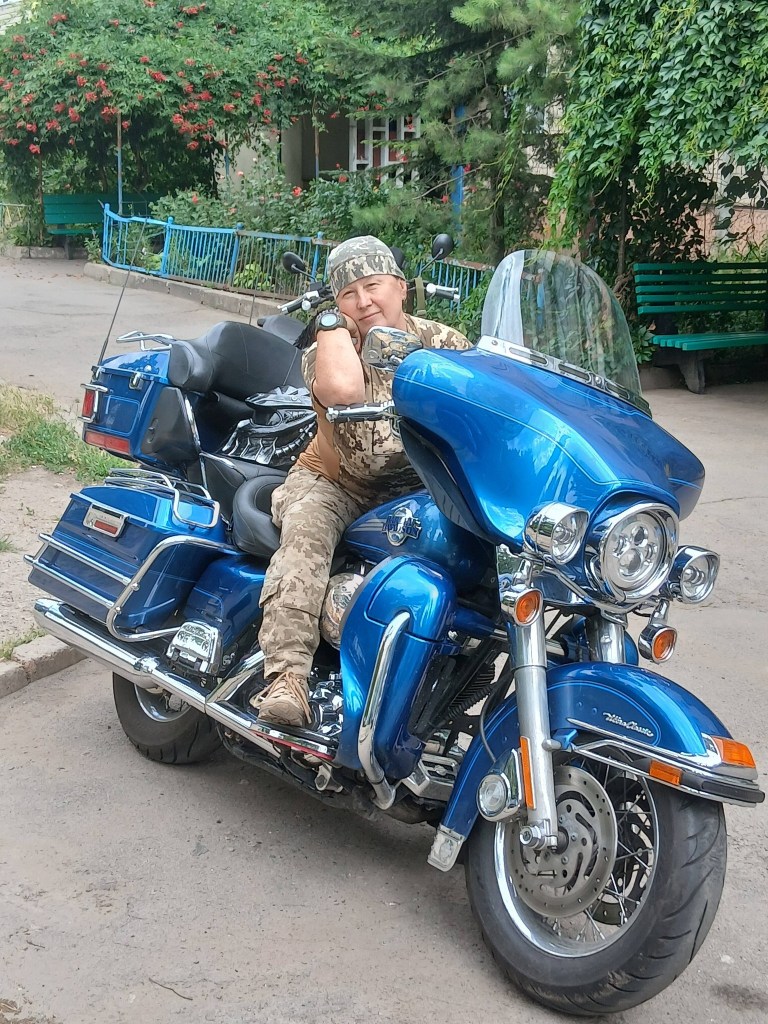
– You know, I ride a motorcycle – now it's called “biker”. And this since youth. Because our town is small, there was no motorcycle club. We were just a small group of friends who were passionate about riding motorcycles. There was an accident that I was involved in and I had “metal osteosynthesis” surgeries, meaning plates and screws were put in, things like that. At first, I was called “Cyborg” as a joke, and that name stuck with me. When I went through basic military training, I stood out for being strong-willed, so this nickname stuck as an official callsign.
“Many people were disappearing and there was no news about them”
– Being a medical professional and being on the front lines for so long, I assume you've seen more things that are etched in your memory forever. What will you never forget?
– We were unable to charge our devices. We had no electricity, so there were big problems from that point of view. And what is called “word-of-mouth radio” worked: someone heard something, told someone else, who passed the information on.
It was very difficult to hear that in one place a family was shot, in another – the same. Many people were disappearing and there was no news about them. It was extremely difficult.
There were also young people, very young boys, who were brutally beaten – and for no reason. When they entered us (the Russian military – no), they already had lists of those who had participated in battles in “ATO” (the territory under Russian occupation – no), with those who had worked in the police, in the force structures. We had lists of hunters, lists of ex-combatants from Afghanistan. They were following these people. And if they couldn't find the men, they terrorized the families. It was very hard to bear.
– How do you live with all these separations from people who may not have been close to you, but who still mark you?
– My service consists of providing medical assistance to a point of stabilization. For a certain period I served at a higher level of health care delivery. The flow of wounded was so great. Of course, there were cases when the boys did not survive. It was very hard, very hard to accept.
When there are so many of them, and everything is layered over your consciousness, it is extremely difficult to bear. Even if you don't know the person, it's just as hard. Every day there is an endless stream of wounded, it is very difficult. And the wounded, and the words they say.
A particularly painful moment was when a boy did not survive, and at that moment the phone rang and “mom” appeared on the screen. No one could answer, because no one knew what to say, how to say it.
These are very difficult times. I am older and relate everything to myself: when young children die, I think about how his mother would have felt. I had to learn to fight with myself, to accept it, to live with it, to be able to continue working.
“None of my military comrades agrees to give up even a piece of territory”
– If you had the opportunity, what could you say to Russian citizens, mothers in Russia?
– This question put me in a bit of trouble. What can you say to a people so influenced by propaganda? The propaganda worked so well that people are convinced that they are defending their homeland. But it is not so. Addressing those mothers who bless their sons and ask them to bring one or the other from Ukraine – I don't know how to address these mothers. I can only wish that God gives them a clear mind.
– How close do you think Ukraine is to the end of this war?
– I don't have enough data and analysis for this, but I know one thing: some of our territories are occupied. None of my military comrades agrees to give up even a piece of territory. Morale cannot be broken. I cannot predict how events will unfold, but I know how determined our boys and girls are. That is why I believe in victory and it cannot be otherwise.