A third of Romanian men hide money from their partner. Women are more honest, a study shows



Young people talking. Photo: Bialasiewicz | Dreamstime.com
A new Valentine's Day study conducted for BCR by Cult Market Research shows how today's young people manage their finances as a couple and what these choices say about trust and the future.
The results show that, beyond romantic gestures, the stability of a modern relationship is also built through clear discussions about money, so that what united us in love is not jeopardized by unspoken expenses or decisions made separately.
See the results of the study here
The money, the first serious attempt as a couple
First vacations together are quickly followed by first bills, first installments, and first joint financial decisions. And here begins the real test of the relationship. The data shows that 36% of young people say that an argument about money has affected their privacy, and 40% have had at least one tense discussion over finances. For today's young people, money is not only a practical matter, but a topic with a direct impact on the emotional balance of the couple.
“Today's young people no longer avoid difficult conversations. They want authentic relationships, and authenticity also means financial transparency. The study shows that money is not an administrative detail in a couple, but a factor that influences trust, intimacy and the stability of the relationship. For us, this is a clear signal that financial education does not start only in school or in the office, but also in personal relationships, where the first decisions are made together,” says Nicoleta Deliu Pașol, Head of Communication & CSR, BCR
Equality in the house, tradition in the city
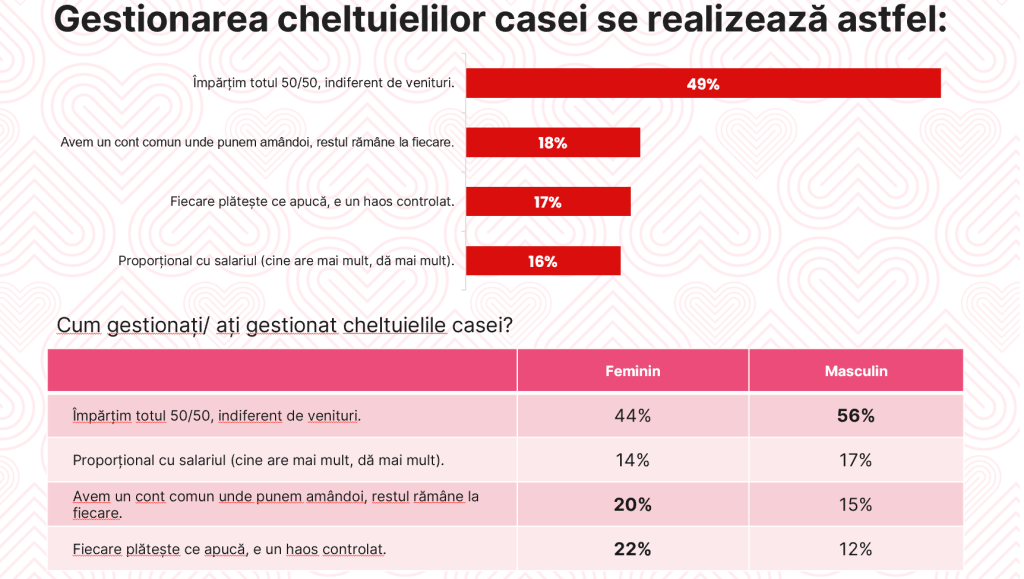
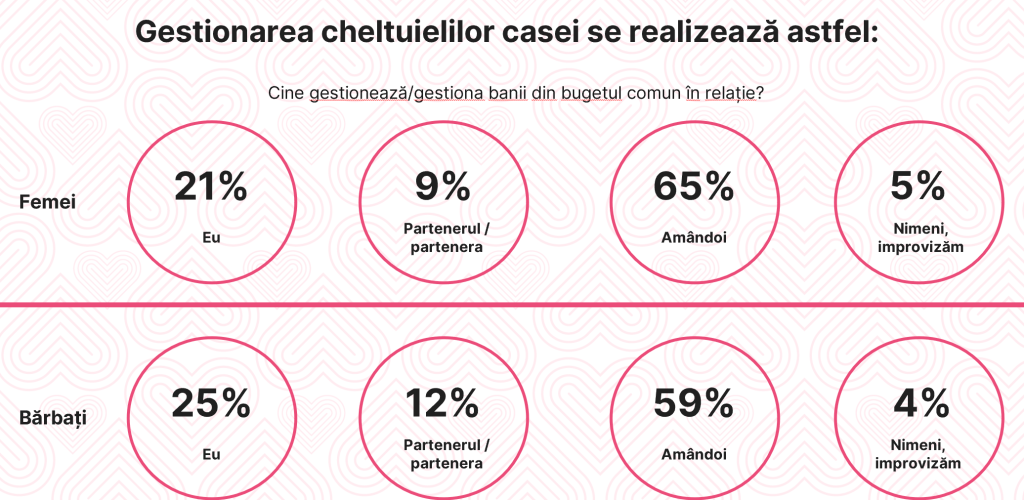
In everyday life, young couples function more balanced than clichés would suggest. Almost half of respondents say they split expenses 50/50 and handle bills and due dates together. Some choose a joint account for household expenses, others share in proportion to income or work in a flexible system, adapted from one month to the next.
In the social space, however, traditional reflexes persist. At a dinner out, 64% of men think they should pay the bill, compared to 44% of women. Between practical equality and the symbolism of gestures, young people still navigate between modernity and tradition.
Autonomy and financial secrets
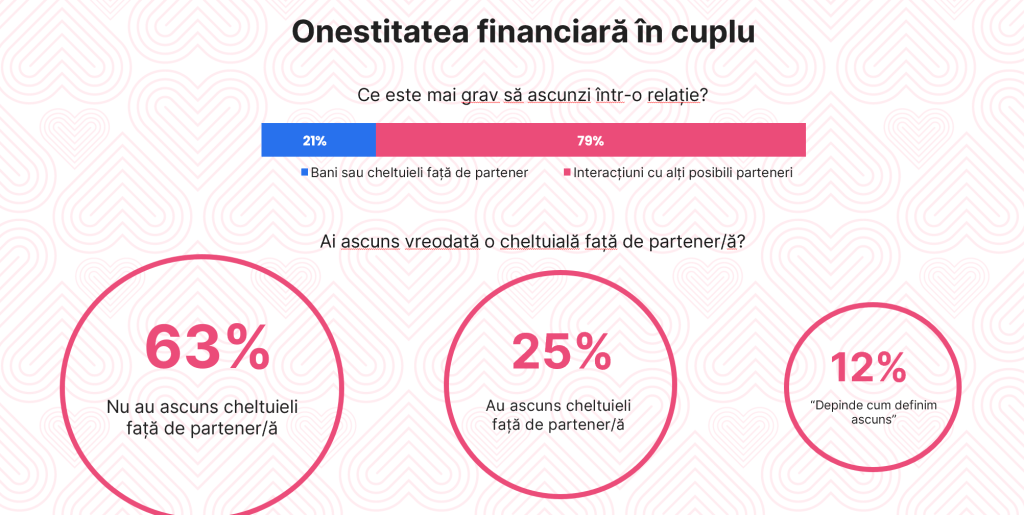
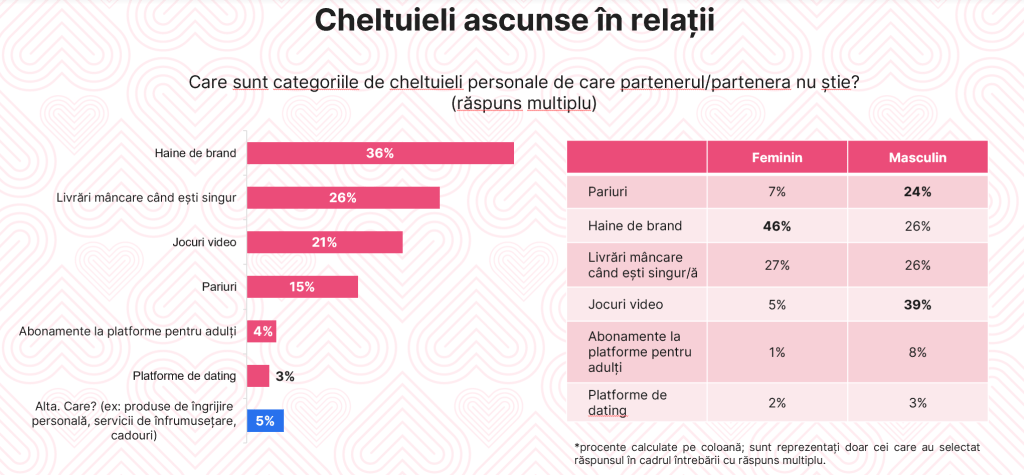
The study shows that financial autonomy does not completely disappear in couples. One in four young people admits to hiding certain expenses from their partner. Most often it is about personal pleasures such as designer clothes, food deliveries, video games or betting. Women tend to hide clothing purchases more often, while men are more likely to hide spending related to gambling or gambling. Additionally, 30% of men say they have money put aside without their partner knowing, compared to 20% of women, with the trend being more pronounced among younger people.
“We notice that today's young people dismantle the myth of waste: after the age of 24, we see an important leap towards pragmatism, where 61% consider financial security essential as a couple, so that the main saving priority becomes a down payment for a house (40%). This attitude reminds us of the study on >, carried out by BCR and Cult Research last year, where it is observed that young people with high autonomy (the “Taylor Swift” segment) build their confidence on achievements concrete and sustainable investments, not on social pressure (coming from both online and offline)”, explains Paul Acatrini, Cult Market Research Director
The common dream: the house
Beyond the differences, there is one major goal that unites them: their own home. For 40% of respondents, saving for a down payment is their top priority. After this common goal, the nuances appear: women more often think of a fund for the child, while men are more oriented towards savings for vacations and experiences.
About the study: the study was carried out by Cult Market Research, commissioned by BCR, through a quantitative sociological survey (online survey) on a sample of 501 young people aged 18-30. Data was collected between February 18–19, 2026.