“Why didn't they capitulate?”. Trump is puzzled by Iran's refusal to budge, his special envoy says


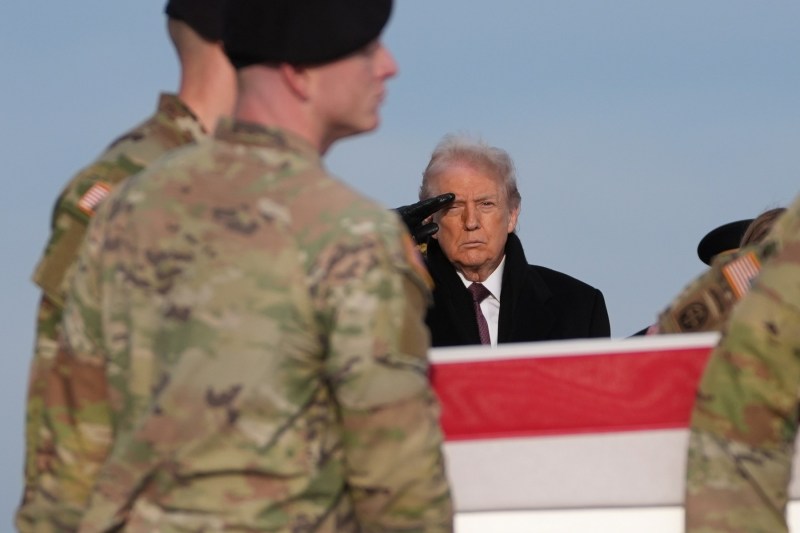
US President Donald Trump. Photo: Evan Vucci / AP / Profimedia
US President Donald Trump is questioning why Iran has not yet “capitulated” and agreed to curb its nuclear program as Washington builds up its military capabilities in the Middle East, the White House leader's special envoy Steve Witkoff said, according to Reuters.
“I don't want to use the word 'frustrated,' because he understands that he has a lot of options available to him, but he's wondering why they haven't done it yet … I don't want to use the word 'surrendered,' but why haven't they surrendered,” Witkoff said in an interview with Fox News on Saturday.
“Why, under that pressure, given the naval force and sea power deployed there, haven't they come to us and said, 'We say we don't want a nuclear weapon, so here's what we're prepared to do'? And yet it's pretty hard to get them to that point,” he said.
Trump has ordered a large increase in US forces in the Middle East and preparations for a possible air strike on Iran, which could last several weeks. Tehran has threatened to strike US bases in the region if attacked.
The United States wants Iran to give up enriched uranium, which Washington says could be used to make a bomb, end support for Middle Eastern militant groups and accept limits on its missile program.
Tehran maintains that its nuclear program is for peaceful purposes, but says it is willing to accept certain limitations in exchange for the lifting of financial sanctions. Iranian authorities, however, reject conditioning an agreement on other issues, such as the missile program or support for armed groups.
“They've enriched the uranium well beyond what's needed for a civilian nuclear program. They've reached 60 percent (fissile purity). They're probably a week away from having industrial-scale, bomb-quality material, and that's extremely dangerous,” Witkoff said.
A senior Iranian official told Reuters on Sunday that Iran and the United States still have different positions on lifting sanctions as part of the negotiations.
Witkoff also said that at Trump's request, he met with Reza Pahlavi, an Iranian opposition figure and the son of the shah ousted in the 1979 Islamic Revolution. He did not provide further details about the meeting.
Pahlavi, who lives in exile, became a symbol for part of Iran's opposition during anti-government protests last month in which thousands are estimated to have been killed, the worst domestic unrest since the revolution.
In early February, Pahlavi said a US military intervention in Iran could save lives and urged Washington not to prolong negotiations with Tehran's religious leaders over a nuclear deal.