What is happening to the tens of billions of dollars that American companies paid for last year's tariffs imposed by Trump? What is known so far


US President Donald Trump is ramping up his trade offensive after the Supreme Court ruled that sweeping emergency tariffs are illegal. Trump announced a short time ago that he was increasing the new global tariffs introduced after yesterday's court decision, increasing them from 10% to 15%.
Along with this escalation, another question remains unanswered: What will happen to the tens of billions of dollars that American companies paid last year in emergency tariffs?
The Trump administration, both officially and informally, has promised to return the collected amounts if the Supreme Court rules against these taxes, CNN notes. However, neither the representatives of the administration nor the judges explained concretely how the reimbursement would be made.
“It's probably going to have to be settled in court for the next two years,” Trump told reporters on Friday. He later added that it would be about “the next five years”.
The US could be forced to repay more than $175 billion
Ahead of Friday's Supreme Court ruling, thousands of companies, including Costco (one of the largest cash-and-carry retailers in the United States), sued the US government, trying to speed up the refund process. However, it is not clear whether this approach will have the desired effect, CNN wrote.
Ultimately, companies seeking refunds will have to turn to lower courts, particularly the Court of International Trade, for clarification, CNN writes.
A Penn-Wharton Budget Model analysis, commissioned by Reuters, estimates the US could be forced to repay more than $175 billion to importers. Several companies already have open lawsuits to recover the amounts, and the Supreme Court's decision does not clarify whether the state can keep the money collected so far.
Trump, who harshly criticized the six-judge majority that ruled against the tariffs imposed through the International Emergency Economic Powers Act (IEEPA), was asked by reporters at the White House what will happen to the $175 billion collected so far in taxes imposed on other countries by the law.
In response, he argued that the Supreme Court justices had not addressed this issue in Friday's ruling and suggested that the situation would have to be clarified in court.
“It takes them months and months to come up with an opinion and they don't even discuss this aspect. We took hundreds of billions of dollars, not millions, hundreds of billions of dollars (…) It wasn't discussed. You don't think they would have put a phrase there to say 'keep the money' or 'don't keep the money', right? I assume there has to be a trial in the next two years (…). Your question is very simple, it was the first question I asked,” answered Trump.
What happens to ordinary Americans who have endured price hikes
Critics of the Trump administration argue that ordinary Americans have borne additional costs because of the tariffs and should in turn receive a refund given the impact on shelf prices. However, such a scenario is unlikely, even indirectly.
Tariffs are paid by importers, who usually pass the cost on to retailers, who can then factor it into the final prices paid by customers. Therefore, it is companies that could receive any refunds, not individual consumers.
“It's very unlikely that firms will start cutting prices as a result of these refunds,” Stephanie Roth, chief economist at Wolfe Research, told CNN. “Walmart isn't going to send you a check for the 15% fee on the pair of sneakers you bought four months ago.”
Trump's latest tariff announcementor global
In a press conference Friday after the US Supreme Court's ruling, Donald Trump said he has other tools at his disposal besides the IEEPA for tariff policies. He announced a global tariff of 10% under Section 122 of the Trade Act of 1975.
“The court said I can't charge a single dollar from any country under the IEEPA (…), I suppose to protect other countries. This must have been done to protect those other countries, certainly not the United States of America, which they should be interested in defending. But I'm allowed to stop any trade or business with the same country. In other words, I can destroy trade, I can destroy country, I can embargo, I can do whatever I want, but I can't charge a dollar,” he said. Trump said ironically.
On Saturday, however, the American president announced that he would increase to 15% the global tariff that he had announced after Friday's decision of the Supreme Court.
“As President of the United States of America, I will raise, effective immediately, the 10% worldwide tariff on countries, including many that have 'robbed' the US for decades, to the fully permissible and legally tested level of 15,” Trump announced in a social media post
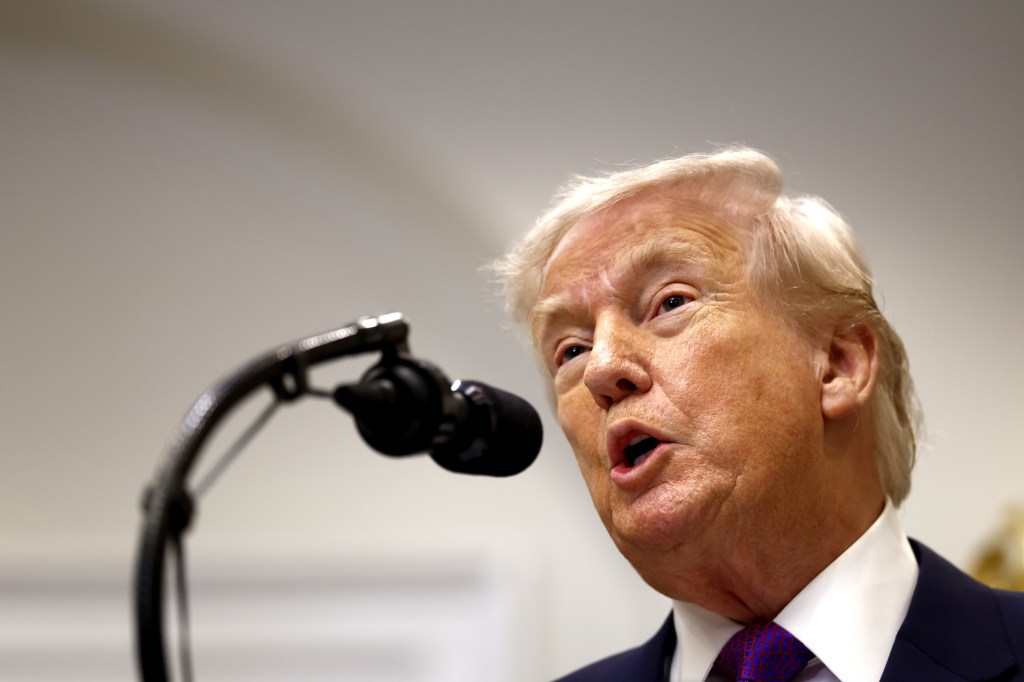 Trump Changed His Mind: New 10% Global Tariff Raised After Just One Day
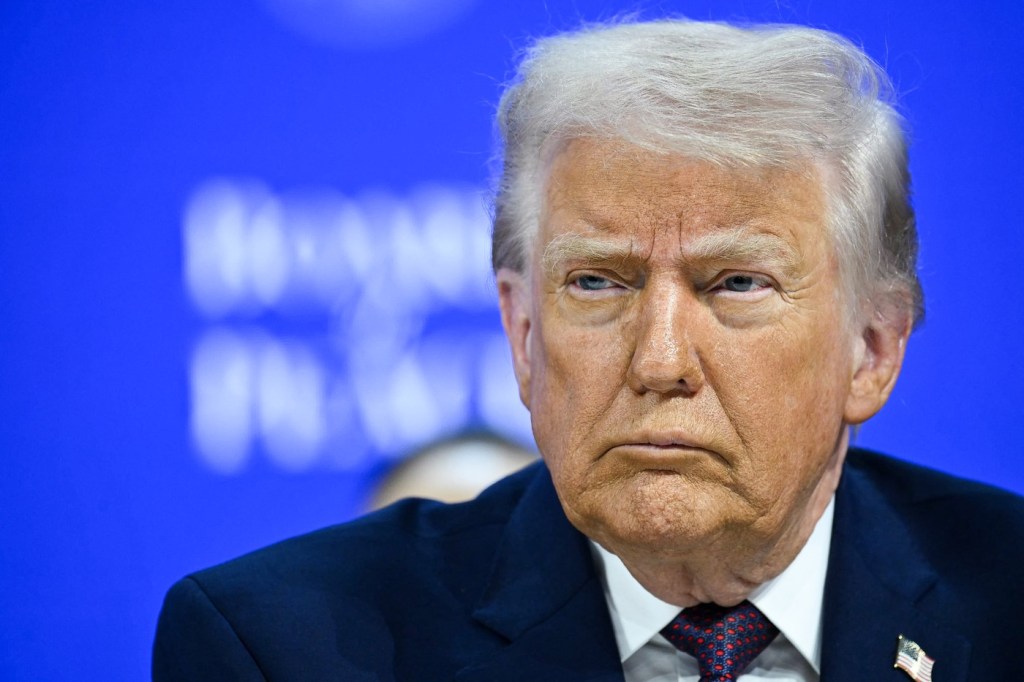 VIDEO Trump, harsh reaction after the US Supreme Court canceled his trade tariffs: “A court influenced by foreign interests” / Trump announces a new global tariff
Section 122 had not been used before, so there is no court interpretation of the text yet, according to The Guardian.
This leverage comes with two clear constraints: Tariff measures taken by the president are capped at a maximum of 15% and can be maintained for no more than 150 days.
The White House said Mexico and Canada would be exempt from the new temporary tax. Certain foods, such as beef and tomatoes, as well as essential minerals are also exempt.
Europe's reaction: “The biggest poison is uncertainty”
German Chancellor Friedrich Merz said on Saturday he expected the burden on German companies to ease after the US Supreme Court overturned much of President Donald Trump's trade tariffs, but warned of “poison” from lingering uncertainty, according to Reuters.
In statements to several German stations, Merz said he would closely coordinate a joint position with other European Union member states before his visit to the United States and would emphasize that the tariffs also affect the American economy.
“The biggest poison for the economies of Europe and the United States is this permanent uncertainty about tariffs. And this uncertainty must stop,” Merz told RTL.