Ukraine sanctions Lukashenko after years of hesitation: harsh signal for Belarus and Russia


Ukraine's decision to officially sanction the leader of Minsk, Alexander Lukashenko, triggered harsh reactions in the Belarusian media and propaganda. The measure, adopted for a period of 10 years, comes after years of restraint on the part of Kiev and sends a clear signal both to international partners and to history.
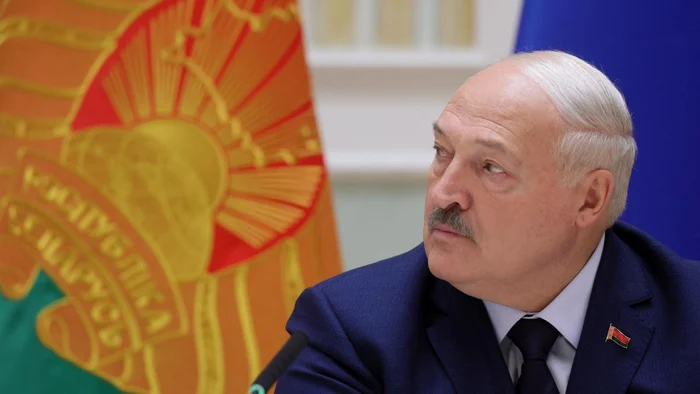
Ukraine sanctions Lukashenko after years of hesitation PHOTO: Archive
According to the Ukrainian publication European Pravda, the aggressive reaction of Belarusian propaganda and attacks on Ukraine and President Volodymyr Zelensky were provoked by the sanctions recently imposed by Kiev against Alexander Lukashenko. These sanctions are valid for ten years and include freezing of assets and capital, complete stoppage of commercial and economic operations, suspension of transit, financial obligations and cancellation of permits.
In parallel, indefinite sanctions were also introduced, which provide for the withdrawal of Ukrainian state awards granted to Lukashenko, with clear legal effects on the territory of Ukraine.
Ukrainian journalists point out that Ukraine has avoided this step for a long time, even after the 2020 elections considered rigged and serious human rights violations. Although Lukashenko was then sanctioned by the European Union, the United States and the United Kingdom, Kiev preferred to leave open a space for diplomatic maneuvering.
From indirect support to direct participation
Sanctions were not introduced even in 2022, when Belarusian support for the full-scale invasion of Russia had become apparent. Even Japan then sanctioned the Minsk regime, but Ukraine postponed the decision.
The situation changed radically in the second half of 2025. European Pravda reports that Lukashenko proved “weak, because he obeys Putinnot his people”and its actions are dictated by the Russian Federation and Vladimir Putin.
The installation of relay stations on the territory of Belarus, which allowed the real-time coordination of drone attacks on northern Ukraine, as well as the deployment of the Oreshnik missile system, can no longer be considered “indirect support”. “It is about direct participation in the armed conflict”Ukrainian journalists note.
International law leaves no room for interpretation
According to Article 3 of a United Nations General Assembly resolution, a state that allows its territory to be used for an act of aggression against another state is itself committing an act of aggression. “In the case of Belarus, this is exactly what is happening“, emphasizes the quoted source.
Repeaters installed at the border are not simple communications equipment, but extensions of Russia's attack capabilities. They increase the accuracy and range of strikes, complicate the operation of Ukrainian electronic warfare systems and increase the risks to civilian infrastructure. In this context, the territory of Belarus has practically become a component of the Russian military machine, with an impact on the security of the whole of Europe.
Belarus, key link in circumventing sanctions
Minsk's role is not limited to military support. Belarus is systematically used as a hub for circumventing international sanctions. Belarusian companies are integrated into the Russian military-industrial complex, and components manufactured in Belarus end up in the missiles used by Russia. Logistical and financial flows also transit this jurisdiction, helping to sustain the war.
A special dimension is the promotion, in 2022, of the filtering camps for Ukrainians and the involvement in the kidnapping of Ukrainian children. “All these actions left Ukraine with no other option,” writes European Pravda. Thus, in 2026, Kiev switched to “a gradual but firm correction” of the policy towards the Belarusian authorities.
Change of perception in Europe as well
The attitude towards Lukashenko is also changing at the European level. On December 15, 2025, the European Union introduced a new criterion for sanctioning individuals and companies that contribute to actions by Belarus that undermine the security and stability of the EU.
The decision was motivated by repeated incidents with weather probes, which posed risks to critical infrastructure, including Vilnius airport. “Even within the EU it is increasingly recognized that the problem is not a local one”notes the source.
In this context, the European Union is preparing to intensify the pressure on Minsk, and Ukraine expects a closer alignment of the sanctions regimes applied to Belarus and the Russian Federation.