Trump hit, but not sunk. He has four clever moves to use. The White House is preparing a counterattack [ANALIZA]

Meanwhile, Trump immediately made it clear that he did not intend to abandon the tariff policy, the basic assumptions of which he shaped in the 1980s. The first step in the new phase of confrontation was the introduction of a global 10% tariff under the Trade Act of 1974.
On February 20, the U.S. Supreme Court voted 6 to 3 to declare Trump's tariffs under the Emergency Economic Powers Act of 1977 (IEEPA) illegal.
The justification stated that the president had no right – without the consent of Congress – to independently change the rules of global trade under the pretext of protecting national security or fighting drug trafficking.
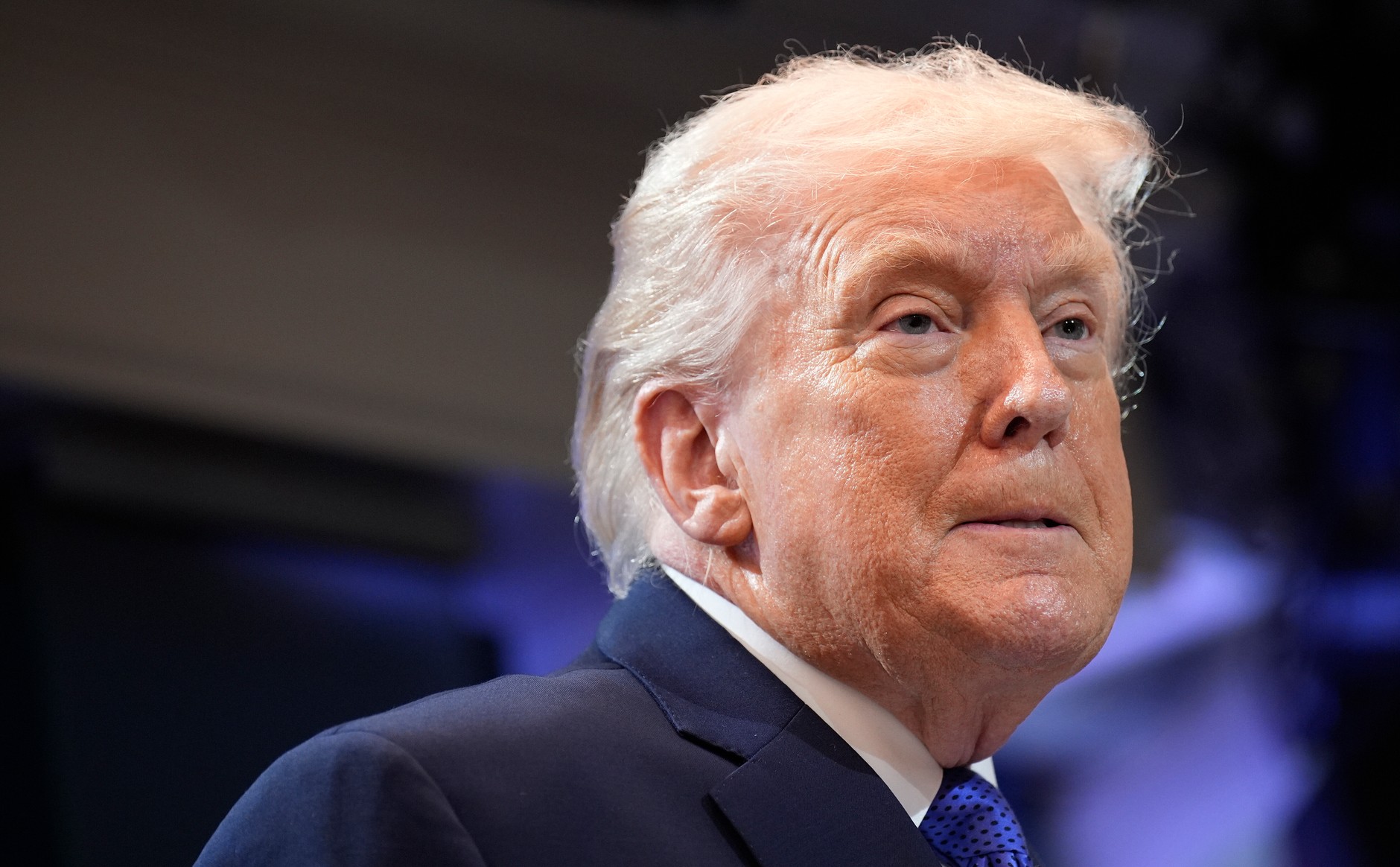
United States President Donald Trump speaks on repealing most of his tariffs during a press conference in the White House conference room in Washington, U.S., February 20, 2026.PAP/EPA/Yuri Gripas / POOL / PAP
So far, American presidents have used this act mainly to impose point sanctions, freeze the assets of terrorists or punish hostile countries. The document does mention the possibility of “regulating imports”, but… it does not contain a single word about customs duties.
On April 2, 2025, Trump declared a national emergency, arguing that the U.S. trade deficit posed an “extraordinary threat to national security.” On the same day, he imposed tariffs on imports from 185 countries and territories.
The rates were as follows:
- Ukraine – 10 percent
- China – 34 percent
- European Union – 20 percent
- India – 26 percent
- Great Britain – 10 percent
The highest tariffs covered:
- Cambodia – 49 percent
- Vietnam – 46 percent
- Sri Lanka – 44 percent
Russia, Cuba, Belarus and North Korea were not affected by the new tariffs.
Today is Deliverance Day – a declaration of American economic independence
Trump announced then.
Tanker in the Arabian Sea off the coast of Mumbai, India (stock photo)SEBASTIEN BERGER / AFP / AFP
However, the legal basis for these actions was questionable from the beginning – and quickly became the subject of numerous lawsuits. They were submitted by both democratic states and thousands of importers – from companies selling sanitary fittings to manufacturers of sports equipment.
The case heard on February 20 was called “Learning Resources, Inc. v. President Trump.” The company mainly produces educational toys in China, which it then imports to the USA.
Split among Republicans
However, there was a clear split in the Republican Party. Close Trump allies such as Senator Bernie Moreno called the court's decision “outrageous” and accused it of weakening the fight against unfair trade. In turn, Republican senator John Curtis assessed the verdict as proof that the American system of balance of powers – despite political storms – still works after almost 250 years. Former Vice President Mike Pence also supported the decision.
He particularly sharply criticized Justices Neil Gorsuch and Amy Coney Barrett — whom he had previously nominated.
What cards does Trump have left?
The president has a few more ways to maintain his tariff policy.
Alternative #1 – a new global tariff
The White House has long been preparing for such a scenario.
The problem is that this recipe has never been used beforewhich almost guarantees further court battles.
Additionally, the decision is valid for a maximum of 150 days – a subsequent extension requires congressional approval, which may be politically difficult before the elections.
Alternative #2 – Commercial Investigations
Trump also announced the launch of procedures under Article 301 of the same trade law. It allows you to respond to unfair trade practices of other countries.
Since 1974, over 130 such proceedings have been initiated. In recent years, their number has increased significantly.
In 2025, the US conducted three investigations into China, including:
- regarding Beijing's dominance in maritime logistics,
- semiconductor policy (considered a threat),
- implementation of the 2020 trade agreement
Brazil, Nicaragua, seafood producing countries and countries introducing a digital services tax also came under the microscope.
Alternative No. 3 – National Security
Another tool is Section 232 of the Trade Expansion Act of 1962. It allows imports to be restricted if they threaten national security.
Trump has used this legal basis before:
- in 2018 – customs duties 25%. for steel and 10 percent on aluminum,
- in 2025 – increasing rates by up to 50%. for steel, aluminum and related products,
- 25 percent tariffs on cars and car parts.
After negotiations, the rates for the EU, Japan and South Korea were reduced to 15%, and for the UK – to 10%. In 2025, 50% customs duties on copper and fees on trucks and buses were also introduced.
Current investigations include pharmaceuticals, critical raw materials, drones and wind energy technology.
Problem? Such decisions require long administrative proceedings.
Alternative #4 – Depression-era recipe
Lawyers point out one more possibility: Article 338 of the Customs Act of 1930. It allows for imposition punitive tariffs up to 50 percent against countries that discriminate against American trade.
It has never been used before — which would almost certainly mean years of litigation.
Trade law expert Peter Harrell sums up: other tools exist, but they are slower, more bureaucratic and less flexible than the mechanism Trump has used so far.
One thing is certain — the Supreme Court's decision does not end Trump's trade war. It only opens a new stage.
Will importers get their money back?
After the verdict was announced, a key question arose: will importers recover the funds paid under the invalidated customs duties?
According to researchers from the University of Pennsylvania, over $175 billion is eligible for reimbursement. (approx. PLN 700 billion). The money was withdrawn from over 300,000. importers under 34 million customs declarations. Thousands of companies – from small businesses to giants such as Costco and Goodyear – began filing lawsuits even before the verdict was announced.
However, Trump immediately announced that administration does not intend to return the money.
Justice Brett Kavanaugh warned that the refund process would risk total bureaucratic chaos. A solution under consideration is to count the duties paid as credits against future import fees.
Democrats sided with consumers. Senator Elizabeth Warren has argued that since ordinary Americans actually paid for the trade war, they should be compensated — although there is currently no legal basis for doing so.
Who really paid for the tariffs?
Despite Trump's repeated declarations that the costs are borne by foreign exporters, research shows otherwise.
From 86 percent up to 96 percent the costs of the tariffs were paid by American companies and consumers.
Importers settled fees at the border and then passed them on to prices in stores. Moreover, not only imported goods have become more expensive, but also their American counterparts.
According to the Tax Foundation, in 2025, Trump's tariff policy increased the tax burden on the average household by approximately $1,000. per year (approx. PLN 4,000).
After some tariffs were canceled, spending was expected to drop, but the cost of living was still expected to increase by approximately $400. per year (approx. PLN 1,600) per household – even before taking into account the new tariffs introduced on February 20 and those that may appear in the coming weeks.