Western highways enter the age of speed. Over 300 kilometers of railways built for high-speed trains

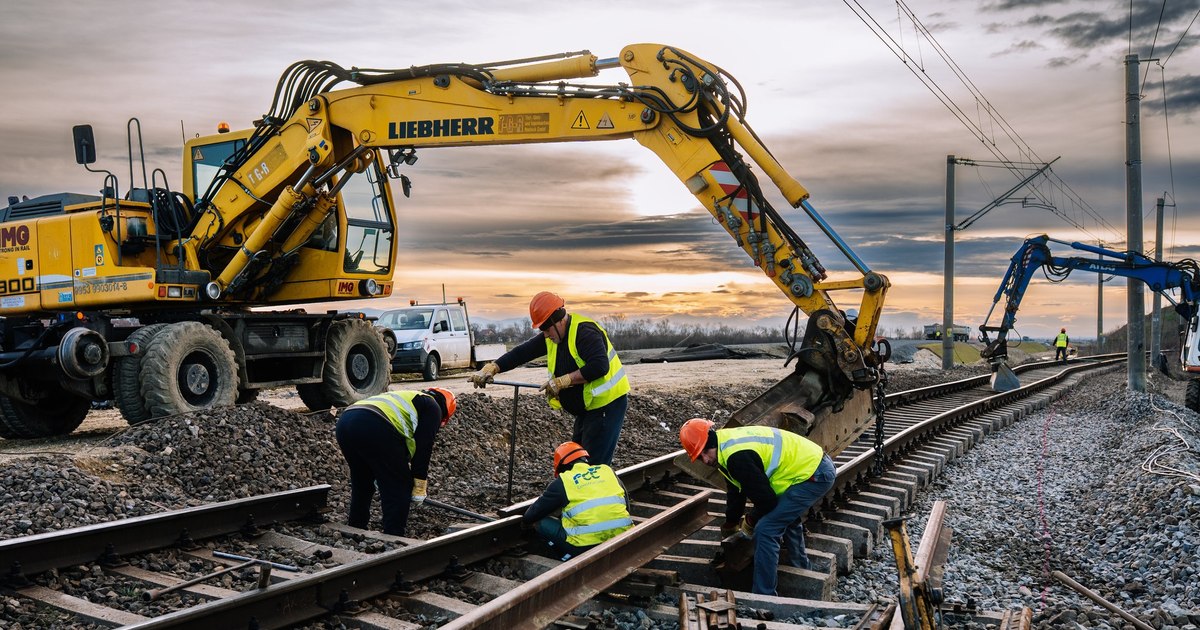
The historical region of Banat is entering a new era of railway transport. Two railways totaling over 300 kilometers, connecting the main cities in western Romania, are under construction, with deadlines for completion in the years 2026-2027.
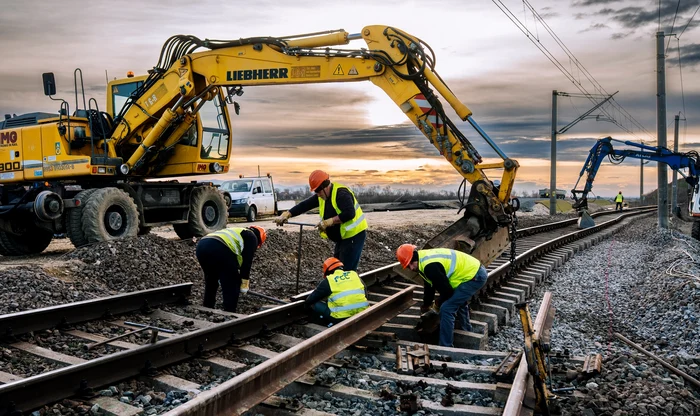
Works on the Lugoj – Timișoara railway. Photo CFR Infrastructure Timișoara. Facebook
Over a century and a half after the construction of the first railways in western Romania, the railway infrastructure of the region is entering a new stage.
The age of speed in rail transport
The main lines are being modernized with European funds so that trains can run at speeds of up to 160 kilometers per hour. Two highways totaling over 300 kilometers are under construction, with estimated completion dates in 2026–2027.
According to the latest report on the state of works on the Caransebeș – Lugoj – Timișoara – Arad and Arad (km 614) – Simeria railways, almost three quarters of their routes should be completed this year. However, in recent years, especially in the case of the Arad – Simeria railway, the deadlines have been frequently extended due to the delays accumulated by the builders.
Built a century and a half ago, the Caransebeș – Lugoj – Timișoara – Arad railway, 162 kilometers long, connects the main cities of the historical region of the Romanian Banat. Its first section, Timișoara – Arad, was inaugurated in 1871, and the Caransebeș – Timișoara line, in 1876.
In 2022, the highway entered the construction site, through a project estimated at almost nine billion lei, financed with European funds, through the National Recovery and Resilience Plan. After the completion of work on its four segments, passenger trains will be able to run at speeds of up to 160 km/h, and freight trains at up to 120 km/h.
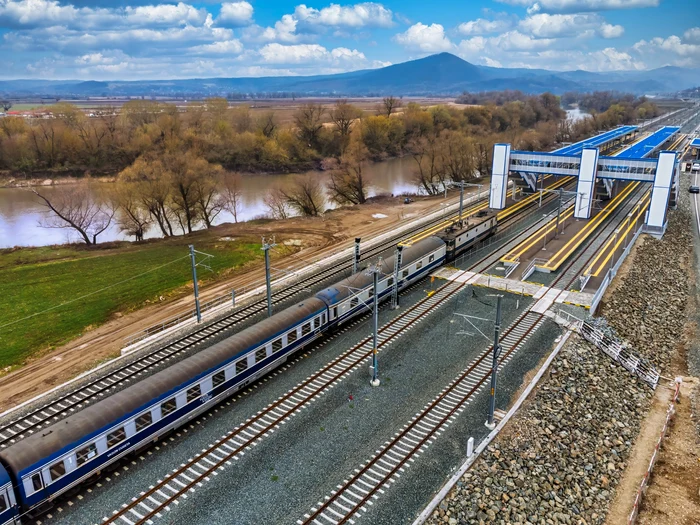
CF Lugoj – Timisoara. Source: CFR Infrastructure
In April 2025, at CFR Lugoj station, traffic was opened on the first modernized railway segment on the Lugoj – Timișoara section, part of this line. If the CFR's estimated timelines are met, 122 kilometers should be completed in 2026, and 40 kilometers the following year.
The stage of the works on the Banat highway
Lot 1 Caransebeș – Lugoj, 40 kilometers long, is made by the association Rail Works, leader of SC Alstom Transport SA. The contract was signed on January 15, 2024, and the estimated completion date is July 2027. The value of the investment amounts to 1,344 million lei. The physical stage of the works is 7.26 percent, according to the report published by CFR.
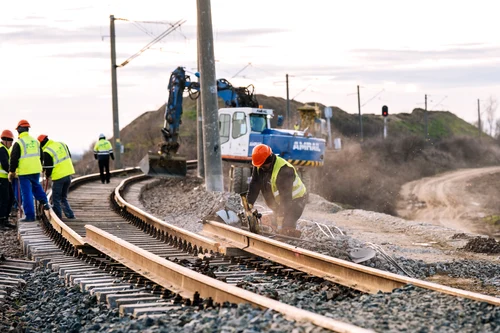
Image 1/8:
CF Caransebeș Lugoj Timișoara Arad Photo CFR Infrastructure Timișoara jpg
Lot 2, between Lugoj and East Timișoara, has a length of 54 kilometers and is being built by FCC Construcción SA. The contract was signed on December 28, 2022, with an estimated deadline for the completion of the first stage in August 2026. The value of the investment is 1,916 million lei. Physical progress has reached 60 percent, according to CFR.
Lot 3 Timișoara Est – Ronat Triaj, with a length of 14 kilometers, is carried out by the association WEBUILD SpA – Partecipazioni Italia SpA – SALCEF SpA The contract was signed on December 5, 2022, and the estimated completion date is June 2026. The value of the works is 1,440 million lei, and the physical stage has reached 18 percent.
Lot 4 Ronaț Triaj – Arad, 55 kilometers long, is carried out by the association WEBUILD SpA – Partecipazioni Italia SpA – SALCEF SpA The contract was signed on December 16, 2022, with an estimated completion date of June 2026. The investment value is 2,184 million lei, and the physical progress of the works is 27 percent.
The Simeria – Arad railway, expected in 2026 – 2027
The Arad-Simeria-Alba Iulia railway was formerly called the “First Transylvanian Railway”, after the company that started its construction in the middle of the 19th century. The Mureș Valley highway was inaugurated in 1868, but the modernization works of the Arad – Simeria line, 141 kilometers long, will turn it into one of the fastest and safest railway routes in Romania. The total investment, financed by the Romanian state and the European Union, exceeds two billion euros.
In 2017, work began on the four sections of the railway connecting the counties of Hunedoara and Arad. The project aims to modernize the infrastructure and reconfigure the route, so that the speed of the trains can increase up to 160 kilometers per hour. The length and radius of the curves were increased, some curves were eliminated, the stability of the embankments was increased, and the level of the railway line in flood zones was raised.
The plans included the construction of 60 kilometers of completely new route between Simeria and Arad, the construction of tunnels and the construction of nine bridges over Mureș, compared to the existing one on the old route, at Brănișca.
Also, nine railway stations will be modernized. Work on the Simeria Train Station, built in the 1900s, has come to an end. Instead, the passenger building of the CFR Deva station was demolished without the necessary authorizations, and the work on the new station has not started, the chances of completion by 2027 being extremely low.
Almost a decade after work began, none of the four lots is fully completed. In 2025, the construction site registered two firsts. According to the estimates published by the CFR, approximately 119 kilometers are due for completion in 2026, and 22 kilometers in 2027.
The stage of the works on the highway from Valea Mureșului
Sub-section 2a, with a length of 42 kilometers, is made by the Webuild – FCC – Salcef – Hitachi Rail Association (lot 2a). The contract was signed on July 27, 2017, with an estimated completion date of March 2026. The value of the investment is 2,065 million lei, and physical progress has reached 97 percent. Receptions for most of the works were carried out on this section.
Subsection 2b Bârzava – Ilteu, 36.04 kilometers long, is executed by the same association (lot 2b). The contract was signed on July 27, 2017, and the estimated completion date is April 2026. The value of the works is 2,295.12 million lei, and physical progress has reached 96 percent. In 2025, several parts of the project were received, including the 16-kilometer segment between Bârzava and Vărădia (Arad county), which includes the Bata Tunnel (603 meters).

Batuta Tunnel. Photo: Pro Infrastructure Association
Sub-section 2c, between Ilteu and Gurasada, has a length of 22 kilometers and is made by the RailWorks Association. The contract was signed on December 4, 2017, with an estimated completion date of July 2027. The value of the investment is 1,909 million lei, and the physical stage is 81 percent. On some segments, such as Gurasada – Câmpuri Surduc, the works have been received, but the completion is delayed on a difficult sector on the left bank of Mureș, which foresees the construction of 1.2 kilometers of tunnels.
Section 3, between Gurasada and Simeria, is 41 kilometers long and is executed by the FCC Construcción SA – Webuild SpA – Contratas y Ventas SA association. The contract was signed on October 3, 2017, and the estimated completion date is August 2026. The investment value is 3,445.60 million lei, and the physical progress of the works is 88 percent. Since November 2025, traffic has been opened on wire I of a six-kilometer section built from scratch on a completely new route, which includes three bridges over the Mureș River, with a total length of 1.3 kilometers.
The oldest railways in Romania
The first railways on the territory of Romania were built in the middle of the 19th century, in the historical region of Banat. The oldest of them, Oravița – Răcășdia – Iam (27 kilometers), was inaugurated in 1856, being used especially for the transport of exceptional quality coal (anthracite), extracted from the Anina Mine (Caraș-Severin), to the Danube port of Baziaș.
In the following years, the railway network in the west and south-west of Romania was expanded, starting from Timișoara, with the construction of the railways Seghedin – Jimbolia – Timișoara (114 kilometers) and Timișoara – Stamora Moravița – Jasenova (94 kilometres), completed in 1858. In the following two decades, Timișoara became the central node of the railway network in the region, being connected with the cities of Seghedin, Arad, Oravița, Baziaș, Lugoj, Caransebeș and Orșova, and through them Budapest, Vienna and Belgrade.
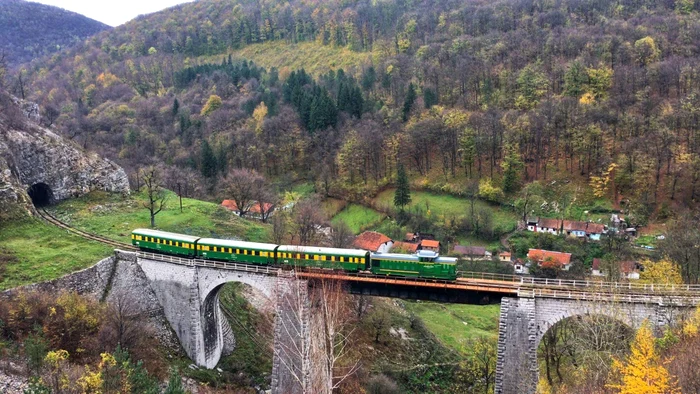
Oravița – Anina railway. Source: CFR Călători
The first railway connecting the historical regions of Banat and Transylvania was inaugurated on Christmas Day in 1868. Then, the first train from Arad arrived in Alba Iulia, crossing the Mureș Valley on a route of 211 kilometers. The railway connection between Banat and Romania was established in 1879, through the line Timișoara – Lugoj – Caransebeș – Orșova – Vârciorova (Iron Gates), connected to the Bucharest – Vârciorova highway.
The oldest mountain railway, still functional, on the current territory of Romania was built in the middle of the 19th century, in the Banat Mountains, to connect the mining towns of Oravița and Anina. It was opened to traffic around 1863, on a route of 33 kilometers, of which more than 20 kilometers involved breaking through hills, the construction of 10 viaducts with a total length of 843 meters and 14 tunnels, totaling 2,084 meters.
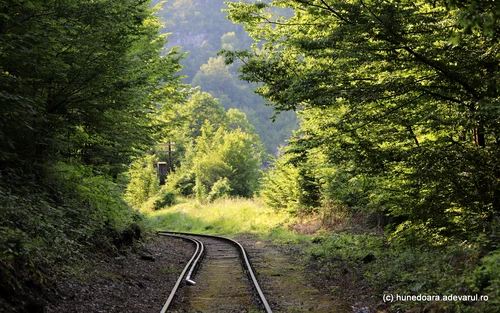
Image 1/27:
The city of Anina Photo Daniel Guță THE TRUTH (85) JPG
By the end of the 19th century, the railway network in the west of the country was over 1,000 kilometers long and continued to expand, becoming, before the First World War, one of the densest in Europe.
“There were no towns in Banat located more than 10 kilometers from a railway line. The railway network was denser in the west of Banat”, informed the historian Dumitru P. Ionescu, in the work “Construcția căilor ferate din Banat” (1988).