Augustin Zegrean explains what solutions the magistrates still have after the CCR decision: “There's no joy”

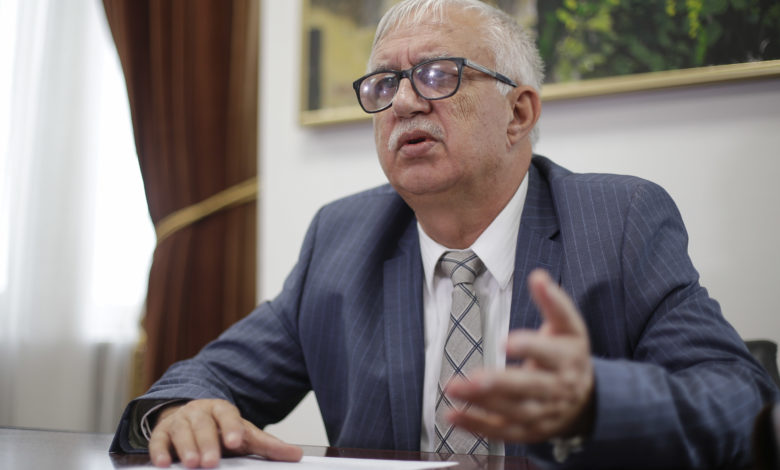
Augustin Zegrean. Photo: Inquam Photos / Octav Ganea
The former president of CCR Augustin Zegrean believes that the decision of the Constitutional Court regarding the pensions of magistrates cannot be considered a victory for society, saying that magistrates can sue the state.
After three months and five adjournments, the judges of the Constitutional Court decided on Wednesday, February 18, that the law increasing the retirement age of magistrates and reducing the amount of service pension is constitutional. Now, the project proposed by the Bolojan Government will go to the president for promulgation.
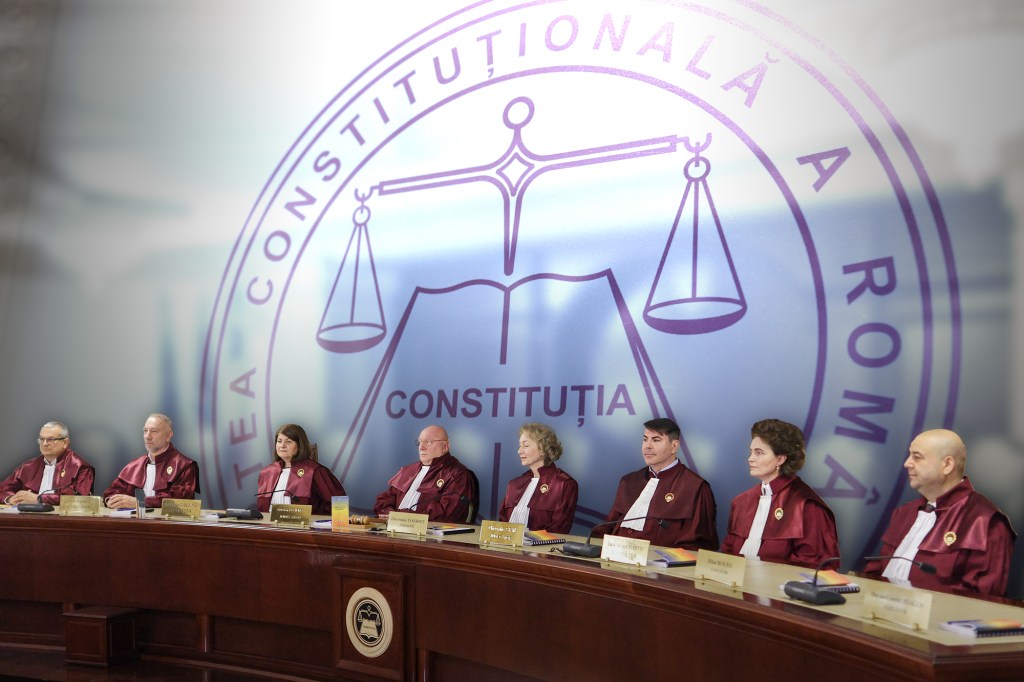 The law on magistrates' pensions passed the Constitutional Court. It goes to promulgation. How the vote was divided and how the CCR motivates its decision / Tough messages from the ICCJ and the CSM. All reactions
Augustin Zegrean, former president of the CCR, said on Wednesday evening, in an intervention at Euronews, that the magistrates still have solutions:
“One scenario could be that the magistrates who are in office today and who in a month, two, three, could retire – and will no longer be able to retire, because the law has been changed – will sue the Romanian state and, with that file, try to reach the Court of Justice of the European Union. And they will be able to reach it,” Zegrean said.
“I have been through such moments before, when the judges sued the Ministry of Justice and they increased their salaries. It has been a long time since then, but the world has not forgotten. I have been through this situation before, and when the teachers' salaries were increased by law and the Government did not want to pay them, the teachers and the Government were tried for about ten years and, in the end, they also received the money and a lot of compensation, much more than they would have received if they had been given the money that was established by law”, the former constitutional judge also explained to Euronews.
“Talks are not over yet”
The former president of the CCR also said that “there is no joy that the CCR gave this decision”.
“The talks are not over. They've been talking about this for 16 years and there will be about 16 more until they reach the retirement age under current law,” added Zegrean.
Augustin Zegrean explained what results the referral to the Court of Justice of the European Union can produce.
“How will it work? It will start one, two, ten, and one will reach the CJEU. The rule is that, if it is reached, the case is suspended in the country until the answer comes from there. And if Romania continues to disobey the decision that the CJEU will give, others will also follow. In this interval (no: interval in which the CJEU's answer is expected) the law in force at the time is applied,” Zegrean added.
“CCR judges have no reason to fear politicians”
Zegrean also stated that if the CJEU is referred, the procedure can take “years”, a period during which the law cannot enter into force.
“During this interval (no: interval in which the CJEU's answer is expected) the law in force at the time applies,” said Zegrean.
“CCR judges have no reason to be afraid of politicians, because they cannot appoint them a second time. They have no reason to be grateful. They say in the world of constitutionalists that obligation is greater than obedience. So they have no reason to believe that if they do not give a solution to their liking, something will happen to them,” Zegrean said.
“Most of them, when they leave there, cannot be appointed anywhere. And then why should they be afraid or why should they work with the fear of the politician? If they did it for political reasons, it is very serious. If not, we will see what history will say”, he concluded.
What will change to magistrates' pensions after the law comes into force
The judges of the Constitutional Court on Wednesday rejected the referral of the High Court of Cassation and Justice (ÎCCJ) on the amendment of the law reforming the pensions of magistrates. The Court's judges therefore ruled that the law was constitutional.
According to the new law, the pension will be equal to 70% of the last net salary. Currently, the service pension of magistrates represents 80% of the last gross salary.
The amount of the service pension will be 55% of the calculation base, represented by the average of the gross allowances of the last 60 months, but not more than 70% of the last net allowance received in the activity.
Magistrates will still be able to retire early, provided they have 35 years of service, but if they have not reached the age of 65, an annual penalty of “2% until they reach the standard retirement age in the public system” will be applied.
 What does judge Lia Savonea say she will do after the CCR rejected the ICCJ appeal on magistrates' pensions: “Firm reactions. It is not negotiable”