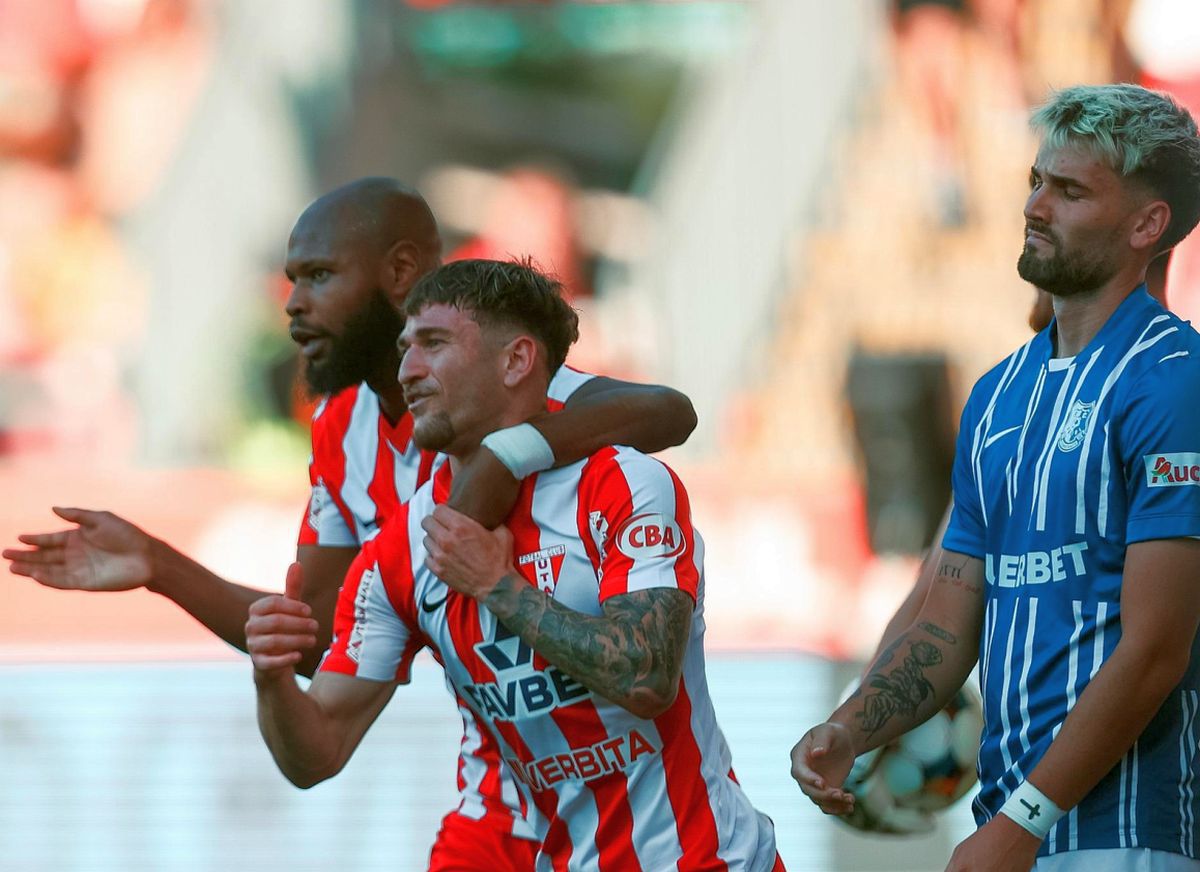
REPORT The only stadium in Romania where Juventus kneeled » Hunted by the real estate market, GSP found it abandoned, but secured to the maximum

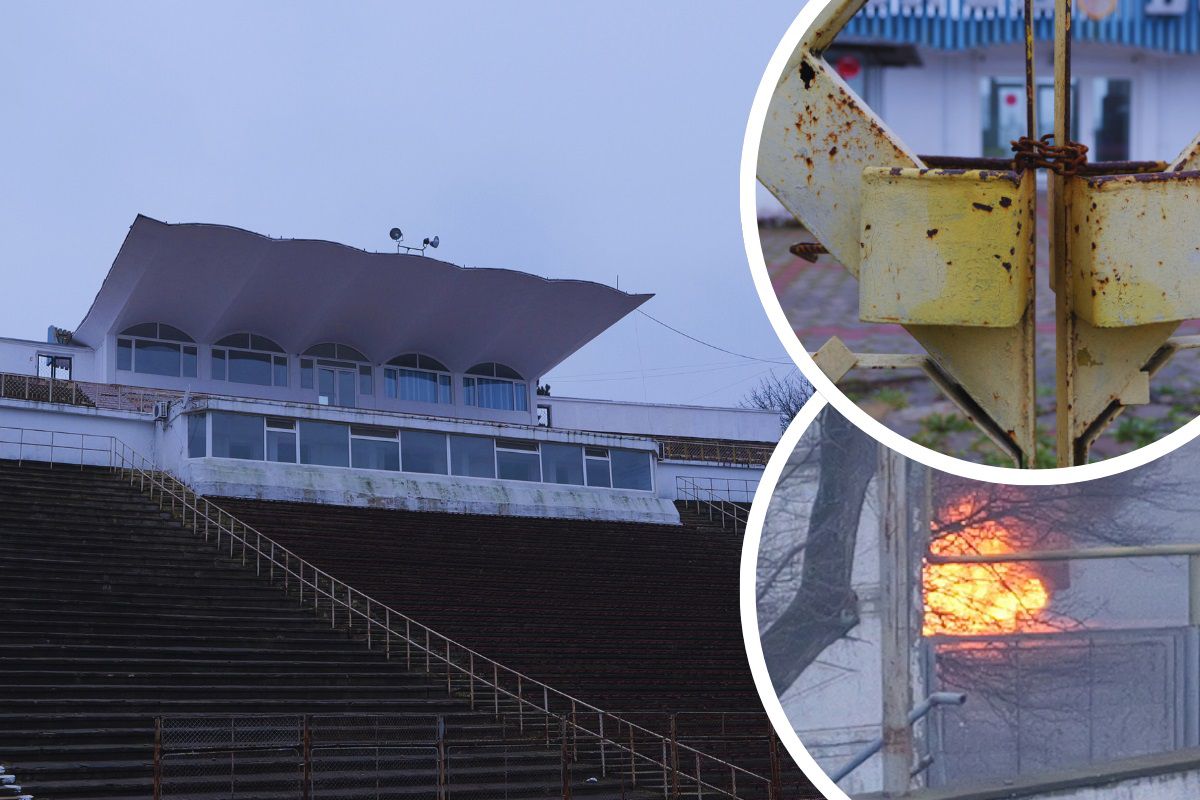
Nicolae Rainea Stadium, the former Danubefrom Galati, the place where Oțelul defeated the Juventus Turin 37 years ago, it reached an advanced stage of deterioration. Gazeta Sporturilor visited the 24,000-seat arena, left in the last decade without the 8,000 seats, which disappeared without grace and without official explanation. In other words, a ruin immersed in an oppressive gray, for which the local authorities only found the solution of the lock.
An important landmark of the city in the last century, today the horseshoe-shaped colossus, once designed to please the crowds, is no more than a forgotten, albeit well-guarded, space. On the land hunted by the real estate market on the banks of the Danube, few things move anymore, in the background of cold concrete, with edges dulled by years and by the wind blowing from the river.
Access is blocked with high beige fences and thick, rusted chains. There is no longer the idea of ”entering the match”. It's all about delineation, while inside and outside no longer communicate.
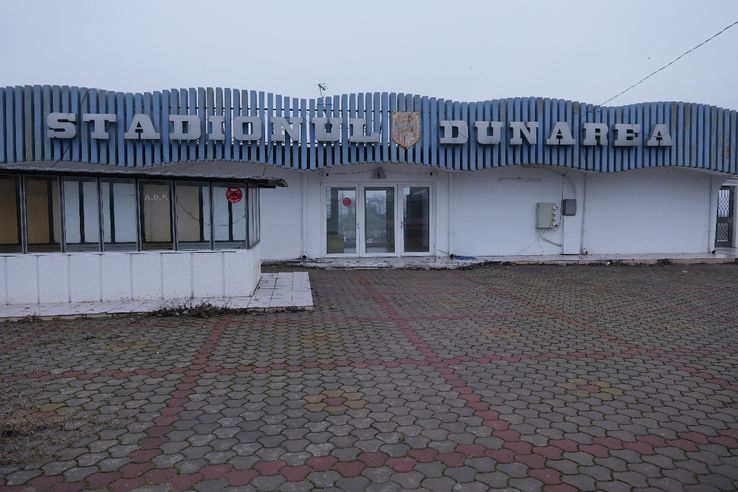
What was chosen for Dunărea Galați Stadium
In February, Galațiul is neither cold nor hot. It's wet and suspended. A low fog clings to the blocks and makes them appear taller than they are, and the streets sound muffled, as if the city is seeing its way, in a muted way.
Sheltered by three of the tallest buildings in the area, the Dunărea Stadium, baptized “Nicolae Rainea” in 2011, stands secluded, closed in its own sad outline.
Seen from above, it is an imperfect horseshoe. From below, there is a lot of horizon. The amphitheater has no seats at all, only wide steps worn by time, which no one climbs anymorenot even urban jocks looking for quieter thoughts than they have.
Two surveillance cameras fixate the expressionless entrance, connected to a security firm doing its job properly: guarding an abandoned stadium. The paradox is simple, silence has always cost money.
Right next door, two fast food restaurants operate non-stop. Good light, doors that open often, smell calling you, not in American English, not with a Moldovan accent. On a typical day, it probably takes in more than the stadium has produced from ticket sales since its inauguration. The contrast is not metaphorical, it is accounting. The present sells combo menus, the past is an empty paper bag.
On the side of the road, we found cars parked chaotically, abandoned trailers, discarded tires. Nothing seems temporary, but neither is it stable. The area is not completely abandoned, it is used for utility. It's exactly the kind of space that cities are preparing, without saying, for something else.
1962it is the year of the inauguration of the Dunărea Stadium in Galati. Over time, it was host to the Dunărea (1970-2014), Metalosport (2015-2018), Oțelul (2004-2005, 2016) and CSU Galați (2018-2019) formations
The dirt track is now a dusty surface, with no footprints, only a few dogs cross it from side to side, quiet, as if in a space left without a master.
At the entrance, the old company with raised letters remained in communism. It is not illuminated, it is not renovated, but it is content to exist. Around it, small interventions appeared, typically local. Give the Romanian a hole in the wall and fill it with thermal insulation.
If you turn your head, a few tens of meters away, a fire suddenly smolders. One of the cars driving madly, taking advantage of the lane, caught fire on the go. Nobody cries, even if the damage is total. In the same spectrum, the reserve banks also spend their days, almost broken. Everything that is wood is swollen with moisture, the paint is falling off, and the screws have long been out of place. In recent years, only a few matches from the lower leagues have been played here. We don't know if the fence was jumped, but it's certainly the kind of activity that doesn't save a stadium, only postpones its end.
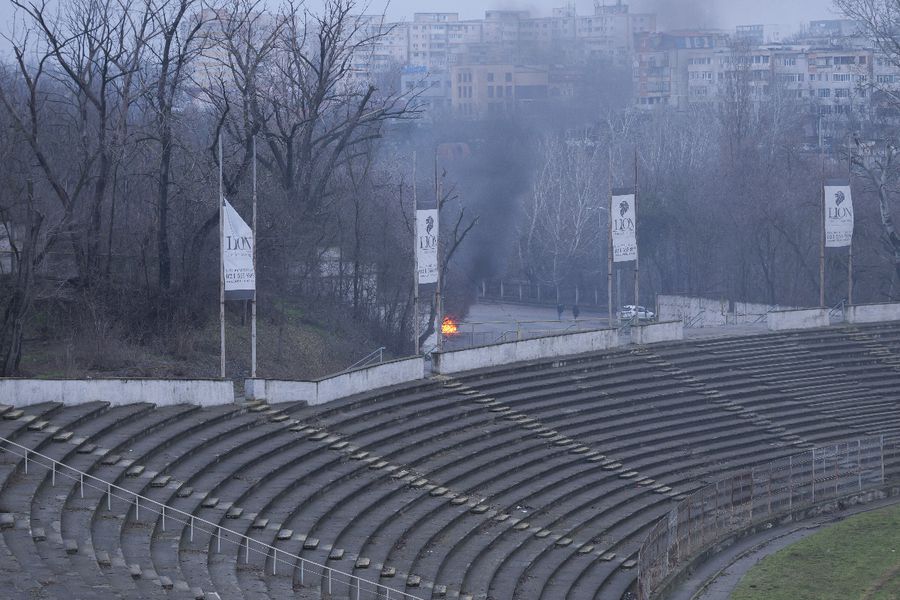
What the “Nicolae Rainea” Stadium looks like in Galati, the former Danube: Photo: Andrei Furnigă, GSP
-
The Dunărea Stadium is a special construction in the landscape of arenas in the country, being made by shaping the terrain, not by classically erecting a structure. The building is the only one in Romania completely “sculpted”, using the existing relief, leveled to form the stands.
And yet, the place is not completely empty. Because the big memory does not disappear with the small present, there is still the story told in the city, transmitted simply, without details. Here, Juventus were brought to their knees. For a moment, this place was on the big football map. Today it is not even on the map of the city.
In fact, the Dunărea Stadium has always lived between statutes. Never new enough, never important enough, never useful enough in the long run. It was always a fallback, a temporary solution, an idea to be replaced by something better. The promised new stadium remained a promise. The old remained reality.
Meanwhile, the city changed around him. Economic flows shifted, many people left and priorities found new adjustments. A big stadium without big events quickly becomes a problem. It costs, takes up space, does not produce. Exactly the kind of infrastructure that the real estate market is looking forward to.
The land it sits on is valuable not for what it is, but for what it could become: blocks of flats, parking lots, commercial spaces, anything that generates constant flow. In the logic of the contemporary city, the rest has no arguments, one can drown in memories.

I asked Dorinel Munteanu how many seats the stadium should have, he told me that somewhere around 10% of the total population of the city. Taking into account that we have between 250,000 and 300,000 inhabitants, we believe that it is a correct decision (no – for the stadium to have 25,000 seats). About Dorinel, I can say that he is a technical part of this project, because he is a great coach and has lived a life in the stadium. Oțelului's new stadium will be on the Danube. It's a project that will most likely need at least six months to have a feasibility study, from our calculations it's a project that will amount to somewhere around 100 million euros.
– Ionuț Pucheanu, mayor of Galaţi, April 2024
Built in an era when size was synonymous with ambition, the stadium was designed for tens of thousands of people. Industrial cities needed big symbols, and sports was one of them. The full stands validated not only the teams, but also the system that had raised them. Today, the same size becomes a handicap. It's too much for what's left.
It's not officially abandoned, but not really active either. The intermediate state is the longest, this is also because the demolition costs, and the reconstruction several times more. So it remains present enough not to be completely forgotten and useless enough not to be saved.
All around, life goes on pragmatically. People come out of fast food with hot bags, couriers deliver, cars drive by. The stadium is far from being a meeting point, it is an urban background and it carries nothing between two calculations: the cost of the past and the value of the land.
It's not about football anymore. Too few and not those who lead will realize that a city does not just lose a stadium when they let him die, but also part of the way the city knew how to be together.
And when the locks are, one day, cut, the question will not be what is built in its place, but whether there is anything left to collect from what was.
-
In December 2011, the City Council of Galați decided, without public debate or prior documentation, to change the name of the “Dănărea” stadium to “Nicolae Rainea”, after the name of the international referee.
-
The decision sparked controversy and discontent among the local football people, with some considering the gesture inappropriate, especially given that the stadium was still in a poor state of maintenance.
-
Even Nicolae Rainea, alive at that time, did not think it was the best idea, in the context where there was no project to revitalize the arena, but he was grateful.
Steel – Juventus 1-0, the match almost forgotten
On September 7, 1988, Oțelul Galati played probably the most important game in the club's history. In front stood Juventus Torino, then coached by the legendary Dino Zoff and made up of top European players, including Michael Laudrup, one of the most valuable Danish footballers of all time, Rui Barros or Nicolo Napoli, who would coach in Romania.
Approximately 30,000 spectators filled the “Danurea” stadium to see Altobelli, Laudrup, Tacconi and the rest of the stars come to Galați. In an evening that would remain in the memory of the city, Oțelul, prepared by Cornel Dinu and Ioan Sdrobiș, won 1-0. The only goal was scored in the 59th minute by Ion Profir, from the penalty scored by Drăgoi.
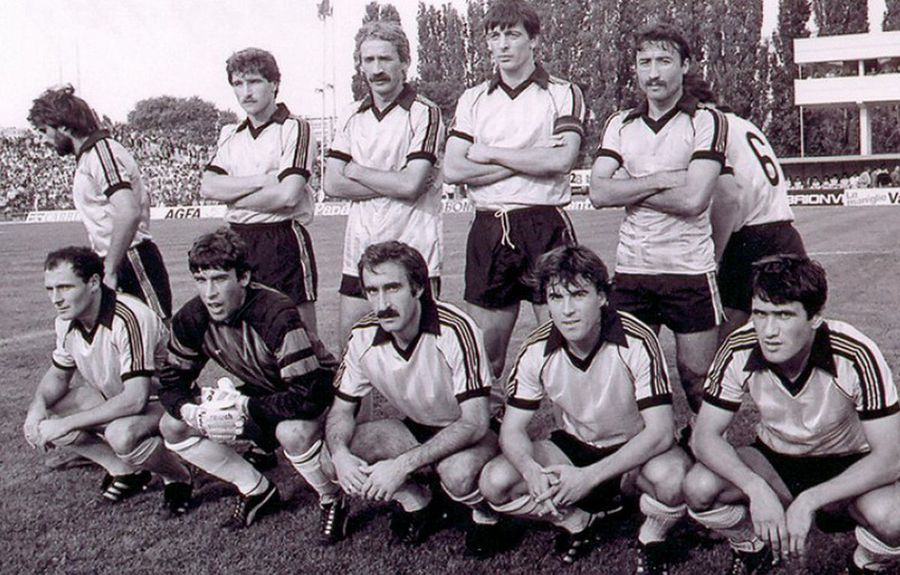
Archive image from the match Oțelul Galati – Juventus
Galati Steel: Călugăru – G. Popescu, Anghelinei, Agiu, Borali (72' Ad. Oprea) – Burcea, M. Stan, Profir, Oct. Popescu – Ralea (56' Drăgoi), Antohi
Coach: Cornel Dinu
Juventus: Tacconi – Nicolo Napoli, Bruno, Brio, De Agostini – Carbini (c), Marocchi, Rui Barros, M. Laudrup – Mauro, Altobelli
Coach: Dino Zoff
The return from Turin clearly tilted the balance in favor of the Italians, 5-0 for Juventus, but the victory in Galați remained a historical landmark. And today, Oțelul is the only team in Romania that managed to beat the Bianconeri in an official match.
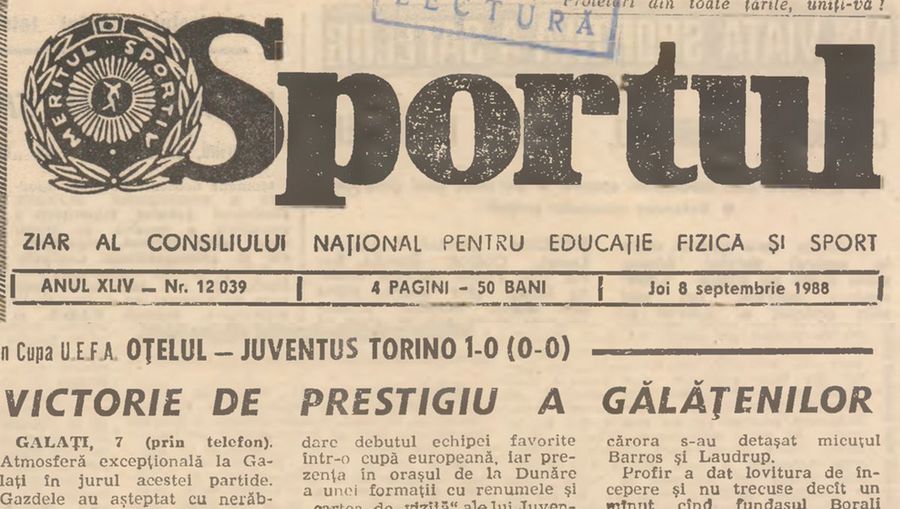
The first page of “Sportul”, after Steel – Juventus
-
On April 24, 2021, a 10-year-old child died at Dunărea stadium in Galați, during a friendly football competition for juniors. With no toilets nearby, the children were directed to an area behind the arena, where they passed through an opening in the fence. Two heavy slabs of concrete fell on the boy, fatally injuring him.
-
The coach reported that several adults were unable to lift the pieces of concrete to save him. The medical team attempted resuscitation, but the child died. The police opened a criminal case for manslaughter, and the tragedy shocked the local community.
The refugee camp, the last big… event
Two years ago, the Dunărea Stadium in Galati was temporarily transformed into a mobile refugee camp, at the request of the UN Agency.
The already dilapidated lawn was covered by a huge camp of tents, part of an exercise organized in collaboration with ISU Galati to test the city's ability to respond to a hypothetical situation of receiving a significant number of evacuees.
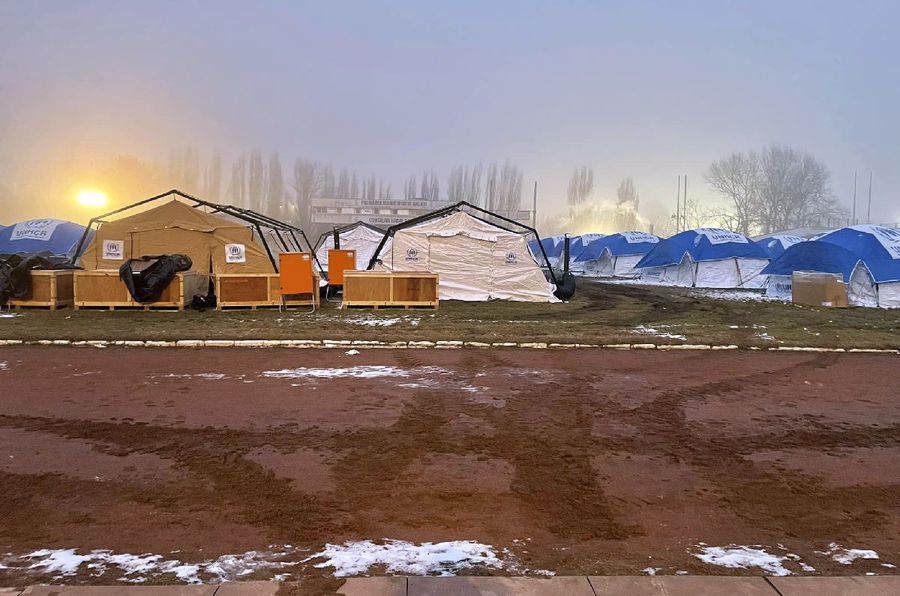
The “Dunărea” stadium in Galati was temporarily transformed into a mobile refugee camp / Photo source: Facebook @ Nicolae Ciocan
Local reactions were mixed. Several athletes and coaches from Galati, used to training on the athletics track, expressed their displeasure, reporting that the setting up of the camp created a disturbance and that the ISU crews would have damaged the track, the only functional part of the arena.
The action was not unique. In February 2022, at the beginning of the conflict in Ukraine, the same area had been used for the placement of tents, although they were not actually used.