The Russian Wagner Group has reoriented itself and has a new mission, this time in the heart of Europe


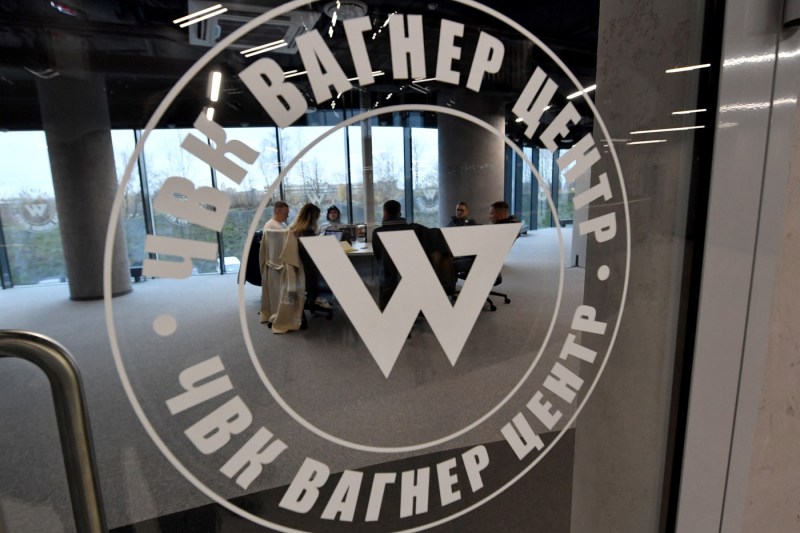
The former headquarters of the Wagner group in Saint Petersburg Photo: Olga MALTSEVA / AFP / Profimedia
The Wagner specialists were tasked with recruiting economically vulnerable Europeans to commit acts of violence on the territories of NATO member countries, writes Financial Time quoted by Agerpres.
The recruiters of the Russian Wagner group have become one of the main instruments for the sabotage organized by the Kremlin in Europe, according to some officials of the Western secret services, the British daily Financial Times reveals on Monday, quoted by the EFE agency.
Although the status of the mercenary group is currently uncertain, Wagner specialists are now recruiting European citizens to convince them to commit acts of violence on the territories of NATO states, according to the same source.
The group's status has been in doubt since a failed rebellion against Russian military rule in June 2023 ended with the death of its founder, Yevgeny Prigozhin.
Now Russia's military intelligence agency (GRU) is “using the talent available,” a Western intelligence official told the Financial Times, referring to the Wagner network.
Both the GRU and Russia's Federal Security Service (FSB) have become very active in their search for potential agents in Europe to sow mayhem, the British newspaper adds.
The Financial Times points out that over the past two years, the Kremlin has expanded a campaign of sabotage across Europe with the aim of weakening the resolve of Western powers to support Ukraine and causing social unrest.
For the GRU, the Wagner network proved to be a particularly effective, if rudimentary, tool to achieve this, senior European intelligence officials told the British newspaper.
Wagner agents tasked those they recruited with organizing arson attacks against politicians' vehicles and warehouses containing aid to Ukraine.
In general, those recruited are usually motivated by money and are often marginalized people, according to the Financial Times.
For its part, the FSB tended to rely on criminal and diaspora networks with which it cultivated ties abroad, but this was less effective in mass recruitment.
And that's because Wagner and his supporters already had a significant presence on social media targeting the Russians, the British publication adds.