Railways, power plants, airports. A secret report reveals the scale of sabotage in Germany


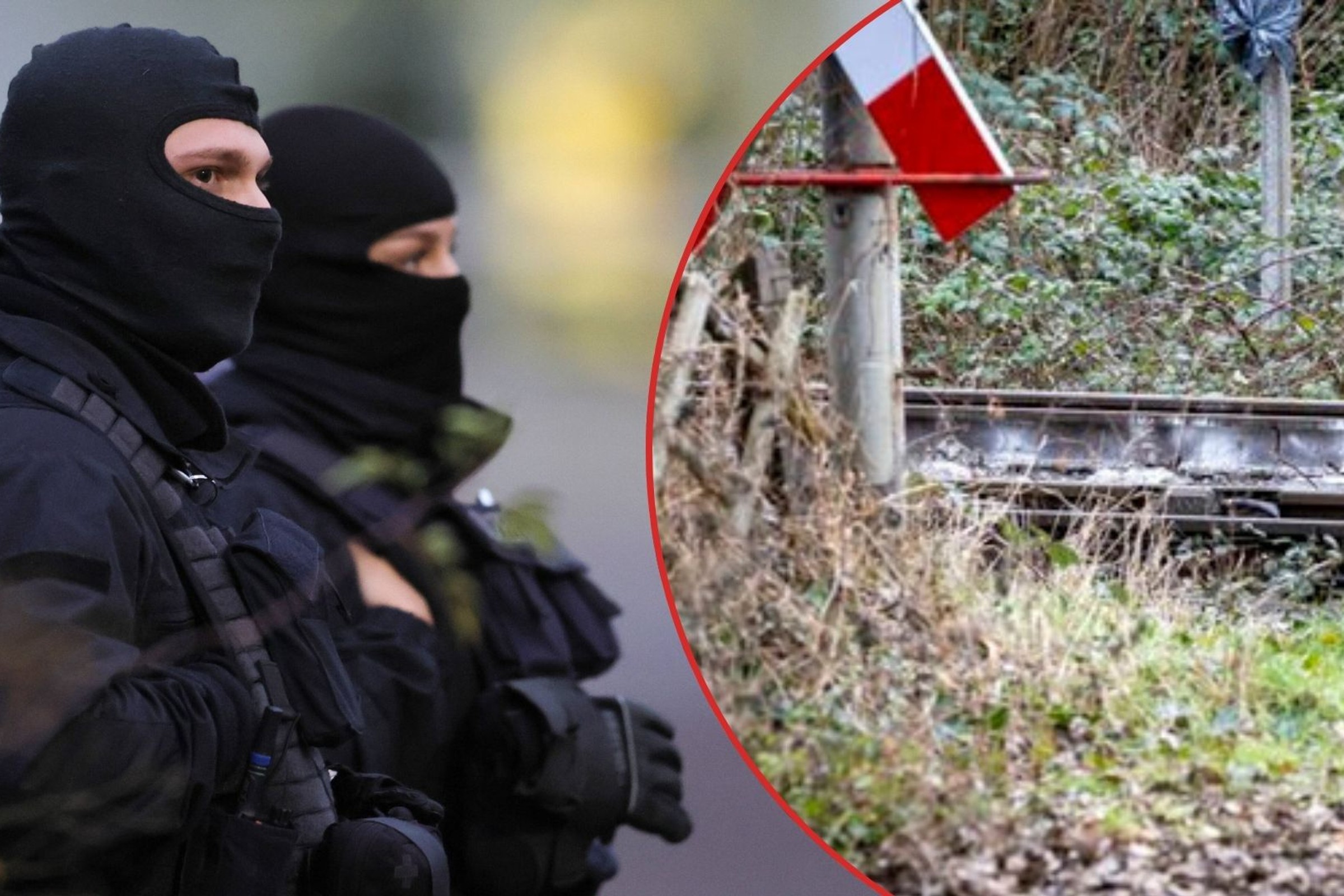
In a confidential report of the Federal Criminal Office (“VS – Nur für den Dienstgebrauch” — “For official use only”), accessed by Welt am Sonntag, the office documents numerous attacks on the state. Over the course of a few days in January, a transformer station was broken into in Germany, a wind farm was attacked, railway radio equipment was stolen, a transformer station was set on fire, a freight train with dangerous cargo was partially derailed and a radio mast was blown up.
At the same time, security services record numerous drone flights over sensitive areas.
Last year, the Federal Criminal Office (BKA) registered 321 cases of suspected sabotage throughout the country, with particular emphasis on North Rhine-Westphalia (the federal state in the west, the largest in terms of population) and Lower Saxony (the second largest in terms of population, the federal state in the north of Germany). In the third quarter, the number peaked at 94 cases.
Bundeswehr and police facilities, as well as railway equipment, railway infrastructure and other infrastructure elements were particularly frequently attacked. Energy infrastructure also received increasing attention throughout the year. There have been ten documented cases so far in January, again mainly in North Rhine-Westphalia.
At the same time, last year the authorities recorded a total of 2,310 security-related drone flights. Since the beginning of the year, BKA has already recorded 28 such cases. “Welt am Sonntag” analyzed reports and documented reports of sabotage from one week earlier this year.
January 7, Wuppertal (North Rhine-Westphalia)
Unknown perpetrators break into the transformer station. They break down the door. Investigators find signs of use of a crowbar and find a bag with tools. No damage to the installation was found, but according to BKA's internal analysis, “preparatory activities related to sabotage” cannot be ruled out. The state security service is taking over the investigation because the transformer station is part of the critical energy supply infrastructure. There are no clues about the perpetrators yet.
January 8, Berg (Bavaria)
Unknown perpetrators are trying to break into a wind farm. They break the fence, leave crowbar marks on the front door and paint the letter “A” next to the entrance with white paint. The material damage amounts to approximately EUR 1,500 (PLN 6,310). The power plant is not monitored. It is unclear whether it was a politically motivated act or vandalism. An investigation was launched into the disruption of public enterprises.
January 9, Oberhausen (North Rhine-Westphalia)
A burglary was detected in the building of DB Cargo, a subsidiary of Deutsche Bahn. Two Deutsche Bahn maneuvering radios were stolen. In a confidential analysis by investigators, it was found that thanks to an individual code it would be possible to eavesdrop on communications in freight traffic. However, there is no direct threat to passenger traffic. The devices come from the freight transport area and are used for internal communication during maneuvers.
January 9, Braunsbedra (Saxony-Anhalt)
Early in the morning, the transformer room is set on fire. In a confidential report, investigators describe in detail the perpetrators' modus operandi. They remove ventilation panels from metal entrance doors. The perpetrators insert wooden strips through the hole and set them on fire. As the fire was noticed quickly, it was extinguished using a hand-held fire extinguisher. However, as a result of this event, 35 households were temporarily left without electricity, as was the neighboring heat and power plant. Power supply was first restored temporarily. Video footage shows a black van near the scene. The subject of the investigation is to determine whether the incident was politically motivated.
January 10, Halle (Saxony-Anhalt)
At 22 unauthorized persons activate all alarm sirens in the city using the siren control system of the integrated control center in Halle. An official warning signal is broadcast, accompanied by messages in English and the claim that an armed attacker is in the city.
According to the current state of the investigation, the alarm was triggered by unauthorized external access to the control system. After breaking into the system, unknown perpetrators not only trigger an alarm, but also play a self-installed audio file. After five minutes, the alarm can be stopped. Due to the large number of visitors, the city's website is temporarily unavailable. An investigation into possible computer sabotage and political motives is ongoing.
11 January, coastal waters before Fehmarn (Schleswig-Holstein)
January 12, Essen (North Rhine-Westphalia)
January 12, Viersen (North Rhine-Westphalia)
Just after 1 a.m., an explosion occurs near a newly built telecommunications tower. The police discover an open control cabinet door. Video footage later shows the person running away. The facility was put into use recently. Investigators assume it was intentional sabotage and not an attempt to steal cables. Residents of the area had previously criticized the construction of the tower.
January 8–12, Hannover Airport (Lower Saxony)
Over the course of several days, five cases of drones were reported in the vicinity of Hannover-Langenhagen Airport. Authorities identified the two devices as models from the manufacturer DJI. The incidents occurred in the restricted air traffic zone or directly at its border. The next three observations are based on witness statements, which, however, cannot be confirmed. Federal police are testing additional technology on site to detect drones. Investigators have no information about the operators or circumstances of the flights.