Historic change in NATO: an Italian general will take over security at the Black Sea. “An American leader would keep the focus on Russia”

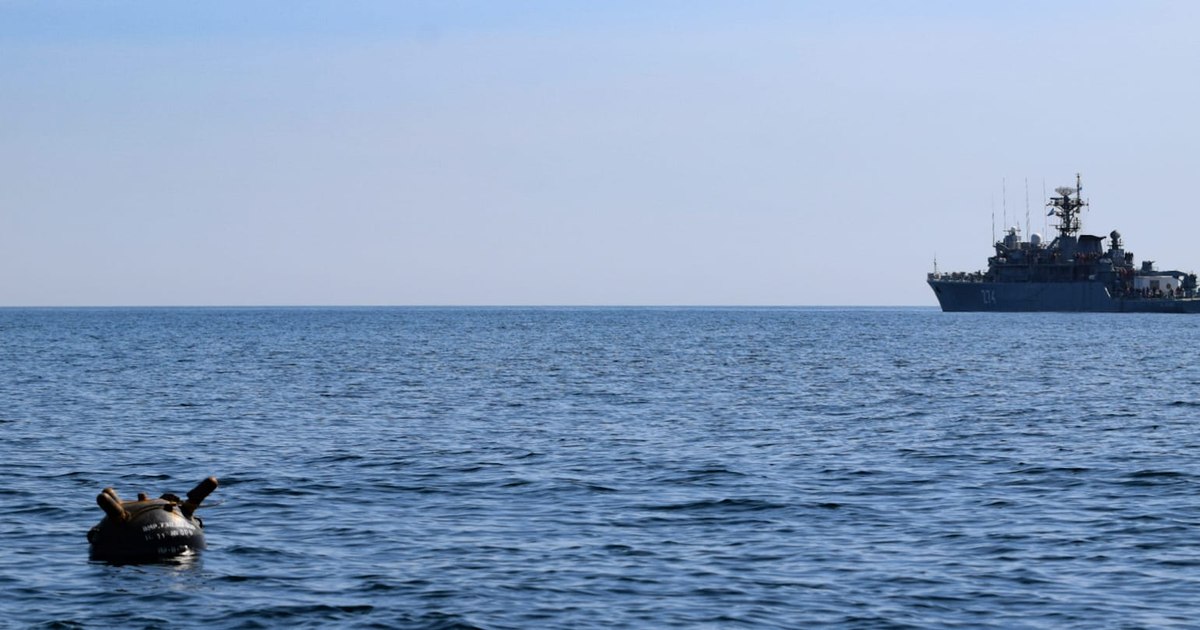
Security in the Black Sea and the Mediterranean Sea will be coordinated by Italy, after the US relinquished the headship of the NATO Command in Naples, in the context of the reduction of American involvement on the European continent. Three Romanian generals with NATO experience explain the effects of this decision.
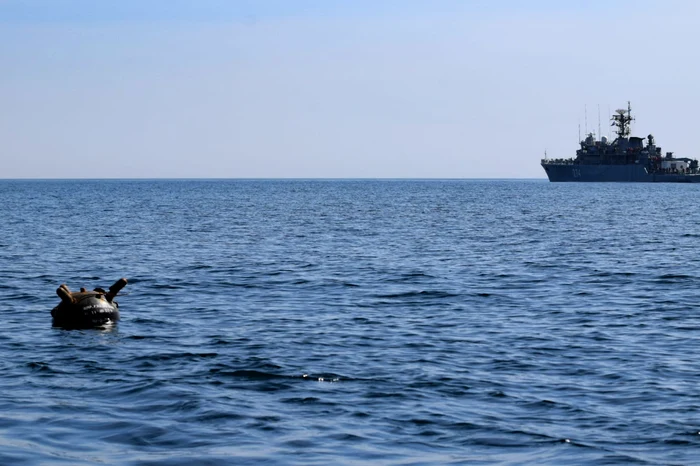
NATO security in the Black Sea will be coordinated by an Italian general. PHOTO: MAPN
In the last few days, essential decisions were adopted at the NATO level, the influence of which will be felt on the collective defense — including on the security of Romania's territory and the deterrence capacity in the Black Sea area.
There are three sets of strategic plans: the first covers the Atlantic and the Arctic, the second covers the Baltic region and Central Europe, and the third covers the Mediterranean and Black Sea region.
This last plan is essential for the defense of Romania, our country being integrated in the Southern Regional Plan. It is managed under the operational coordination of the Joint Forces Command (JFC) in Naples, a NATO structure strategically oriented towards the southern and southeastern flank of the Alliance.
“These days, NATO formalized a major restructuring of responsibilities at the level of the three operational commands. This reorganization responds to pressures for Europe to assume increased responsibility for its own defense, aiming at a more equitable distribution of tasks among allies. Thus, the management of the Joint Force Command (Joint Force Command) Naples will be transferred from the US to Italy, a fact considered a historical paradigm shift“wrote on Facebook, general (r) Dorin Toma, former commander of NATO's Southeast Multinational Division.
Toma: “An American leader in Naples would maintain the focus on countering Russia, an Italian leader would prioritize North Africa”
The former NATO general claims that it remains unclear how this decision will influence the planning process, the allocation of forces and training in the Black Sea area. “Also, Romania's position during these negotiations is unknown. Any “handover” of the baton from the US to a European state should be viewed with caution, as American leadership remains, in my view, a central pillar of the ultimate security guarantee.”
General (r) claimed for “Truth” that “we will have to collaborate with an Italian commander who will probably pay more attention to the southern flank (Mediterranean Sea). Italy has vital strategic interests in the “Extended South”, which may dilute the attention given to the Black Sea region. Without occupying an important position at the level of this command, risks may arise regarding the viability of plans or the prioritization of resources for Romania.”
“An Italian military leader could prioritize instability in North Africa and migration, while an American leader in Naples would keep the focus on countering Russia in the Black Sea and Eastern Mediterranean”says the general. Having an important presence in this command is crucial to ensure that Romania's defense plans are viable, practiced and ready for execution, he concluded.
Grecu: “There shouldn't be a negative effect that an American was exchanged for an Italian”
General Dan Grecu, an officer who had missions in Afghanistan, Iraq, Eritrea and Ethiopia and was decorated in turn by the United States of America, the UN and NATO, current president of the Association of Reserve Officers in Romania, is of the opinion that the change of an American general with an Italian one in the command in Naples will not have negative consequences for the security of our country.
“We are not only talking about this command, because there are about five commands that the Americans are giving up, and not only from Europe. It is the signal of the reduction of the involvement of the United States towards the European continent and NATO in general, but without that meaning a withdrawal“, claims Dan Grecu.
The effect for us, that an American was exchanged for an Italian or a French or someone else, should not exist, says the general. Why? “Because at these commands work is done on the basis of political decisions made in the North Atlantic Council, which are then transposed into the plans made at the level of the Supreme Command of the Allied Forces in Europe, from Mons, and then go down to the execution commands”he explains.
Grecu shows, however, that there has always been a major difference between the Black Sea and the Mediterranean: “One perspective is that of international law. We know that the transfer of a military vessel from the Mediterranean to the Black Sea is subject to the Montreux Convention, which imposes limits on size and time of stay. That's why we don't even see American, British or Italian military ships in the Black Sea except for exercises, visits, cruises and so on. They cannot stay in the Black Sea for more than a limited number of days, around 45.”
On the other hand, Turkey has the right to prohibit this transit of ships. “And that is why, in the end, the dispute or strategic balance from a naval point of view has always been between Turkey, as a NATO member, and Russia, during the Cold War the communist enemy, now the aggressor from the east”shows Grecu.
Who decides NATO's reaction to what is happening in the Black Sea
However, the transfer of important functions from the Americans to the Europeans was discussed even before Trump, the general says. “During the Trump administration they became a reality. But that doesn't mean an American withdrawal. I don't think they're going to give up, for example, Supreme Allied Commander Europe. Or they're not going to give up at any point in the near future.”
And basically, if something happens in the Black Sea, where is the reaction set? “The reaction is always decided at the level of the North Atlantic Council. So the decision is always a political one. This also happens in our country. The decision is a political one. The moment the politician sets the objective, the final goal, the strategy, they will be translated into military plans and, from that moment, the military enters into action.”
It is true, on the other hand, says the specialist, that the military advises the political factor before making the decision. “States are represented by the heads of state, the president/prime minister. It is logical that they should be advised by their own structures that they have. Whether it is the foreign minister, when it comes to international relations, whether it is the military side, when it comes to military issues.”
Bălăceanu: “For crisis situations, regional plans must be applied, and this is where the involvement of the USA matters”
General (retd) Virgil Bălăceanu, who represented Romania at the NATO Command in Brussels and was head of the Multinational Brigade in South-East Europe, is of the opinion that there will be no negative effects for Romania's security:
“I don't think we can talk about something like that, because, for example, the commander of the Land Force component in Izmir remains an American general. On the other hand, the battle group in Bulgaria is led by Italy. As the battle group in Romania is led by France, as such Italy's main responsibility, related to the eastern area, is South-Eastern Europe, bearing in mind that, together with France, it provides the basis for NATO's defense and deterrence posture through the framework nations for the two battle groups.”
These changes, says the general, are ultimately necessary from the perspective of entrusting the main mission of defending the territory of Europe to the Europeans. “By the way, the rapid reaction corps, and here, also in the context of these ideas, are led by European generals. Either Italy has a rapid reaction corps, as, by the way, France has two rapid reaction corps, the French one and the Eurocorp. And, from such a perspective, maybe things are easier to solve, bearing in mind that, for crisis situations, regional plans must be applied and we are talking about regional defense and deterrence plans; here it is important that the United States maintain its contribution”details Bălăceanu.
The presence of a thousand or two thousand American soldiers on the territory of Romania or Bulgaria does not represent the application of regional plans, the general emphasizes. “No way. When we talk about regional defense and deterrence plans, we are talking about tens of thousands, even hundreds of thousands of troops. Here is the essence of the problem and the essence of keeping the United States' commitment.”