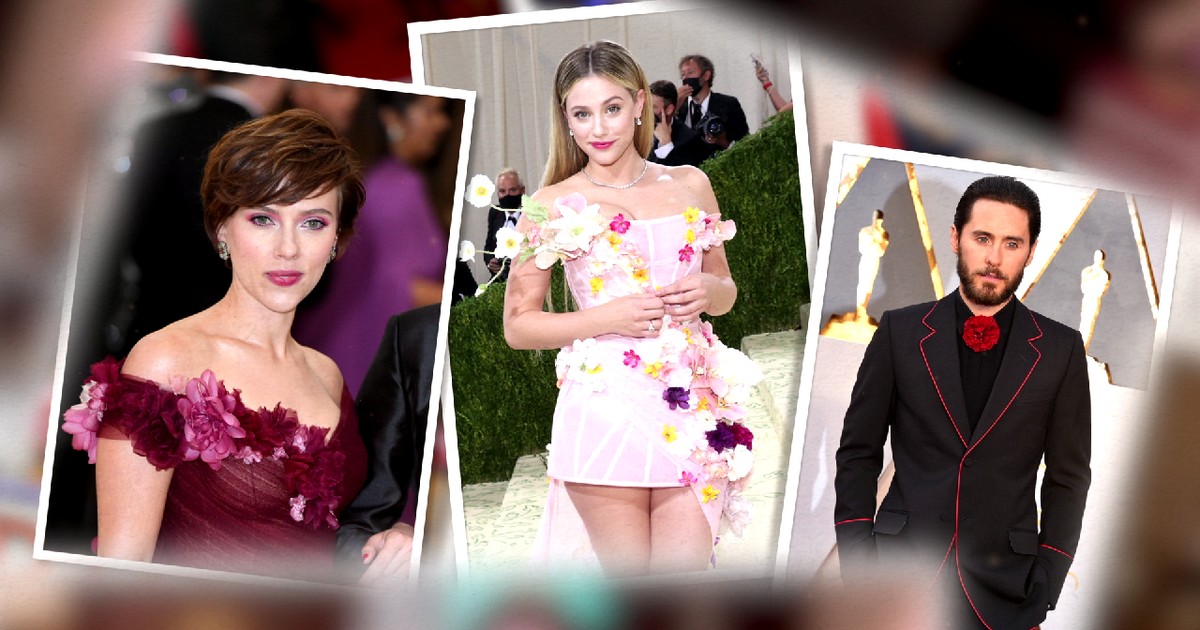
This factory produces flowers for stars such as Beyoncé, Lizzo and Sarah Jessica Parker. There were once over 100 similar factories in New York that produced flowers into fabric for clothing and hats. Currently, M&S Schmalberg is the last factory of this type in the area.
I don't know if it's luck or magic. There's definitely someone watching over us
– says Adam Brand, co-owner of M&S Schmalberg.
One of the biggest challenges for this company is that no matter how creative and unique its flowers are, cheaper fakes constantly appear.
“It's impossible to compete when other companies are doing it for 5 or 8 cents,” Adam admits.
Read also: Record gold prices have a dark side. Nothing lasts forever
They create artificial flowers for stars
|
Business Insider
How did a family business manage to attract so many high-profile clients? And how did the company still exist?
Adam Brand grew up in this store, but he never thought he would take over the family business.
— At first, I treated it like an ordinary job. I didn't find her particularly attractive, he recalls.
Slowly, watching the customers' delight over the walls of flowers, Adam fell in love with it all.
“When I started looking at this place from other people's perspective, I realized how lucky I was to be a part of him and this family,” says Adam.
Currently, Adam is the fourth generation co-owner of the company. Together with his team, he works with various materials, from organza to leather. Customers often bring their own materials.
— Anyone can make a red rose. For me it's great when people make it to order and bring their own fabric. That kind of detail can't be achieved anywhere else, he admits.
Today, the company is altering the wedding dress of one of its clients' deceased wife.
He marries again. He wanted to pay respect to his deceased wife. He sent us a dress, and we make long-stem roses, boutonnieres and beautiful bouquets from it.
– says Adam.
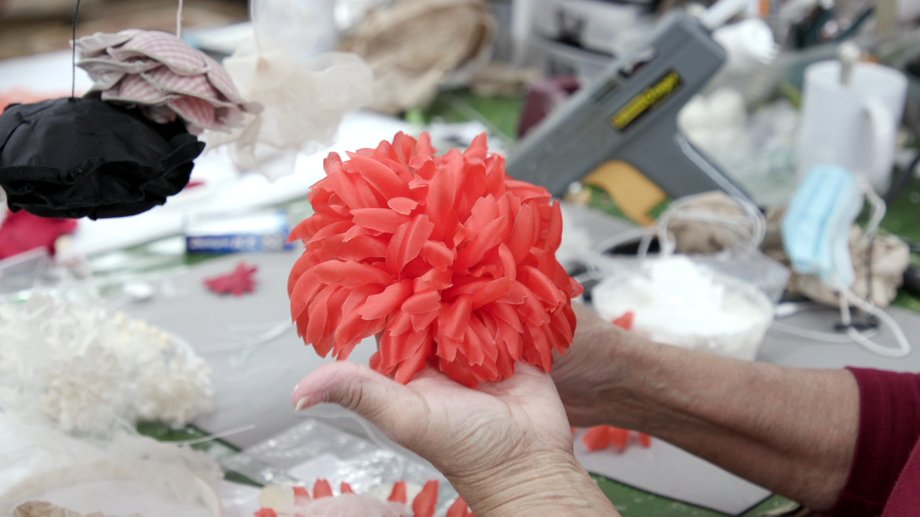
Workers starch the fabric using the same mixture that was used 100 years ago. It closes the fibers and helps keep their shape. However, this must be done in small batches, otherwise the entire contents of the container may spoil.
This handmade frame was built specifically for the factory 35 years ago and is perfect for large orders.
Workers use it to stretch the fabric, which prevents it from wrinkling as it dries. Adam's father introduced cutting dies 50 years ago. Previously, workers cut the flowers by hand using a rubber mallet.
– We take such a tool. We put them on the fabric and take a swing. I won't do it because I might hurt myself. We hit the tool hard to cut the fabric, he explains.
Currently, workers can cut twice as many flowers at the same time.
— I love that we make them the traditional way. We don't use lasers, computers or 3D printers, Adam smiles.
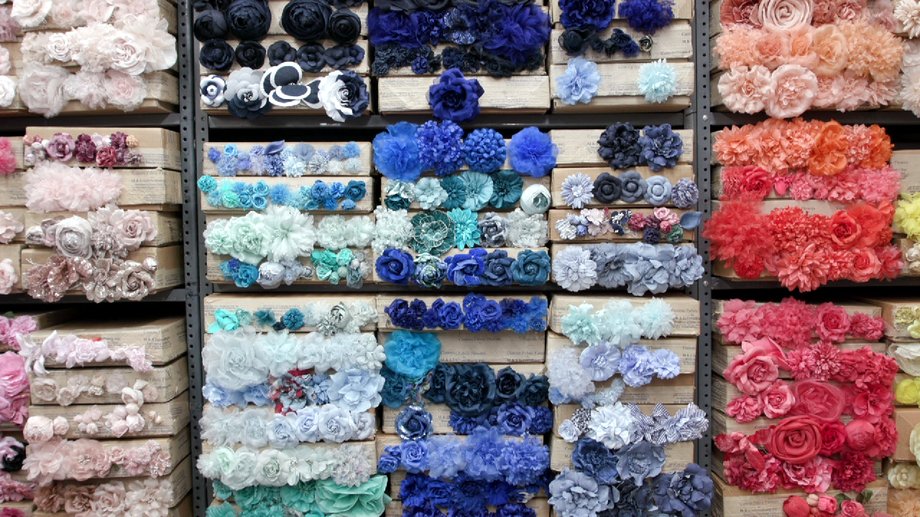
Over the last century, they have collected over 1,000 dies and molds of various sizes and shapes.
— Some of them are really 100 years old, and some even older. They are the core of our identity, he adds.
Read also: In Silicon Valley they print books like they did 150 years ago. One costs up to 10,000. hole.
The last artificial flower factory in New York survived 100 years
|
Business Insider
How are artificial flowers for stars made?
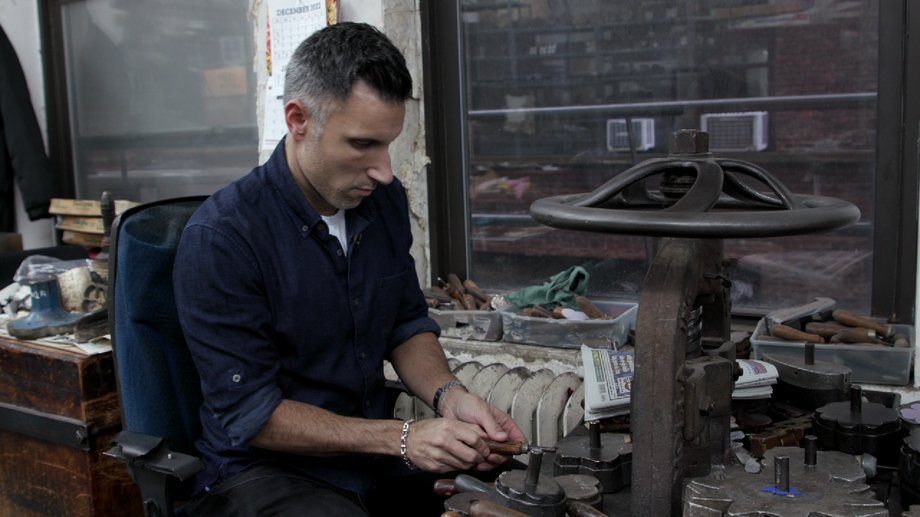
Alex Nelson is the only person who controls them all. He has been cutting at M&S Schmalberg for almost 40 years.
– These are the daisy cutters. And these are for dahlias. Some of them were made in New York. “Dad says a lot of them come from Eastern Europe,” explains Alex Nelson, a cutter at M&S Schmalberg.
Adam still keeps some of the machines that have been here since the store opened, like this gas-powered press that shapes the cereal.
“Some tools can wear out a little over the course of a child or a hundred years,” Adam admits.
Adam says his family has always been picky when it comes to choosing technology without sacrificing quality. This hydraulic electric press is one of our newest additions and has been here for 30 years. It shapes the flowers in seconds and is easier to use than the gas press they used before. However, Adam's father was initially skeptical.
In the 1980s, such machines looked absurd. My dad doesn't like change. He has the attitude that everything is fine as it is. He worked, making one flower after another. At some point I think he decided he'd try one of these new machines. Like many new technologies, you don't have to think too hard with this one
– says Adam.
Dyeing the petals and assembling the flowers is still done entirely by hand. Miriam Baez has worked here for over 40 years. She retired in 2013, but missed her job so much that she returned full-time a year later.
I love this job. It's hard for me to give it up. I do what people like, what makes me feel good
– says Miriam Baez, production manager at M&S Schmalberg.
Some of the dyes Miriam uses are over 50 years old. Forming flowers requires a delicate touch and attention to detail. The five-person team has mastered this art to perfection. Employees can form over 500 flowers a day. Many of them have been with the company for decades.
“I'm proud that people want to stay here,” says Adam.
Some started working for Adam's grandfather, Harold Brand, who bought the company in 1960. Harold moved to New York from Poland when he was 17, after losing his entire family in the Holocaust.
— I keep this photo of him “looking” at me to make sure I'm not slacking off. It's a completely family business. I say this from the bottom of my heart – he is moved.
Adam is worried whether the family business will survive
|
Business Insider
When did artificial flowers replace live ones?
Adam says this has been the case since his grandfather's uncles opened the business in 1916. Artificial flowers gained popularity during the Victorian era in the late 1800s. They were a popular alternative to fresh flowers because they could be used year-round.
At the beginning of the 20th century, M&S Schmalberg was one of 114 stores in New York that produced almost 75 percent. artificial flowers in America. However, in the 1950s, foreign producers began to sell the same flowers for pennies. In 2016, almost 70 percent artificial flowers in the world were produced in China.
Let's say we want to get $2 for our work and someone else wants to get $1.90 for it. You can compete on price and someone will win in the end. You can't compete when other companies are doing it for 5 or 8 cents. That's why many companies, not only ones like ours, started to close. The entire clothing district began to shrink
– says Adam.
Adam claims that his family's designs were copied by foreign manufacturers. Competition is a burden on an already unpredictable industry.
— We are not a company that is constantly growing. Our development fluctuates wildly. Sometimes we have good times and sometimes bad times, he admits.
In the 1990s, many other stores closed permanently. Still, Adam's father always found a way to keep the business going.
“I heard stories about him selling Christmas wreaths, Arnold Palmer T-shirts, basically anything he could to keep the place going until the next flower era came,” he adds.
In 2017, M&S Schmalberg became the last artificial flower factory in the garment district.
When times are scary and we don't know if we'll get more orders, that's when the orders come in. I don't know if it's luck or magic. There's definitely someone watching over us
– he gets emotional.
How did the family business build relationships with famous designers?
The fact that it was the only company of its kind in the area made it stand out, and designers began turning to it for flowers. The factory's location in the heart of Manhattan also helped.
Over the years, the company has built strong relationships with designers such as Vera Wang, Marc Jacobs and Oscar de la Renta.

Artificial flowers from this New York company are worn by famous stars
|
Business Insider
Many amazing last-minute projects have happened because the designers have their headquarters right next door. They can come to us with the fabric in their hands, tell us what they want and pick up their order the next day
– Adam boasts.
When Adam least expected it, he started seeing his designs on celebrities' clothes.
One of the stylists ordered some flowers, and about a month later someone sent me a photo of Beyoncé with our flowers
– he recalls.
For more than two decades, the company's flowers have been worn by dozens of celebrities, including Anne Hathaway, Rihanna, Gwen Stefani, Kaley Cuoco, Sarah Jessica Parker and Prince Harry and Meghan Markle.
The company also worked on floral arrangements for The Marvelous Mrs. Maisel and The Rockettes, as well as for Rapunzel at Disney World. Adam's favorite designs, however, are small and personal, like the wedding dress that workers turned into a dozen flowers.
“It's unique that we can take something that someone has no idea for and make something new out of it,” says Adam.
Adam is most proud of continuing the work of his ancestors.
— My dad always loved the reactions of people who entered the store, especially the flower room. They said it was a “flower wonderland”, “heaven” or a “candy shop” – he recalls.
Challenges facing the family business
One of the main challenges Adam is currently facing is recruiting new employees. More than 4,000 artificial flower producers were working in the U.S. when M&S Schmalberg opened more than 100 years ago.
Currently, however, only this 13-person team remains.
— Many of our employees have been working here for a very long time. They will retire one day, so it is very important for me to find new employees to study. I had a bit of trouble finding people who wanted to be a part of something creative and different. This craft is hard to explain in words unless you see it with your own eyes – says Adam.
That's why Adam is looking for ways to educate people about this craft. It organizes factory tours and offers internships at local fashion schools throughout New York. Adam is already thinking about the next generation of his family.
I have a daughter, Skyler, who is 2.5 years old. No one knows what she will want to do when she grows up. In my opinion, the best gift I can give her in 20 years is to tell her that this business exists and can be hers.
– he adds.
Adam doesn't know what the future holds, but he's grateful to be a part of this company's history.
— What we do has a long history and is amazing. Despite all adversities, we continue to act. We survived the Great Depression and the coronavirus. We shouldn't take this for granted, he says.