Why the perception of corruption in Romania will not drive away investors. Political scientist: “Corruption is largely linked to the weaknesses of the state”

Trump has suppressed anti-corruption programs, so that businessmen can take advantage of the cultural specificity of the countries where they are present. Corruption in Romania, in this context, would not directly scare investors, but there is an even greater danger, says professor Cristian Pîrvulescu.
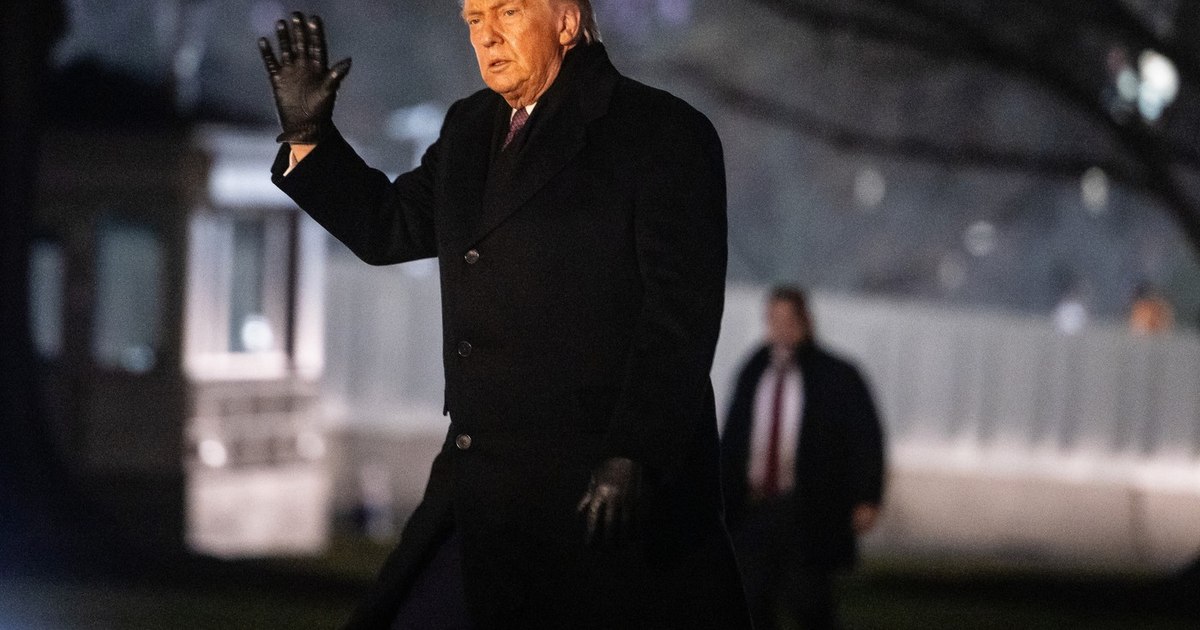
Donald Trump has given free rein to American investors to take advantage of local specifics. PHOTO: Profimedia
Romania is in the top 3 in the EU in the ranking regarding the perception of corruption in the public sector, according to the latest annual report published by Transparency International.
With a score of 45 points out of 100, our country is surpassed only by Bulgaria and Hungary, both with 40 points, while the European Union average is 62.
The Corruption Perceptions Index assesses the perception of public sector corruption in 182 states and territories on a scale of 0 to 100, where 0 is “very corrupt” and 100 is “not at all corrupt”. Romania has a level comparable to that of the so-called “fragile democracies”, which register an average score of 47 points.
For the last 14 years, Romania has hovered around the 45-point score zone, with 44 points in 2012 and a maximum of 48 points in 2016-2017.
According to the organization, states that have a strong democracy have an average of 71 points. Several important democracies in the world have a score below this average: Italy (53), Spain (55), USA (64), France (66), Belgium (69). The Nordic countries Denmark (89) and Finland (88) have the highest score, followed by countries such as Singapore (84), New Zealand (81), Norway (81), Sweden (80), Switzerland (80), Germany (77).
“Adevărul” discussed with professor Cristian Pârvulescu about the causes and effects of this situation.
“It's a Balkan specificity”
Professor Cristian Pîrvulescu claims that not only Romania and Bulgaria have such scores, but all countries in the Balkans: “It is a Balkan specificity. The only country that does not obey this pattern is Hungary, which is a Central European country. Romania is a mixed country, equally Balkan and Central European, but also with Eastern tendencies. We are right at the crossroads of three tendencies”.
Pîrvulescu claims that this report, which has already been measuring various elements regarding corruption for two decades, is the best demonstration that anti-corruption policies that do not take education into account cannot have results: “We live under the illusion that corruption can be acted upon by punitive and legislative means. And no, it cannot. Because corruption is an informal institution, an extraordinary traction force, an institution that people use to solve problems. Corruption is largely related to the weaknesses of the state.”
In all these countries, states are weak, even if we have dictatorial or authoritarian regimes.
The political scientist claims that in our area due to the traditional weakness of the state, whether it was the Ottoman Empire or the successor states, there was a tolerance for corruption: “There was a cultural tolerance for corruption, for the simple reason that people had to survive.”
The professor points out that the survey measures the perception of corruption, not corruption, and the two things are different. For example, he points out, in the Nordic countries we have a low perception of corruption, which does not mean that there is no corruption: “In Romania, we have an increased perception of corruption, because discussions related to corruption make people perceive, even if they do not use corruption, that the country is corrupt. We openly discuss corruption and measures against corruption, measures that have proven ineffective for the reasons I have explained to you, because it is a matter of approach, and this does not mean that legislative measures against corruption should not be taken, but that they should be supported of a whole series of other measures”.
“The ridiculous salaries of civil servants mean an invitation to corruption”
First of all, says the professor, the state apparatus must be strengthened: “Current policies are an open invitation to corruption, because cutting salaries across the board, just to make budget adjustments without any risk assessment, will only strengthen corruption at any risk. At a time when civil servants' salaries are ridiculous, this is an invitation to corruption.”
The teacher exemplifies with a dialogue he had, a few years ago, with the customs officers at the border with Moldova. Recognizing him, they asked him: “Mr. Professor, do you think that with this salary and they showed me the salary slip, a family of four can be supported?” And the answer was no. “It was a direct invitation to corruption. And that's one of the problems. You can't be efficient if you have ridiculous salaries and if you treat the public sector with contempt.”
Pîrvulescu suggests that the private sector does not protect us against corruption and that this preponderance of private interests in relation to public ones only perpetuates corruption in Romania: “Because the private sector has an interest in public sector salaries remaining low, in order to be able to keep the sector, they say, competitive. But the economic model only generates more corruption.”
On the other hand, progress in such a short time is difficult to achieve. An example in this sense is Singapore, exemplifies the professor, which has managed to fight corruption through appropriate wage policies and by strengthening the public sector: “That doesn't make it not a competitive economy, but the result has come over decades and equally with a significant increase in the level of education. Remember that Singapore is the model that China has used to accelerate its development. On the other hand, China is a developing country where corruption is endemic for reasons that are largely related to things I announced earlier. Although the cultural reasons for corruption are different.”
The real danger of corruption: “voting out of frustration”
Pîrvulescu is of the opinion that this type of report, such as that of Transparency International, does not affect Romania's image to the extent that foreign investors avoid us.
“On the contrary. We are at a time when Donald Trump, for example, has suppressed all anti-corruption programs in the United States of America, precisely so that American businessmen can take advantage of the cultural specificity of the countries in which they are present. So I could not say that in this context this is a problem that discourages businessmen, it depends on the context“, the teacher points out.
Indeed, President Trump signed an executive order early last year instructing the Department of Justice to “freeze” enforcement of the Foreign Corrupt Practices Act (FCPA), a 1977 law that prohibits Americans and American companies from bribing foreign officials to obtain contracts or business advantages. The order requires the attorney general to review enforcement and issue new guidance, which in practice has resulted in a temporary halt to investigations and prosecutions under the FCPA. Trump justified this decision by saying that the law would be an obstacle to American competitiveness.
Organizations such as Transparency International have warned that this pause in FCPA enforcement “harms the global fight against corruption”, undermining decades of progress in combating transnational bribery and risking encouraging unethical behavior by some business actors.
China, on the other hand, does not have such legislative provisions, which is why in certain corrupt countries, Chinese businessmen will benefit from being able to pay bribes to obtain certain contracts.
Businessmen are not discouraged by corruption, proof that they have always gone to corrupt countries, but by political instability, political risks to a large extent, the political scientist claims: “But corruption, on the other hand, produces a social dissatisfaction that eventually takes the form of political instability. Especially in the context of the hybrid war, because it is certain that Russia is also corrupt, but Russia can very well use the corruption in Romania to further weaken the Romanian State, which is what happened, the accumulated social dissatisfaction is largely related to corruption.”
People are dissatisfied and believe that they were forced to leave Romania because of corruption, and then their vote turns to the extreme right as a compensation for this: “Not necessarily because it is the solution to the problems of corruption, but because in this way they are expressing their frustration with the situation they have reached and which they consider to be a consequence of corruption.”
“We don't lack legislation”
Pîrvulescu claims that he is speaking from a neo-institutional perspective and not one related to criminal law: “I believe that neo-institutionalism is not only a theory in political science, it is also a theory in economics. Acemoglu received the Nobel Prize in economics last year. The question he was asking is how some states are efficient and others are not. His famous book was called 'Why do nations fail?' And that's the problem. Returning now, jurists are tempted to reduce everything to legislation. We lack legislation in Romania. We can strengthen the legislation more and more, but if people have to resort to corruption in order to survive, they will do so at all risks.”
Professor Pîrvulescu's conclusion is that solving the corruption problem is done through “education, good wages in the public sector and economic dynamism, because if we don't have an economic dynamism to support this effort, then all these things will cease to matter”.