2026-02-12 07:25
publication
2026-02-12 07:25
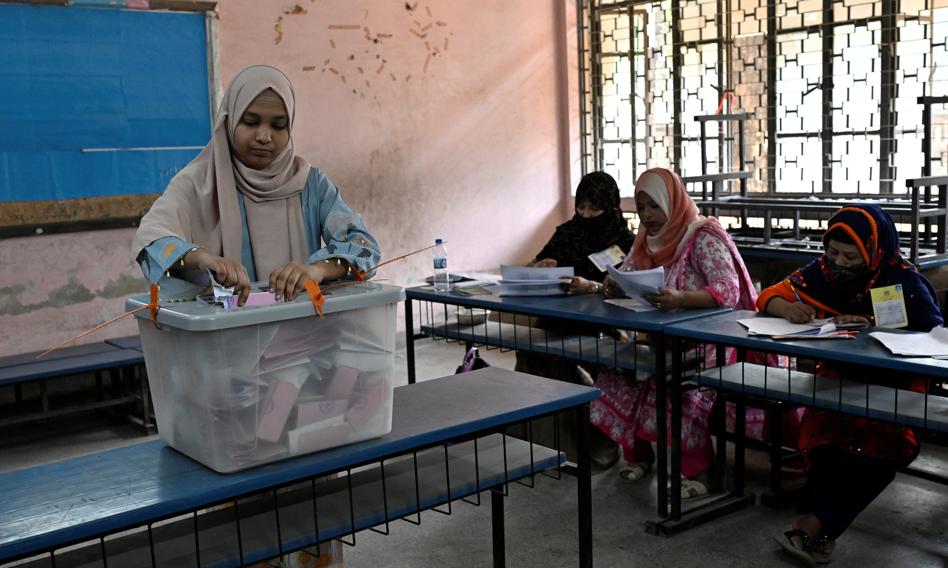
The parliamentary elections taking place in Bangladesh on Thursday are a breakthrough moment in the country's recent history. They are perceived as a test for the democratization process after decades of authoritarianism and a chance for a new beginning after the bloody revolution of 2024 caused by the young generation.
In addition to voting for the 350 members of parliament, over 127 million eligible Bangladeshis will take part in the referendum on the July Charter 2025 – a document defining new rules of governance, including term limits for the prime minister and the introduction of a bicameral parliament.
For the last 15 years, Hasina Wazed, also known as Sheikh Hasina, has been in power in Bangladesh. Although the country recorded significant economic growth during that time, her rule has been burdened with allegations of systemic corruption, human rights violations, executions of political opponents, and elections in 2014-2024 that, according to observers, did not meet democratic standards.
The turning point was July 2024, when student protests against the employment quota system in public administration turned into a nationwide uprising. The authorities' brutal response led to the death of at least 1,400 people, and on August 5 – under pressure from the army and crowds marching on her residence – Hasina fled to Indiawhere he remains to this day.
Since then, the country has been governed by an interim cabinet led by Nobel Peace Prize winner Muhammad Yunus, whose interim government aimed to thoroughly reform state institutions to prevent a return to dictatorship.
Bangladesh's economy is in a difficult situation
Bangladesh's economy is in a difficult situation: the growth rate has dropped from 8 percent. before the pandemic to 4-5%, inflation is around 9%, and unemployment among university graduates reaches 13.5%. The society is very young – the median age is approximately 26, which affects the dynamics of the labor market and social mood.. There is also a deep lack of trust in law enforcement agencies, which were politicized during Hasina's government, which contributes to the growing number of lynchings and lynchings, also against minorities.
Hasina's party, the Awami League, was excluded from running in the elections for its role in the bloody suppression of the protests. What counts for the largest blocs is the Bangladesh Nationalist Party (BNP) and Jamaat-e-Islami (Urdu Islamic community), which compete with each other in populist slogans.
BNP, led by Khaleda Zia's son – Tarique Rahman, who returned to the country after 17 years in exile after Hasina's fall – presents itself as a liberal-democratic party, announcing national reconciliation and economic reforms. According to polls, he enjoys support of about 33 percent. voters. It promises, among others: benefits for unemployed university graduates and a support program for 4 million families, offering 2,000-2,500 taka (PLN 60-70) or their equivalent in food products such as rice or oil per month.
The second political force in the country is Jamaat-e-Islami, which is experiencing a political renaissance after years of persecution during Hasina's rule. She is gaining support, especially among young voters, who pay less attention to her role during the 1971 war of independence, when she supported a brutal campaign by the Pakistani army that killed at least several hundred thousand Bangladeshi civilians.
The future identity of the state is also at stake in the vote
Jamaat has entered into an alliance with the party formed by the leaders of the 2024 student uprising. This bloc runs under the slogans of fighting corruption and social justice, attracting disillusioned youth. It promises low-interest monthly loans to unemployed graduates.
The importance of this election goes beyond a simple change of government. They are intended to restore constitutional order and provide the new government with a social mandate, which Hasina's government has lacked over the last dozen or so years. The future identity of the state is also at stake in the vote: whether Bangladesh will remain a secular country or move towards a model based on Islamic values - even if Jamaat does not highlight them in the campaign.
Post-election stability will be crucial to avoiding economic collapse and resolving the humanitarian crisis related to the presence of more than one million Rohingya refugees who have fled persecution in Brima. The Hindu minority, constituting approximately 8 percent. population, feels threatened because after the fall of Hasina, there were a series of attacks on their homes and places of worship.
For the first time in history, over 7 million Bangladeshis living abroad gained the right to vote. Although the military, which on August 5, 2024 refused to obey the order to open fire on unarmed protesters, declares support for the democratic process, its chief – General Waker-Uz-Zaman – remains an influential figure in the shadows. Election security depends on the deployment of more than 100,000 soldiers.
Joanna Baczala (PAP)
bye/san/