Poland with a nuclear arsenal? “It is not impossible to obtain nuclear weapons”

In late January, the doomsday clock moved 85 seconds closer to midnight. The scientific organization Bulletin of the Atomic Scientists, which monitors nuclear weapons, symbolically shows how far the Earth is from a nuclear catastrophe. The change in guidance draws attention to the fact that the international situation is increasingly uncertain and therefore dangerous. One of the main sources of this uncertainty is Europe.
Representatives of Sweden, Norway, Germany and the Netherlands – some of the most pro-American countries in Europe – have reaffirmed publicly in recent days that all this cannot continue to be ignored. “I think there will be a discussion among Europeans about a European nuclear deterrent,” Norwegian Prime Minister Jonas Gahr Store said last week.
Since the Cold War, Europe has relied on the protection of the United States, which promises that its nuclear weapons also protect NATO allies. In other words, if Russia attacked one of America's allies, the Americans would respond by attacking. While there had always been doubts whether the U.S. really wanted to risk Armageddon over the destruction of some European city that most Americans couldn't even find on a map, the position of American and European leaders was widely seen as unambiguous. Most of Europe trusted this position, and European countries did not attempt to develop their own nuclear weapons or, in the cases of France and Britain, significantly strengthen their own arsenals.
Currently, European countries officially continue to claim that American nuclear protection remains essential, but at the same time they are exploring the possibility of closer relations with the continent's nuclear powers, especially France, whose arsenal has always been separate from those of the US and NATO. British forces are independent of Washington but rely on American technology. The Norwegian Prime Minister only emphasized what is obvious: closed-door talks are coming to an end, and European politicians will be forced to solve this problem completely openly.
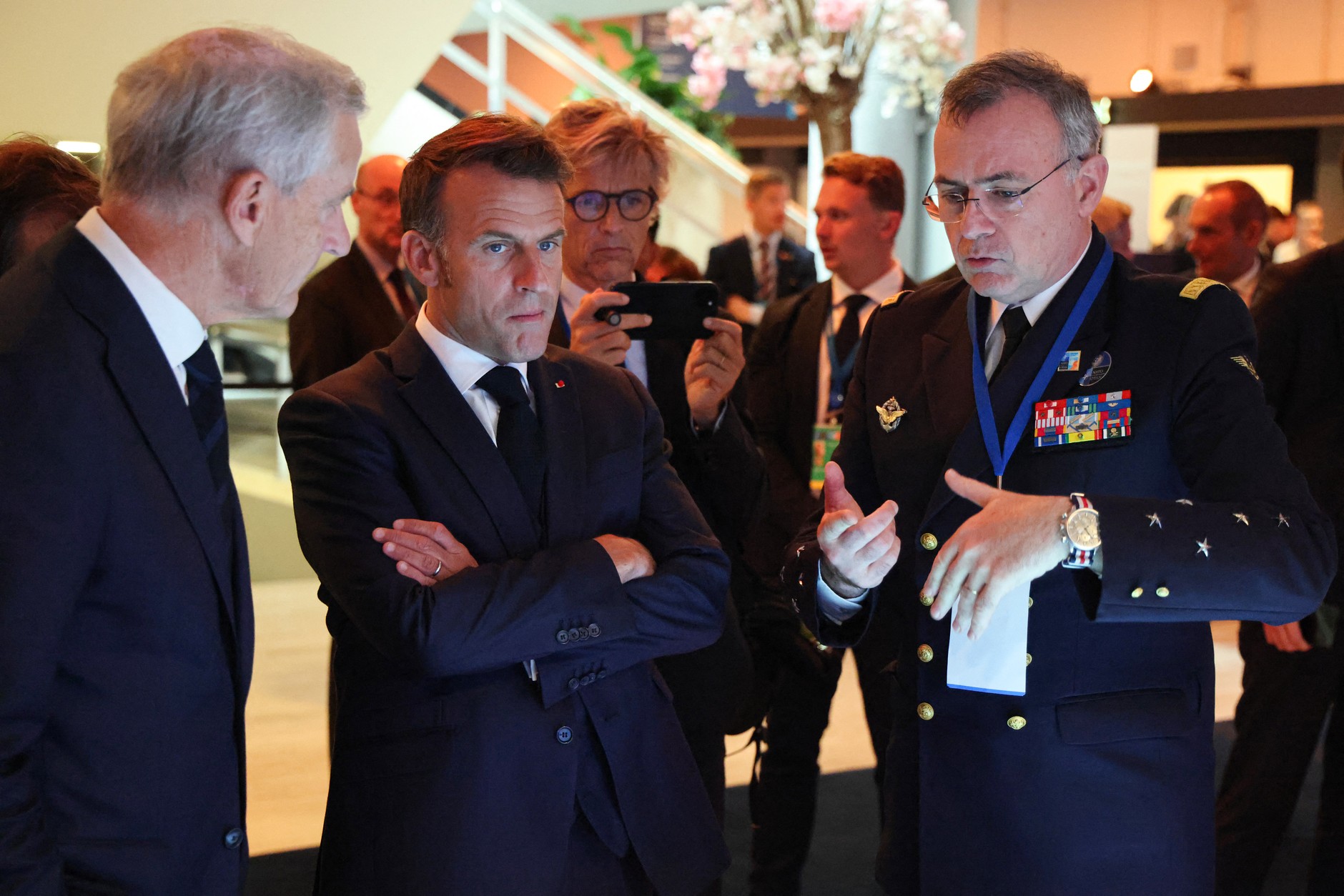
From left: Norwegian Prime Minister Jonas Gahr Store, French President Emmanuel Macron and NATO Supreme Commander for Transformation Admiral Pierre Vandier during the NATO Leaders' Summit in The Hague, Netherlands, June 25, 2025.LUDOVIC MARIN / POOL / AFP / AFP
The French nuclear umbrella
One of the most popular options is the assumption that France will change its nuclear doctrine and with its warheads will protect not only the sovereign interests of France (French territory and its immediate surroundings), but all European allies. — “It's the most logical, fastest and most economical option” – this is how Marko Mihkelson, chairman of the foreign affairs committee of the Estonian parliament, described the possible basis for future European nuclear defense in an interview for POLITICO.
Dutch Foreign Minister David van Weel, in an interview with NBC News, said that the Netherlands “is not completely closed” to the idea of France providing a nuclear deterrent to European countries. Other European governments, including Germany, have expressed general interest in a greater role for France, but their stance remains cautious for now.
French President Emmanuel Macron, who in recent months has held talks with, among others, with Germany and Poland on possible cooperation in the field of nuclear defense, definitely does not reject this role. Unlike the United States and the United Kingdom, France is not a member of the NATO Nuclear Planning Group, although French presidents have always emphasized that France's core national interests have a European dimension. As in the United States, the French armed forces are subordinated solely to the president and only he can decide to use them.
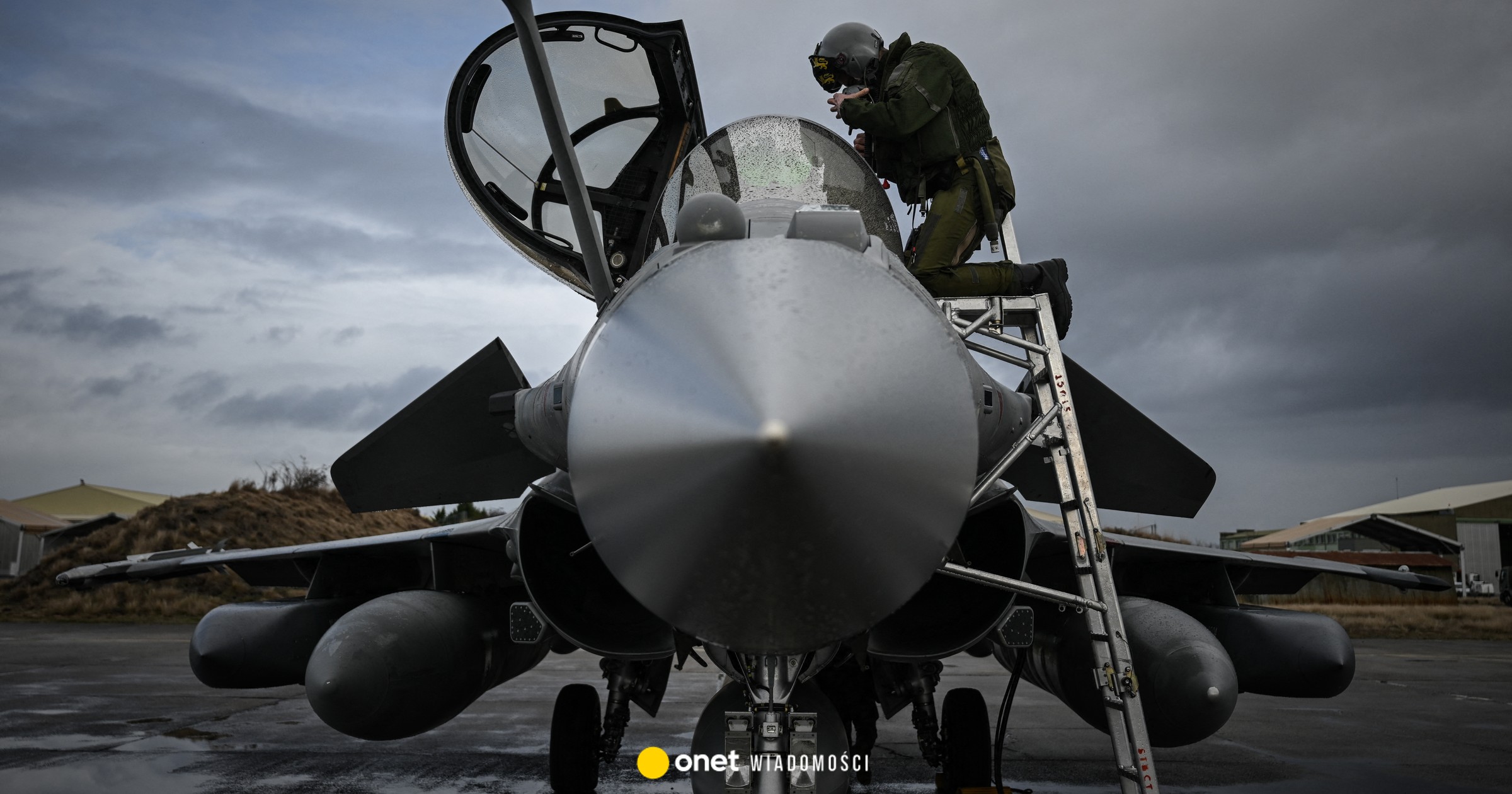
According to European leaders, France could demonstrate its determination by, for example, deploying nuclear-armed Rafale fighters under French command to European countries, making it clear that its interests extend beyond the banks of the Rhine. Macron is expected to make a public comment on France's nuclear doctrine this month, and diplomats in Paris say it should be a more concrete presentation of how exactly France could modify its doctrine.
The French nuclear umbrella is a solution that, however, has many pitfalls. — So far, they (the French) have not openly said that they want to provide an umbrella for Europe. They only talk about a strategic dialogue, within which it would be possible to consider whether France's key interests also have a European dimension – says Liviu Horovitz from the Berlin-based German Institute for International and Security Affairs (SWP) in an interview with the weekly “Respekt”.
France only says it should play a bigger role in European defense, but definitely not that it should replace the United States. The problem is also that, especially if the threat of a retaliatory nuclear attack is intended to deter a would-be attacker, France has historically never believed that extended deterrence, the nuclear umbrella that the United States provides to Europe, would be fully effective. Therefore, it continued to develop its own independent – if limited – arsenal.
It should be remembered that when it comes to nuclear weapons, the technical aspect is as important as the psychological one. Nuclear deterrence only works when the other side has real concerns that a retaliatory attack would be truly devastating. If, for example, Russia did not believe that Washington (or, in the future, Paris) was ready and technically capable of effectively defending Eastern Europe, the risk of a Russian attack would increase.
In this sense, the French nuclear umbrella has already indicated limitations. According to the Stockholm International Peace Research Institute (SIPRI), France has 290 nuclear warheads, while the United States has 3,708 and Russia 4,380 (UK 225). Russia and the United States have a nuclear triad of sea-launched, air- and land-launched weapons, but France's arsenal is naval – with one ballistic nuclear missile submarine that constantly patrols the sea – and air – with squadrons of the aforementioned Rafale fighters equipped with long-range missiles.
Security analysts emphasize that France's smaller number of nuclear weapons is not a fundamental problem. Paris has enough of them to destroy most of Russia's most important targets, and whether it has the strength to destroy Moscow once or a hundred times is irrelevant to the final result. Unlike Russia, France and the UK do not possess smaller and more operational tactical nuclear weapons and rely solely on much larger strategic missiles. This could make it more difficult to respond to a small Russian attack: in such a situation, only bombs capable of destroying entire cities would be available, with the risk of a disastrous escalation of the conflict.
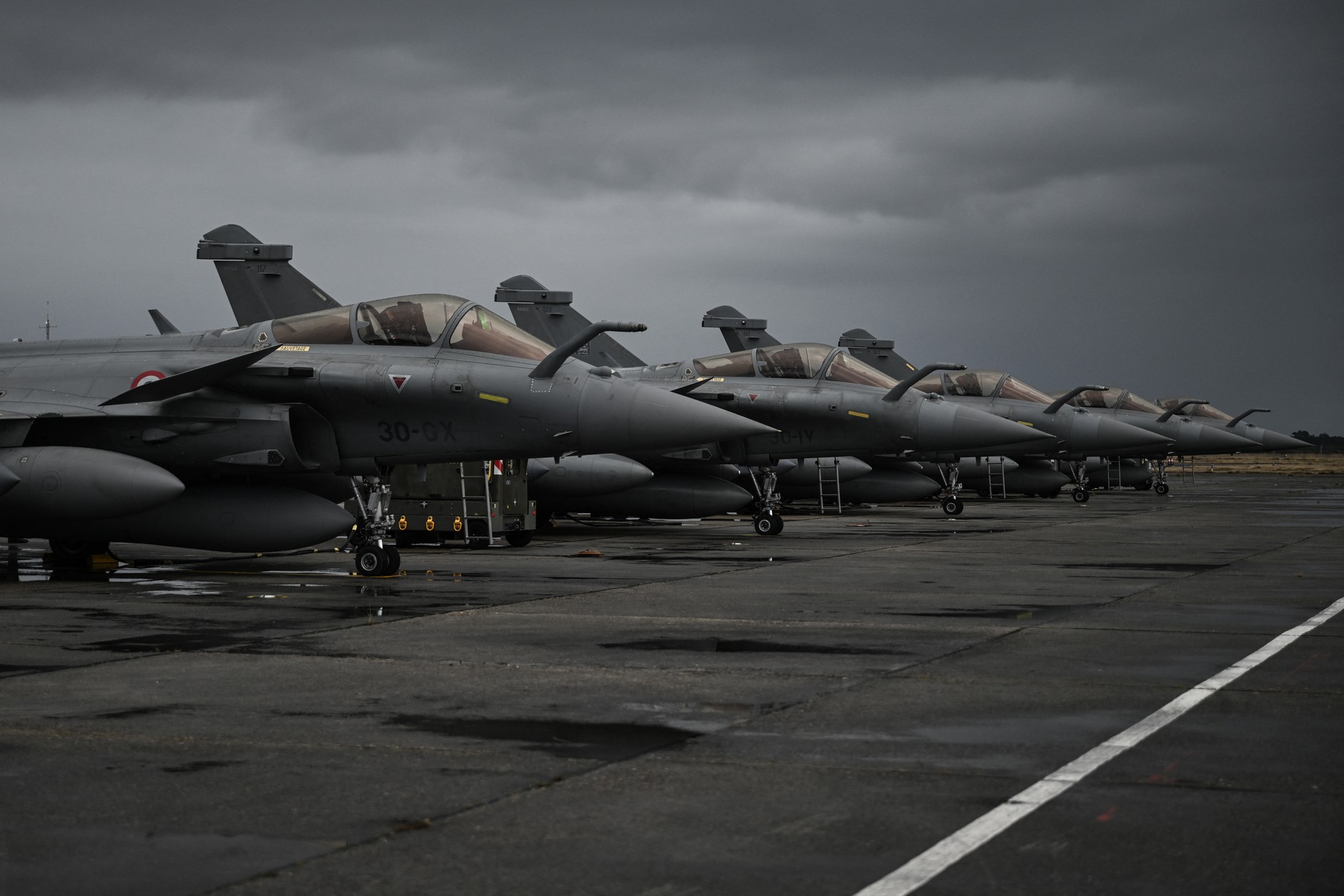
French Rafale fighters, which can carry missiles with nuclear warheads, at Air Base 120 in Cazaux, France, January 29, 2026.Philippe Lopez/AFP / AFP
A new nuclear power
European leaders, of course, know all this and are also considering other options. After more than 50 years, when, under international agreements and global consensus, nuclear weapons have hardly spread (in addition to the five official powers mentioned above, North Korea, Israel, Pakistan and India also have nuclear bombs). Now, however, the situation may change. Countries such as South Korea, Japan, Taiwan and Europe, looking at the uncertainty of the United States, are realistically considering their own alternatives.
The creation of a new European (nuclear) power is also at stake, and there are several candidates: Poland or some Scandinavian countries. They have now become easy targets for the Russian nuclear warheads that Moscow has deployed in Belarus, and as the countries closest to the Russian border, they take their defense very seriously. Finland and Sweden joined the North Atlantic Alliance after decades of neutrality, and Warsaw is working on creating an army of half a million, and its military spending is the highest in Europe.
— Obtaining nuclear weapons is not impossible. This is old technology and it would not be impossible, especially for countries that already have nuclear reactors – Horovitz estimates, adding that even North Korea was able to produce nuclear weapons on its own. At the same time, however, he adds what this would mean for European countries. North Korea sacrificed the well-being of its own starving people to produce nuclear weapons.
However, even for relatively wealthy European countries, the development of nuclear weapons would not be easy. Even in wealthy Sweden, developing its own deterrence model could take two decades and cost many tens of billions of euros, notes Hans Kristensen, director of the Nuclear Information Project at the Federation of American Scientists. Moreover, a nuclear mission would divert attention from the resources that European countries must invest in conventional weapons, training and infrastructure construction, which they urgently need in the near future.
Sometimes we don't realize it, but Moscow would probably find out that a country is trying to acquire its own nuclear weapons and would not let it go unnoticed. Therefore, the Iranian situation could easily repeat itself, where the Americans almost completely destroyed the Iranian nuclear program in a recent air attack.
Horovitz explains. According to him the production of European nuclear weapons would only be possible if an already existing nuclear power provided protection for the program.
No solution is simple. The only certain thing is that Europeans no longer want to rely (exclusively) on Donald Trump. As Dutch Foreign Minister David van Weel, quoted above, said during the World Economic Forum in Davos: “We still consider NATO to be the foundation of our security. At the same time, however, we see that the world is changing and we are entering an era of geopolitical competition.” Europe simply needs to strengthen its position in this field. The question remains how specifically and how quickly.