What is hidden under the construction site of Autostrazi Westului. The impressive discovery when digging the first tunnel at Holdea

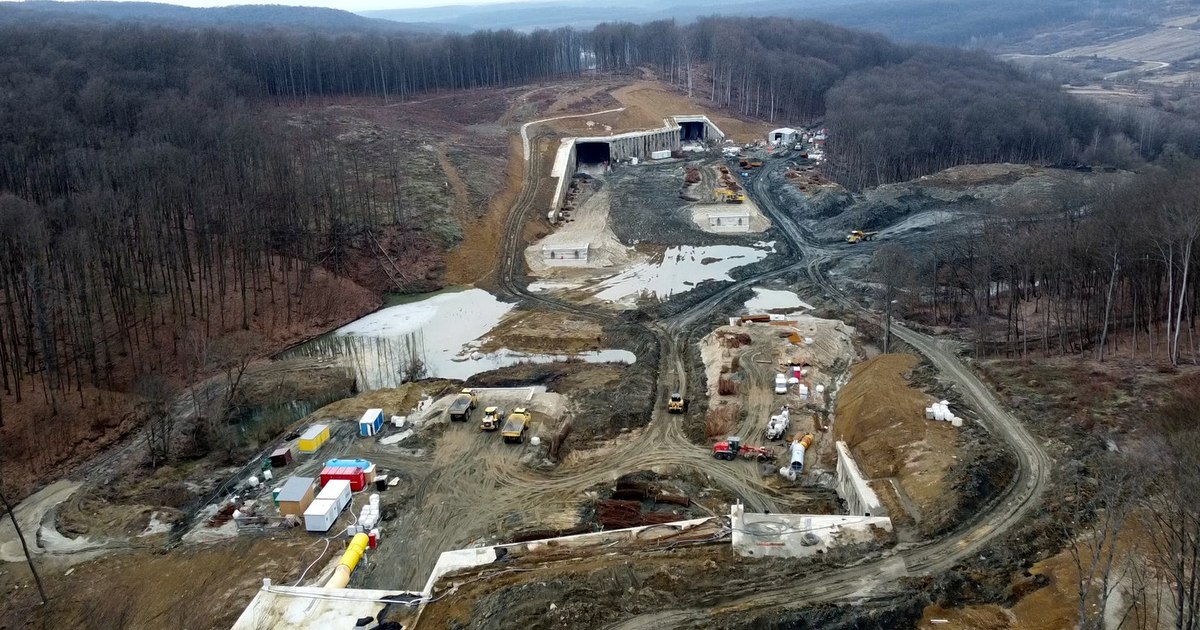
The hills pierced for the construction of the new highway tunnels in western Romania have revealed amazing information about the geology of the Holdea–Margina area, but also about the risks associated with the soils excavated by the builders.
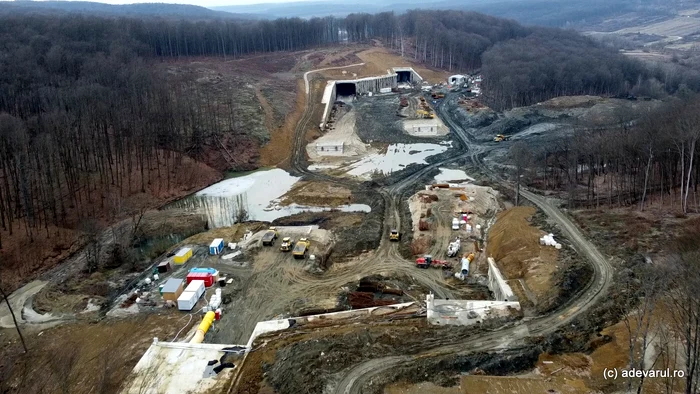
The construction site of the Lugoj – Deva highway. Photo: Daniel Guță. TRUTH
The works on the last unfinished section of the Autostrada Vestului (A1 Lugoj – Deva) started in 2024 and are due to be completed in the fall of 2026.
The highway, half built
The nine-kilometer segment between Holdea (Hunedoara county) and Margina (Timiș) became known as the “Highway with tunnels”, because it includes two tunnels with a total length of over two kilometers, complemented by more than two kilometers of viaducts and passageways.
The physical stage of the works on the Margina – Holdea section has reached 50 percent, according to the latest report of the National Road Infrastructure Administration Company (CNAIR), and more than 500 workers are mobilized on the site almost every day. The Small Tunnel (T1), with galleries of 415 meters and 368 meters, has been completely excavated, and the excavations started on several fronts for the large tunnel (T2) are approaching half.
“At the T2 gallery executed by the contractor UMB, with a total length of 1,985 meters, 660 meters have been excavated so far, part by the “cut & cover” method, and the rest by underground excavation. In the T2 gallery executed by the contractor Euro Asfalt, with a total length of 1,825 meters, 796 meters of excavation have been carried out, both underground and in the areas created from the surface”. informed DRDP Timișoara.
Swampy highway area
As of early 2026, work on the tunnels continued at a steady pace regardless of the weather, but the terrain along the site became boggy in several places due to snow, rain and runoff from the slopes.
Extensive puddles and extremely soft, water-soaked soil pose problems for builders on the edge of the site, especially in the tunnel area. The hills and valleys on the border of Hunedoara and Timiș counties, crossed by the future highway, have been known for centuries for the risks of floods and landslides, a fact that has prevented the development of villages over time.
Until the beginning of the 18th century, the lands around the cities of Lugoj and Timișoara, crossed by the waters of the Timiș and Bega river basins, were mostly covered by swamps, which made life difficult for the local communities. The situation of the area began to improve with the reorganization of the Banat region of Timisoara, planned by the Austrian Empire: the rivers were channelized and regularized, and many marshy places were cleared, without the dangers of flooding being completely removed.
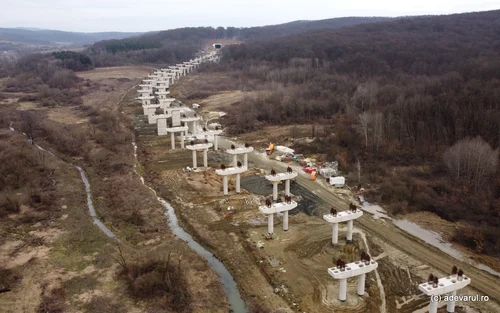
Image 1/9:
Lugoj Deva Motorway construction site Photo Daniel Guță THE TRUTH (33) JPG
In the last years of the 19th century, the Lugoj – Ilia railway was built, with a length of over 80 kilometers, which crosses the hills of the Holdea area. The line, whose route is almost parallel to that of the Lugoj – Deva Highway, was put into use in 1898. Its most spectacular work of art was the railway tunnel at Holdea, with a length of approximately 400 meters, made in the vicinity of the current large highway tunnel, located in the construction site.
The first tunnel dug through the layer full of fossils
The digging of the railway tunnel, almost 130 years ago, between the towns of Holdea and Coșteiu, revealed precious details about the geological structure of the hills, showing the difficulties that their soil presented.
Specialists discovered marine deposits millions of years old: sandy blue clays, sands, marls and limestones, remnants of an extinct sea that once covered western Transylvania and Banat. Marine fossils were identified in impressive quantities in the excavated layers, and the Holdea tunnel became a point of interest for German and Hungarian scientists.
“A paleontological treasure was brought to light during the construction of the tunnel from Coșteiu, on the new Ilia – Lugoj railway line. By a favorable coincidence, this fossiliferous deposit was crossed by a large tunnel, and the thousands and tens of thousands of fossils thus arrived abroad, to be studied and processed there”. informed the Geological Magazine (1902).
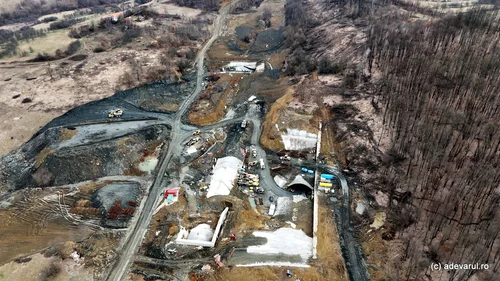
Image 1/17:
Lugoj Deva Motorway construction site Photo Daniel Guță THE TRUTH (24) jpg
Thousands of marine mollusk fossils were then picked up by Dr. Oskar Boettger, professor and researcher at the Senckenberg Museum in Frankfurt am Main, and transported to Germany for study.
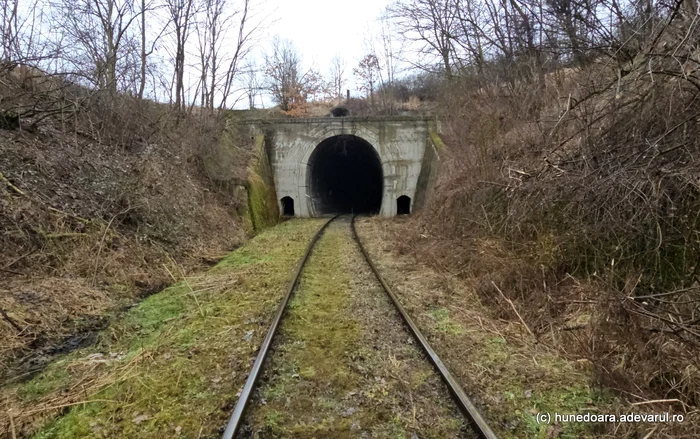
Holdea Tunnel. Photo: Daniel Guță. TRUTH
The tunnel had been dug through sediments deposited on the floor of a former warm sea that covered the region about 15–12 million years ago. The entire area of Lăpugiu de Jos commune, to which Holdea village belongs, was rich in fossils, and the locals were able to take advantage of it.
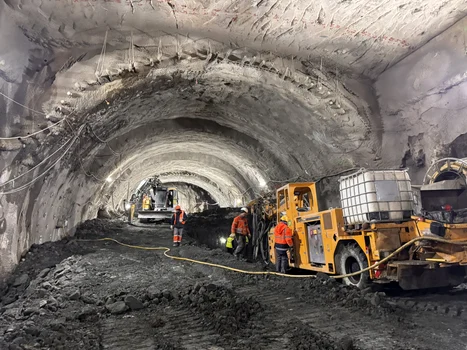
Image 1/20:
Highway with tunnels from the west, Holdea Margina PHOTO DRDP Timișoara (4) jpg
“Most of the famous Lăpugiu Mediterranean fossils come from the Gos valley. In this valley fine blue, bound sand and blue clay are exposed throughout. The strata exposed here contain fossils everywhere. After the rains, especially in the spring, the fossils are washed away from the altered clay and can be seen scattered on the slopes or in the stream bed. They are collected by the youth of the village and exchanged for goods of little value to the local merchant Johann Petrovits, who sells choice specimens to German museums for considerable sums,” showed the Annual Report of the Geological Society of Budapest for the year 1907.
Sandy soil also means risks of landslides
Over time, the Lugoj – Ilia railway was flooded several times, and landslides often destroyed it. The communities in the Holdea-Margina area also suffered from floods and geological phenomena. The tunnels and viaducts of the future freeway were planned both to reduce the freeway's impact on the environment and to solve soil stability issues.
“The existence of landslide problems was confirmed and a retraction of the route between Coșteiu de Sus and Lăpugiu de Jos was necessary… From the observation of the geomorphological features in the field, it seems that relatively deep landslides occur in the areas where the structural inclination of the geological layers coincides with the inclination of the slope. The possible sliding planes are represented by the clay-dust/sand interfaces, where periodic water saturation can lead to a significant decrease in shear strength. Slips are often sequential.” it showed the technical project of the Lugoj – Deva Highway.
Completion of work on the nine-kilometer segment of the highway is expected in 2026.