Donald Trump's return to the White House has a historical irony. His political rise has been fueled, in part, by Americans' deep distrust of the establishment that supported the Iraq war. Today, however, critics warn that the Republican leader could repeat some of the strategic mistakes and rhetorical excesses that marked the intervention decided in 2003 by President George W. Bush, reports CNN.
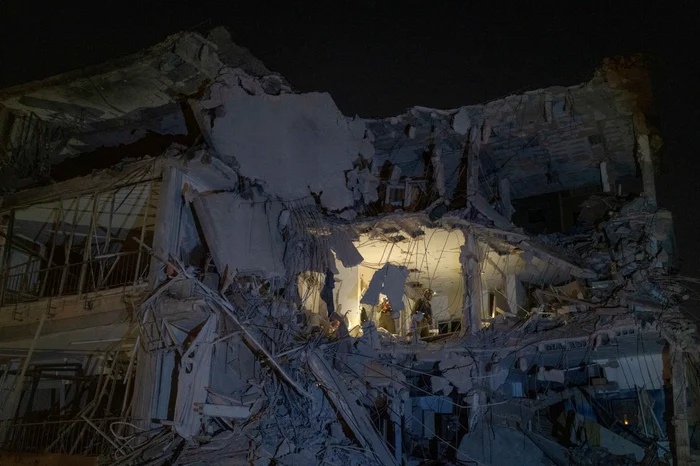
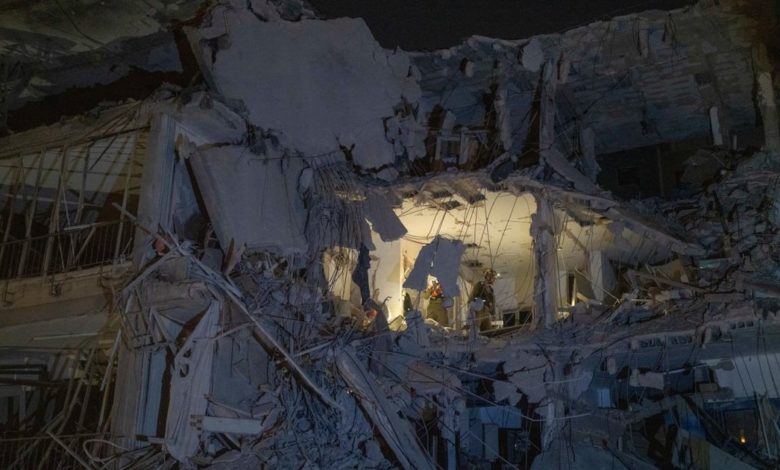
Building in Iran destroyed by Israeli missiles/PHOTO: X
Trump has not announced a final decision on a possible military strike against Iran. Still, the massive build-up of US naval and air forces in the region represents the largest troop deployment since the invasion of Iraq that ousted Saddam Hussein.
For the White House, this mobilization could constitute leverage in the negotiations resumed in Geneva. But in the absence of major diplomatic progress, withdrawing forces without a concrete result could damage the president's prestige.
A public opinion unprepared for war
The Trump administration has built on the message of the “America First” movement, hostile to prolonged foreign intervention. Unlike the run-up to the Iraq invasion, when the Bush administration spent months preparing public opinion for the conflict—albeit based on information that was later disputed—the current administration has offered piecemeal and often contradictory justifications.
In his State of the Nation address, Trump reiterated that Iran must never be allowed to obtain a nuclear weapon. However, his statements raised questions, given that he had previously claimed that Iran's nuclear program had been “annihilated”. The president also cited American casualties in Iraq attributed to Tehran-backed militias, as well as Iran's violent crackdown on domestic protests.
The missile dilemma
The historical echo of the 2003 justifications was felt when Trump spoke about the Iranian ballistic program. He warned that Tehran was developing missiles capable of threatening Europe and, in the future, the US territory.
The rhetoric is reminiscent of statements made by George W. Bush and then-British Prime Minister Tony Blair regarding Iraq's supposed direct threat to the West. Many of those claims have since been shown to be exaggerated or erroneous.
Beyond the rhetoric, another lesson of Iraq concerns the lack of adequate planning for the post-conflict period. The overthrow of Saddam Hussein's regime was followed by years of instability, sectarian and insurgent fragmentation.
In the case of Iran, the uncertainties are equally pronounced. According to CNN reports, the head of the Joint Chiefs of Staff, General Dan Caine, would have recognized the difficulty of anticipating the consequences of a regime change in Tehran. The US intelligence community estimates that, in the event of a power vacuum, the Islamic Revolutionary Guard Corps — the regime's hardline wing — could take over. Such a scenario would not guarantee a more moderate or favorable orientation to Washington.
Strategic calculation and the risk of hubris
The history of American foreign policy shows that assumptions about the behavior of adversaries can fail in contact with the complex reality of the Middle East. Even Trump warned, last year, in Saudi Arabia, against interventions in societies “that we don't fully understand”.
Asked why Iran is not bowing to American pressure, special envoy Steve Witkoff recently suggested that the president is surprised by the lack of capitulation. But Tehran has its own historical lessons. The fall of leaders like Moammar Gadhafi, in the absence of weapons of mass destruction, fueled the belief that a credible arsenal can be a guarantee of regime survival.
In 2003, the Iraq intervention was presented as a quick, “shock and awe” type operation. The reality turned out to be much more complex. In recent days, Trump has publicly dismissed warnings about the difficulty of a potential conflict with Iran, suggesting a confrontation could be “easy to win.”
Diplomacy or Confrontation?
Negotiations mediated by Oman could offer an alternative to escalation. But their success depends on Iran's willingness to make concessions that Trump can present as a political victory.
Tehran has indicated it may negotiate on the level of uranium enrichment, but the ballistics program remains a sensitive issue. In addition, the US president has his own domestic constraints: it would be difficult to accept a deal that resembles the Barack Obama-era nuclear deal, which he himself denounced.
For Trump, the temptation of a military solution may be strong, especially at a time when Iran's regional networks are weakened and the country's economy is affected by sanctions. Eliminating Iran's nuclear and ballistic programs could redraw the balance of power in the region and give the White House a major foreign policy achievement.
At the same time, the risks are considerable: American military losses, civilian casualties, and possible long-term regional destabilization.
If he succeeded in removing the ayatollahs' regime, Trump would join a list of presidents — from Jimmy Carter to Joe Biden — who have failed to fundamentally change the relationship with Tehran.
The question remains whether the perceived strategic opportunity today does not, in fact, hide the risk of repeating a costly lesson from the past.