Tudor Chirilă, exchange of words with the Minister of Culture: “You should know, if you still became a minister, that there are artists whose work cannot be measured with a caliper” / “Let's do a little recap”


The singer and actor Tudor Chirilă publicly intervened in the controversy related to the proposal of the Ministry of Culture to standardize the working time for artists, in a post on Facebook that generated an exchange of lines with the minister Demeter András István. Chirilă says that the measures ignore the specifics of the acting profession and apply the same rules to very different professions in the cultural system.
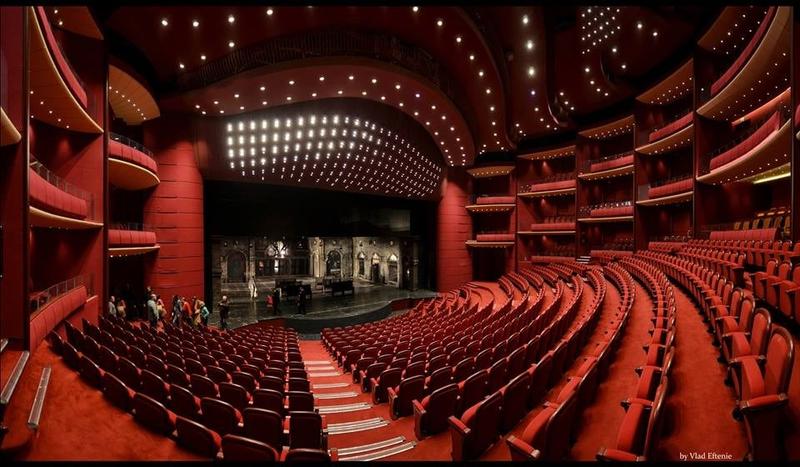 After the Ministry of Culture announced that it is regulating the work of artists, the actors of the National Theater in Bucharest are taking to the streets on Tuesday. UNITER: “It wasn't like that even during the communist period”
“You should know, if you still became minister of culture, that there are artists whose work cannot be measured with a caliper”
In a message posted Monday evening on Facebook, Chirilă states that the state treats occupations that do not work in the same way and that the work of actors cannot be measured strictly in hours or time: “In general, in Romania we lack nuances. And when we legislate. That many times measures are taken that target distinct categories of work or occupations so that they cannot be applied en bloc, to everyone. Perhaps it is possible to standardize the work of a librarian or a museum worker, to you can suggest, of an accountant or head of human resources in a cultural institution, but you should know, if you still became the minister of culture, that there are artists such as actors, whose work cannot be measured with a caliper, computer or excel”.
The artist believes that the work of an actor cannot be measured only in hours or attendance at the theater and that the daily attendance does not reflect the reality in a performance institution. He claims that there are many days when an actor simply has nothing to do in the building, even if they were to come to work, because rehearsals don't involve everyone at the same time:
“We, at the Comedy Theatre, have three rooms, let's say they are repeated simultaneously in all three (it wouldn't be possible because the City Hall doesn't give us money for such an abundance) and these three productions have casts that don't cover the entire theater collective, what do the others do, they come to the theater to sit in booths or offices? They perfect themselves professionally waiting for the next role somewhere in a hallway, from 9 to 17?”.
Tudor Chirilă also believes that standardization does not solve the real problems in the system, including the salary differences between actors:
“I work in a theater where a colleague who hasn't played even 10% of what I was lucky enough to play, earns better than me because he has a doctorate. This has been happening for over 15 years. What will change the situation if he comes to act every day, but won't go on stage because the directors always choose another cast? The real problem is not how some actors ended up taking their undeserved salary, how did actors who don't act for years to win a competition from which we understand that a commission (from the theater) decided that a talented actor presented himself, which the theater, the repertoire, needs”.
“The Minister of Culture does not understand the profession he practices”
Tudor Chirilă says that the regulation of artists' work is not an isolated case, but is part of a wider series of decisions that show that the Minister of Culture “does not understand the job of an artist”.
He explicitly states that this lack of understanding is frustrating for those in the field. The artist accuses the Minister of Culture, András Demeter, of not knowing essential areas of culture and of making wrong or dangerous decisions over time. Chirilă states, among other things: “The Minister of Culture has demonstrated that he doesn't know much about copyright law, he doesn't know the categories of rights, and he relies too much on advisors or various workers from the Ministry of Culture whose observations he takes as the letter of a new law that he can't understand.”
Furthermore, the actor criticizes the Minister of Culture for the way he handled the management contests in the cultural institutions. He says that, in seven months of his mandate, the minister failed to organize a competition at the National Theater and that he caused dissatisfaction with the proposed conditions, which, in his opinion, favor seniority in the system at the expense of management projects:
“Demeter Andrasz is not good at transparent contests either, in seven months after taking over the mandate, he was not able to organize a contest at the National Theater, moreover, he managed to annoy everyone, by proposing that a candidate for the position of manager should have been active for at least ten years in a state institution. Therefore, it is not the management project that matters, but seniority in the system. And it sounds a bit like dedication, doesn't it?
I don't expect the minister of culture to resign. His route through cultural institutions (TVR, Public Radio, Ministry of Culture) speaks for itself. Fudulia does not involve introspection or self-analysis.”
Chirila accuses the lack of competence and interest in culture
At the end of his post, Chirilă broadens his criticism and says that the lack of political reactions shows that the field of culture is not a real priority, neither for the government nor for the parties that talk about national identity. He notes that these formations did not have public positions, although the topics related to the National Theater or heritage are directly related to cultural identity:
“Romanian culture is not a priority for anyone. Neither for the government, nor for the sovereignists who beat their fists in the chest that we are losing our identity. You will not see any official protest position of the so-called nationalist parties, in fact extremists, like this ministry reached the UDMR. I mean, it was a gold mine in sovereignist communication, look sir, who is in charge of our national culture, how is it possible, blah, blah. Nothing, it's not a topic important – that this is how they have taken care for thirty-five years. No sovereign has given a damn that the National Theater does not have a manager or that the administration of the heritage is being politicized through the absorption of the INP, two institutions directly related to the national identity about which they make such a case.”
Reply of the Minister of Culture
The Minister of Culture, Demeter András István, replied to Chirilă in a comment on the Facebook message: “Dear Mr. Tudor Chirilă, dear Tudor, Let's do a little recap.”
He says that the approach regarding the standardization of working time did not appear recently and that it comes as a result of the requests of the Court of Accounts.
According to him, as early as 2023 the Court of Accounts notified the ministry, consultations followed until 2025, and this year “a working group of appointed/volunteer representatives from among the guilds” was formed, which developed “a document, an attempt at self-regulation: the Instructions – in response to the imperative request of the Court of Accounts”.
Demeter says that the instructions will be tested for 30 days only in institutions subordinate to the Ministry of Culture, and then a decision will be made based on the results: “The results will be analyzed and, depending on these results, a decision will be made. There are several possibilities: either they change/improve certain aspects and the instructions become norms, or they are found to be perfectly applicable and become norms, or they are found not to work and they are abandoned with perfection.”
The minister also used an example from the theater to explain the idea of testing in practice: “It's a bit like rehearsals: a brilliant theoretical proposal doesn't work on stage, or an apparently uninspired idea unexpectedly turns out to be very useful in practice.”
He added that the proposal comes precisely from the desire to avoid regulations imposed “from top to bottom”: “Against the background of the failure of all attempts at regulation, from top to bottom, we tried in the opposite direction. Through this proposal for self-regulation of the field.”
Protest announced at the National Theatre
The pilot project of the Ministry of Culture that stipulates the rationing of working time for artists and staff in national theaters has generated criticism in the artistic world. “Artistic creation cannot be measured in hours and tables,” says UNITER, the professional organization that represents Romanian theater artists and professionals. A UNITER protest document is signed by artists such as Victor Rebengiuc, Marcel Iureș, Radu Afrim, George Mihăiță and Vlad Zamfirescu.
The actors of the “IL Caragiale” National Theater in Bucharest, together with the employees of the technical and production area, announced a protest for Tuesday, at 2:30 p.m., in front of the theater, against the implementation of the pilot program sent by the Ministry of Culture, on the recommendation of the Court of Accounts. “Colleagues from other theaters are also invited to support the non-application of this program”, announce the actors of the Bucharest National.
“We believe that this project kills creativity in culture and turns artists into “writers of daily reports”, and the artistic director or manager – into our “reporter”, everyone. The artist's work cannot be standardized in 8 hours a day, his work is not only on stage, it is also with himself – starting at dawn and ending at night – for 10 months a year, 6 days a week”, and an hour on stage involves emotional consumption difficult to quantify”, say the TNB actors.