
Russia is planning something near the border with Finland. Putin made the first moves


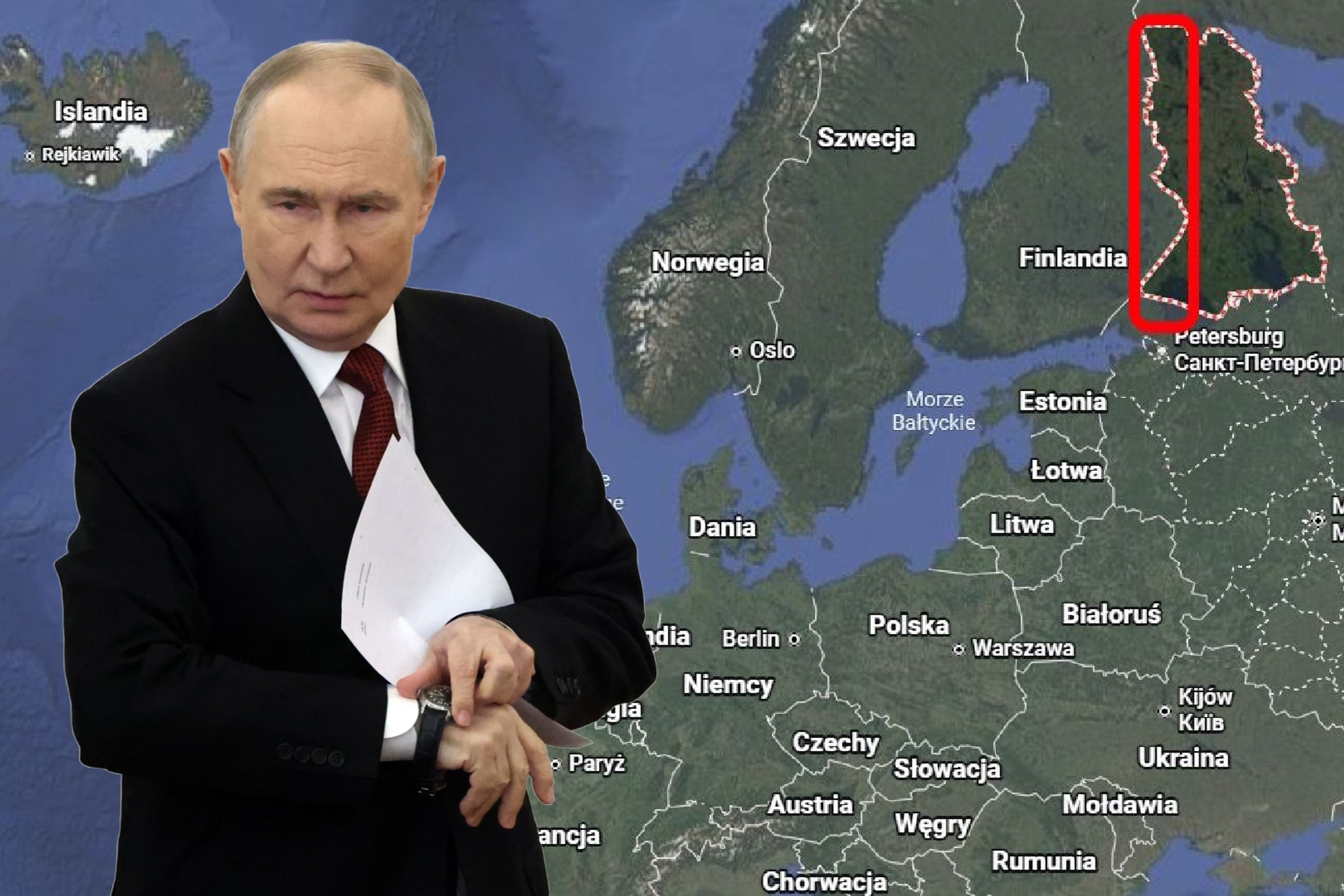
The Finnish public television station Yle regularly analyzes satellite images to track Russian activities near the Finnish border. The latest analysis, published at the end of January this year, indicates several significant changes. First, Russia began renovating the Soviet-era garrison in Petrozavodsk, which had stood empty for years.
The capital of the Republic of Karelia is located approximately 175 km from the border with Finland, where there is already an air base and an equipment warehouse. According to the report, in the Rybka district one can currently observe the clearing of large forest areas and the presence of dozens of military vehicles.
Construction works indicate that the facility is being prepared for permanent use, argues military expert Marko Eklund, who has been monitoring the movements of the Russian armed forces and analyzing satellite images for the Yle station for over 25 years.
According to him, the garrison could be used for the new 44th army corps, which Russia intends to create in Karelia. The corps is to number 15,000. additional soldiers who will need accommodation and training.
Moreover, according to the report, construction work is underway on the military town in Kandalaksh, which Yle already reported last year. Based on satellite photos, it can be concluded that in the Luptsche-Savino garrison, located approximately 100 km from the Finnish border at the foot of the Kola Peninsula, several new buildings were built. According to expert Eklund, the expansion is to serve the new artillery brigade and parts of the engineering brigade, which in total may number about 2,000 soldiers.
The Institute for War Studies (ISW) referred to these observations in one of its latest situation reports.
Russia is building military infrastructure near the border with Finland, likely as part of a broader military expansion effort to prepare Russian armed forces for a possible future conflict with NATO
— writes an American think tank, which in the past reported on the expansion of Russian infrastructure on the border with Finland.
These changes are part of the new policy announced by the Kremlin in 2024. Then the Western Military District, covering the entire northwest of Russia, was divided into the Moscow District and the Leningrad District, which since then cover all regions bordering NATO countries. In this way, Russia probably wants to “improve its strategic command structure along the northern border and take a position vis-à-vis NATO along the border with Finland,” ISW estimates.
Finnish intelligence services emphasize in a new report that “changes introduced as part of the reform of the armed forces” do not pose a direct threatbecause “so far they have not led to a significant increase in Russia's military potential in Finland's neighborhood.” Most of the Russian armed forces are deployed in Ukraine.
After the end of the war, however, it is clear that one of the main directions of development of the Russian armed forces will be Finland
– we read further in the report.
Particularly important strategically for Russia
The northern part of the area bordering Finland is of particular strategic importance for Russia in the event of a possible conflict with NATO, explains expert Eklund in an interview with Yle, because only a narrow strip of land, the Kola Peninsula – where the Russian northern fleet is stationed – connects to the continent.
If the strait were lost, the land connection between the Kola Peninsula and Russia's northern nuclear fleet would be severed
– explains Eklund.
However, the strengthening of infrastructure near Finland is also apparently a reaction to the country's accession to NATO in 2023, which the Russian authorities have sharply criticized. “Decades of good neighborly relations were lost” – this is how Foreign Minister Sergei Lavrov commented on this decision. Since then Finland is increasingly becoming a target of Russian propaganda. Last year, the Kremlin described the country as “aggressive towards Russia” and accused Helsinki of preparing an attack on Russia.
In an interview recently published by the state news agency TASS, former president Dmitry Medvedev spoke negatively about Finland. When Medvedev, now vice president of the Security Council, talked about his training as an artilleryman during his military service, during which he sometimes “fired towards the Finnish border,” he was asked: “Wouldn't you like to shoot at Finland now?” According to the record, he laughed and said “they're really weird people, to be honest.”
Medvedev said that the Finns had forgotten that it was the Soviet Union that made their independence possible and later freed them from being “Hitler's satellite state” — even though it was the Soviets who invaded Finland in 1939 and eventually annexed almost a tenth of Finnish territory.
Finland should be grateful, Medvedev continued, but it had simply “destroyed good, constructive relations.”
Finally, he uttered a barely concealed threat: “We won't miss them,” he said, according to TASS news agency. “However, we would not advise them to joke about this, because the experience of 20th century conflicts does not speak in their favor.” ISW assumes that Medvedev's statements are part of the psychological war waged by the Kremlin in order to create alleged reasons for future military action.
“Representatives of the Russian government made direct threats to Finland, including through rhetoric that Russia falsely justified its invasion of Ukraine against Finland,” the think tank wrote in one of its analyses. This is all part of the hybrid war with which Moscow is trying to destabilize the Westwrites the Finnish intelligence service. In addition to spreading disinformation, this also includes espionage or sabotage of critical infrastructure, such as undersea cables.
Russia deliberately uses various methods of hybrid influence and tries to scale its actions in such a way that they can be denied or difficult to link to the Kremlin
– we read in the report.
However, Finland is probably not the main target of sabotage activities. The tightening of Finland's policy towards Russia has meant that “Moscow's ability to obtain information from human sources in Finland remains limited.”


