Article by Mitica Docan – Published Tuesday, February 10, 2026, 12:47 / Updated Tuesday, February 10, 2026 1:11 p.m.
French coach and choreographer Benoit Richaud was caught on camera at the Olympic Games wearing two different jackets, Canada's, then Georgia's, in just 15 minutes, informs BBC. Should this be uncomfortable?
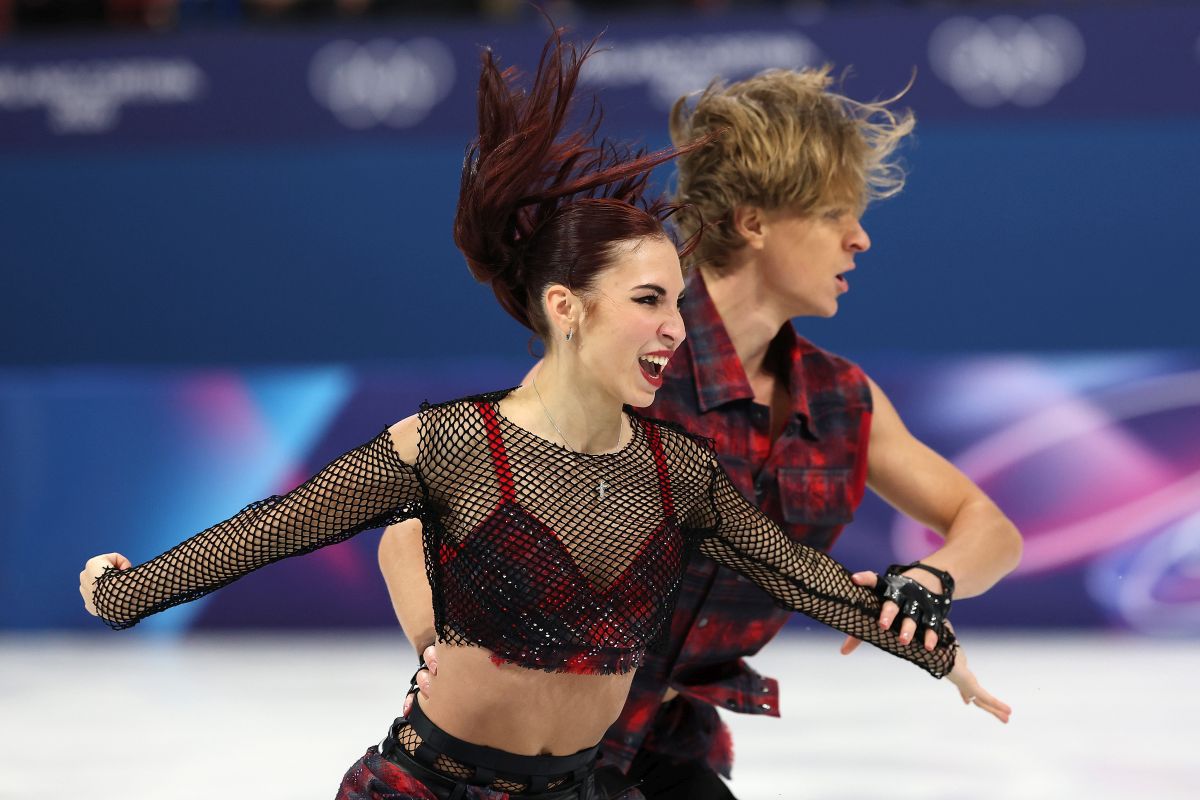
The situation is all the more spectacular as Benoit Richaud works with 16 skaters, representing 13 different countries, which leads to hilarious images where the coach dons the jersey of different nations, happy and then sad on automatic fire, depending on which athlete is on the ice.
It is a common fact at the Winter Olympics, where nationality is traded by athletes without sentimentality, depending on the funds made available to them by the host countries. Norwegians ski for the Netherlands, the daughter of the Russian “iron” Eteri Tutberidze performs under the flag of Georgia, Romania lines up the former Russians Anastasia Tolmacheva and Dmitrii Shamaev in the biathlon.
It's a sheet of flags and supposed loyalties that is often found in other disciplines, from chess to rugby and boxing.
Football has limited it at the national level, where, once converted, you can no longer change the shirt, but it has some accents at the club level, where, for several decades already, the “Madrilenos” from Real Madrid have no idea where the Puerta del Sol is. The “Madrilenos” are those who play for Real Madrid, not those who have any complex connection with the city or the region.
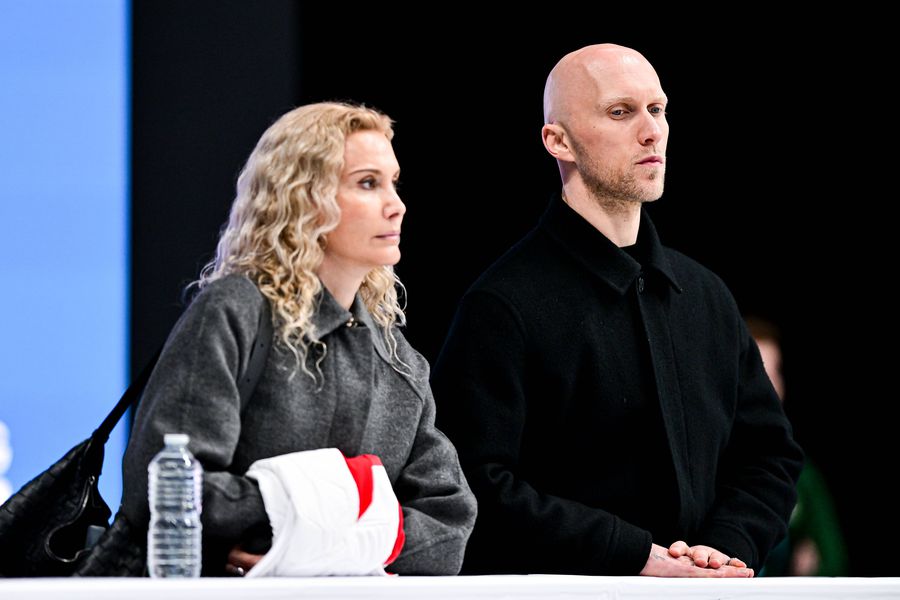
Eteri Tutberidze and Benoit Richaud, in a competition from January 2026, photo: Imago
Who represents who else
I've always assumed that when you watch the athlete or national team that represents you in a competition, you have to find yourself in a certain way in what you see.
Not entirely, because we are all beings with God-given uniqueness, and the nation is an imaginary concept that only outlines what we would have in common, but there must be a certain set of values, certain common traits or experiences, of a light familiarity, that makes you applaud at the end, both on behalf of yourself and those with whom you sit for a beer afterwards.
We were excited by Hagi's goals, because he was our footballer from Constanța, who didn't know the difference between “which” and “on which”, raised and trained in a system fed and thought by some like you and me, the result of both personal effort and a way of seeing the world. Rationally, not “Romanian” in the ethnic sense (an idea I've never understood), so much as a “Romanian” by experience of living in a larger community, with certain instincts of a certain kind.
My ad hoc definition is very likely to be superficial, but I could cripple it further: my expectation was that the nation could be defined by … something. Something that bundles things important to members.
In a decades-long multicultural Western Hemisphere, in something of a crisis to answer the big questions about itself, and where diversity is actively sought, not tolerated, the definition of the nation has narrowed to belonging to a territory. Sometimes, not even that much. Communities are no longer defined by religion, language, culture, common experience, but by loyalty to some common colors stuck in the chest.
We are prisoners of heraldry rather than reality. Which may be a good thing, given the terrible excesses that nationalisms have propagated over the past two centuries. Moreover, it is possible that the obsession of some to propel their flag at any cost, sometimes mass “naturalizing” athletes from other countries, is the mirror of the pathology. I don't know.
Perhaps it is time, however, to have a discussion about what this means in competitions of the scope of the Olympic Games, where notions such as “the French skater”, “the Italian skier”, etc. they start to lose their precision. Maybe some more rigid criteria when representing a country would be nice. Or maybe times are coming when it would be fairer for us all to be under a neutral flag and be able to define ourselves differently.