New York City in the White House's Crosshairs Over Busing. Trump may take revenge


The Trump administration's move to torpedo New York Mayor Zohran Mamdani's plan to introduce free bus rides in the city is more than just a threat to his signature campaign proposal. This is a sign that the truce between the White House and America's largest city is very fragile.
This concerns the Department of Transportation's warning (about suspending funding for public transport), first reported by POLITICO, which is the clearest signal yet that Mamdani's unusual relationship with President Donald Trump has its limits. That bond — cultivated through private phone calls, text messages and a surprisingly cordial meeting in the Oval Office — helped the 34-year-old Democratic socialist mayor avoid some of the administration's most repressive tactics, including massive immigration enforcement raids in the city.
But the threat to introduce free buses shows how quickly the nature of their relationship can change and reminds us of the many opportunities an angry Trump would have to take revenge on New York.
– Many problems may come our way. What about the Second Avenue subway [rozpoczętym projektem rozbudowy nowej linii]? What about other transport hubs and airports? What about money for health care and homeless assistance? What about funds for education and hospitals? The list is long, says Carlo Scissura, head of the New York Building Congress, a contractor support group that has long supported the infrastructure project under the Hudson River blocked by Trump. — It's a really terrible situation, especially since we shouldn't play politics on these issues.
Federal funds are an essential component of the revenue mix that supports more than $100 billion in New York City wages and services each year. (over PLN 353 billion at the current exchange rate) Their reduction constitutes one of the most tangible threats to the Mamdani administration.
Most of that federal funding goes to the state, which was on track to receive $91 billion. (over PLN 321 billion) in the current budget cycle, mainly to reimburse local governments such as New York for health care costs – if they were suspended, it would have a disastrous impact on the city's finances.
The Metropolitan Transportation Authority, which is run by the state and operates the city's subways and buses, receives significant federal support for capital investments. However, New York also gets money directly from the federal government. According to the report of the Citizens Budget Commission, a non-profit organization promoting a conservative approach to the budget, the city is to receive approximately USD 7 billion. (almost PLN 25 billion) directly from federal funds for education, child care and shelter costs.
Taken together, the threat of reduced aid from Washington would make it difficult for Mamdani to provide standard city services, let alone fulfill his costly campaign promises.
Last Tuesday, POLITICO reported that the federal Department of Transportation had developed a proposal that, with a few exceptions, would halt public transport funding for all large cities offering free bus services — which is clearly a blow to the young mayor.
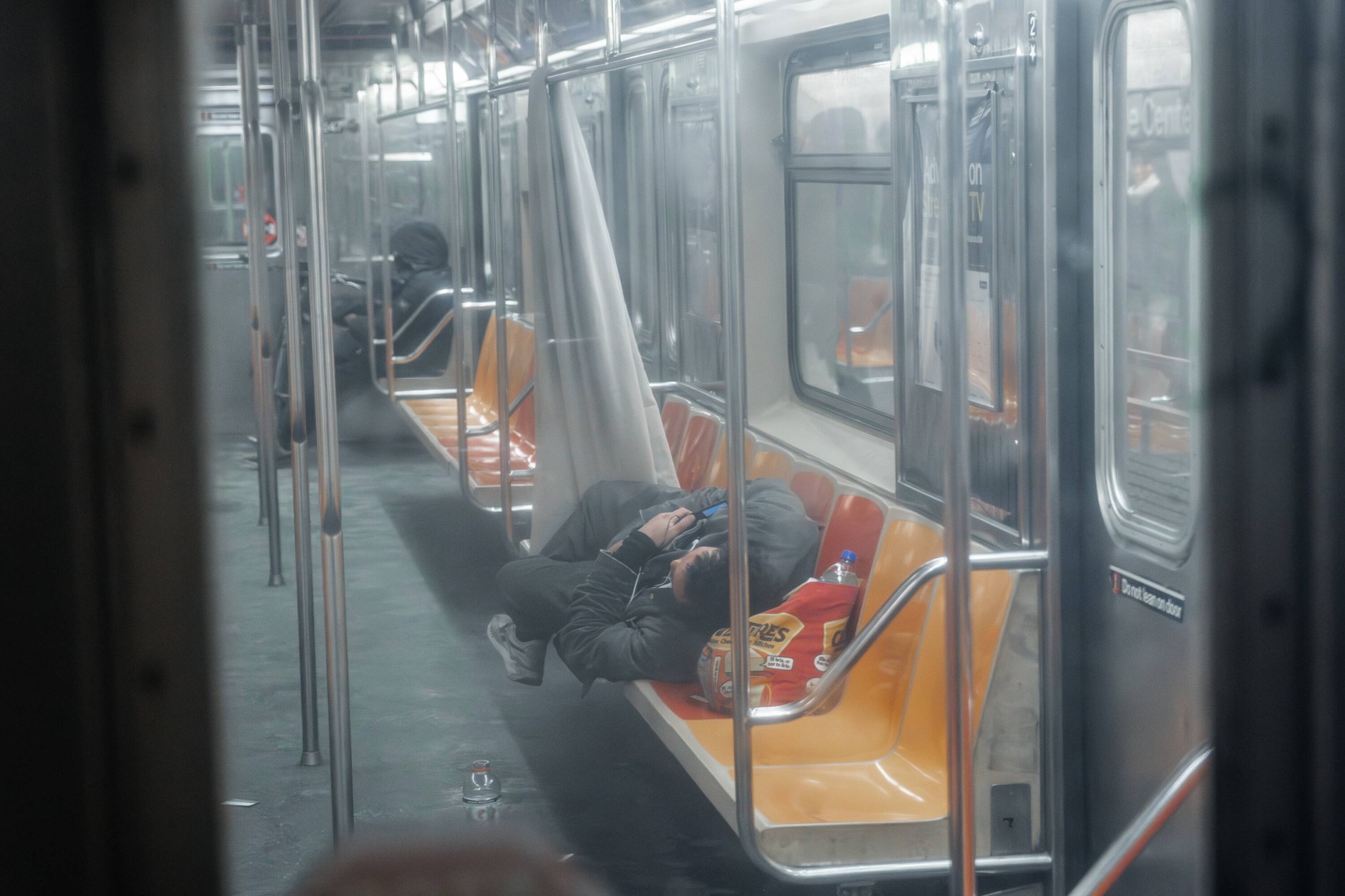
A person in crisis of homelessness sleeps in a subway car during freezing weather in New York, U.S., February 7, 2026.OLGA FEDOROVA / PAP
The idea of free buses has already been criticized as too expensive by New York Gov. Kathy Hochul, also a Democrat. The prospect of Washington defunding transportation authorities gives it another reason to say no, even as Trump's proposal has angered congressional Democrats.
“The federal government has no right to micromanage or hijack local transportation policy,” said Congressman Ritchie Torres. — The Trump administration should focus on reducing costs, not generating them, he adds.
Zohran Mamdani has no intention of resigning
However, the city hall remains adamant.
“The Mayor remains deeply committed to building a fast and free bus system that New Yorkers can rely on and public transit that allows them to get to work on time, visit friends and family, and enjoy the city they call home,” spokeswoman Dora Pekec said in a statement.
Privately, the mayor's team downplayed the significance of the Department of Transportation proposal.
A person close to the mayor, who was granted anonymity, argues that it is not clear whether the initiative came from the White House and emphasizes that it did not affect communication between Trump and Mamdani.
The White House did not respond to a request for comment.
The Trump administration's new prescription for public transportation is part of a set of pressure measures the president can use to harm the city.
The president has already interfered with the country's largest public works project, worth $16 billion. (over PLN 56 billion) project to build two railway tunnels connecting New York with the suburbs of New Jersey. While Trump's opposition to the Gateway Tunnel project goes back many years, its failure would mean huge costs for the city and the entire Northeast region. When Trump froze federal funding for the project this fall, Mamdani organized an event during his campaign in October to draw attention to it.
— Do you want to serve New Yorkers? Do you want to punish them? – he asked then.
The largest share of federal funding for New York ultimately goes to the Department of Education. The Trump administration is currently exploring how to punish cities that support transgender student athletes.
“Things are starting to turn against us.” Trump faces the anger of Americans. The manhunt for migrants is sinking the Republicans
The city's Department of Health receives about $600 million. (over PLN 2 billion) subsidies from the federal government. In March, the White House rescinded one-sixth of that amount that was supposed to go to infectious disease research.
Trump has expressed interest in improving housing development in New York, but the public housing stock is heavily dependent on federal funds, the reduction of which risks further damaging already blighted properties. This year's federal appropriations bill reduced the city's housing authority's budget by about 15 percent, which the budget committee says means more than $500 million. (PLN 1,766 million).
Other threats to New York may come from unexpected sources.
City Council Speaker Julie Menin said Tuesday she feared that national Republicans would revive a previous Trump initiative of asking census respondents about their citizenship — which would likely lead to an undercount of the state's population, a measure used to determine federal aid and representation.
“We're talking about billions of dollars for our schools, public safety, bridges, roads, tunnels, almost anything that might be important to a city,” she said. — The census also matters for representation in Congress, for the balance of power in the Electoral College — all of that matters.
The threat of increased immigration enforcement continues to loom over the city, though so far it appears to be influenced by Mamdani's relationship with Trump and his decision to detain New York Police Commissioner Jessica Tisch. The negative reaction to U.S. Immigration and Customs Enforcement's actions in Minneapolis — and the administration's subsequent withdrawal — could also make the Trump administration reluctant to launch a full-scale offensive in New York.
Last Friday, the Department of Homeland Security issued a statement accusing Mamdani of undermining the agency's work in New York, where officials say there are currently more than 7,000 undocumented people in local custody, though the status of those cases is unclear.
At a more basic level, any cuts to federal services like unemployment insurance, park maintenance, mental health care and road and bridge construction projects could have a profound impact on the lives of New Yorkers, according to the budget committee, which closely examined the nexus between city and state finances.
For now, the city seems relatively safe. The federal budget bill provided New York with funding for the fall at levels similar to previous years. Therefore, any attempt to take away these funds will be met with legal challenges — though that hasn't stopped Trump from making threats, such as promising to defund “sanctuary cities” (for immigrants), an ultimatum he hasn't followed through on.
Find out more: