Moscow authorities have the right to monitor the phones of passengers in the metro. What is the pretext

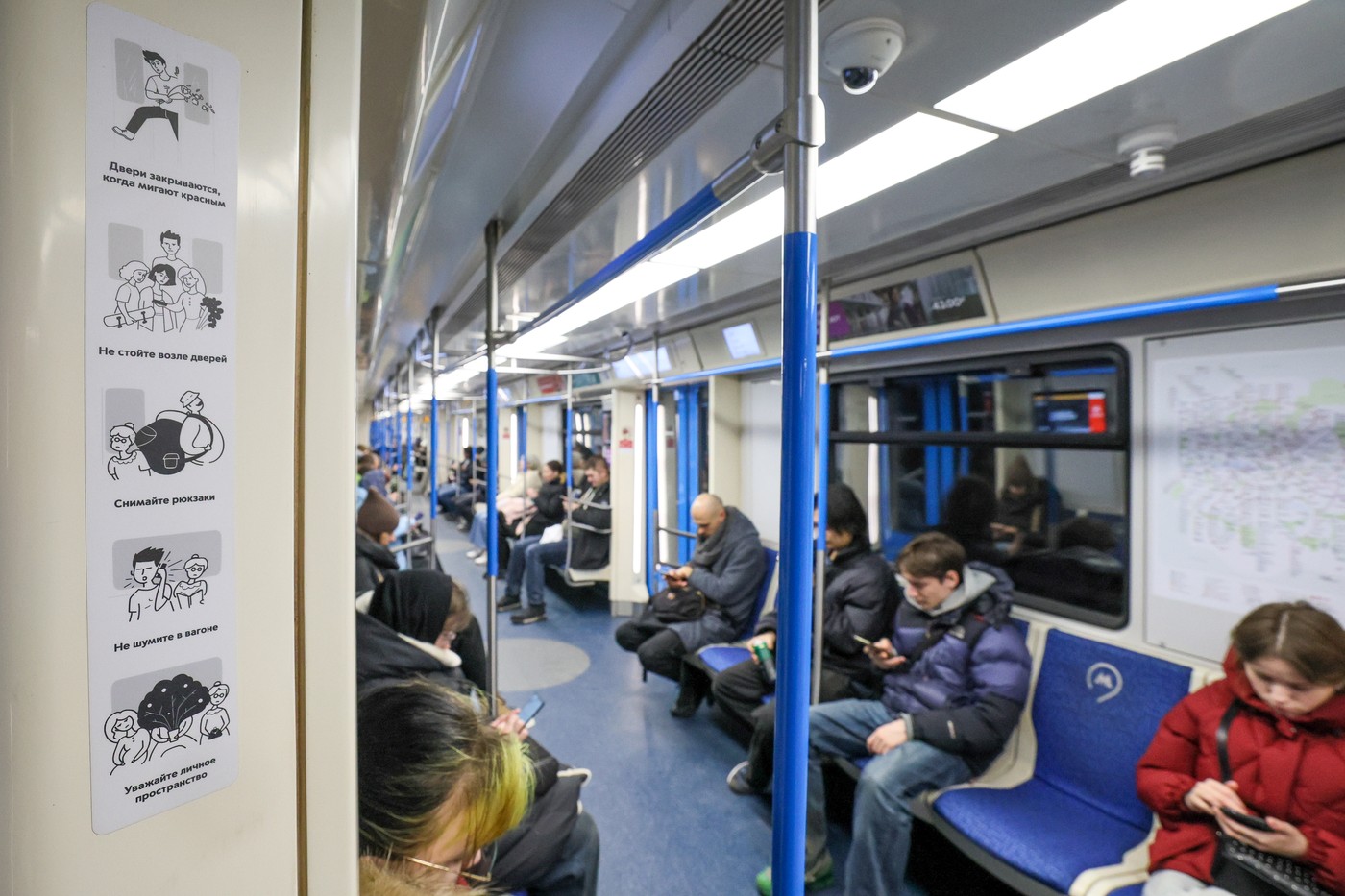
The Moscow Metro. PHOTO: Alexander Yarik / Zuma Press / Profimedia
The Moscow Metro announced on February 2 that the inspection of passengers' mobile phones may be applied “as needed” as an additional security measure, in addition to the checks already taking place in stations and trains. Human rights organizations warn that it is another measure by which the Russian authorities want to have access to the private data of citizens.
- The Moscow Metro is used daily by around 8-9 million people, making it one of the most used underground transport networks in the world.
The metro administration says the checks would not be applied to all passengers, but only “selectively” based on risk assessment, similar to security checks at airports.
Moreover, the representatives of the transport network assured that the purpose of these checks is strictly technical, i.e. verifying that the presented phone is a real and functional device, and not an explosive or other dangerous object. The release does not mention or explain whether or not subway staff will have access to the data stored on the devices.
Russian MP: “There is no right to control the content of conversations”
Deputy Oleg Leonov from the State Duma in Moscow came up with explanations in a comment for the Russian news agency TASS. According to him, employees of the security services of the metro have no legal right to access the contents of the phones of passengers, that is, messages, photos or applications. According to him, any such practices would directly contravene the Constitution of the Russian Federation, which protects the secrecy of correspondence and telephone conversations.
Leonov also stated that checking the functionality of smartphones is comparable to standard procedures in airports and has the sole purpose of ensuring public safety. He also admitted that it is impossible for all passengers to be subject to such checks, especially during peak hours, which is why they will be carried out randomly.
Human rights defenders: “Measures could be used to gain access to private data”
The announced measure raised concerns among human rights defenders. Anastasia Burakova, the founder of the “Kovceg” organization, warned in an intervention for the Dojdi television station (TV Rain) that, beyond official statements, there is a real risk that such controls will be used as a pretext to gain access to passengers' personal data.
“No order of the Ministry of Transport cancels the Constitution, which guarantees the right to the secrecy of correspondence and telephone conversations,” stressed Burakova.
She explained that, from a legal point of view, no one is required to unlock the device, enter a passcode or allow access to messages, calls or other private elements.
“You can only show that the phone works, without giving access to the actual content. And that's all the law requires of you,” the activist said.
Burakova pointed out that, in the context of the current situation in Russia, such controls, if extended or abused, can have intimidating effects on citizens, especially in the context of legislation that already restricts freedom of expression online.
Convictions in Russia for anti-war messages and 'LGBT propaganda'
The concerns of human rights defenders are related to a series of recent cases in which residents of the Russian Federation have been punished for opinions expressed online or for simply displaying symbols considered by the authorities to be “indecent” or “extremist”.
One of the most publicized cases is that of activist and dissident Aleksandr Skobov, 67, who in March 2025 was sentenced to 16 years in prison by a military court in St. Petersburg for a social media post expressing support for Ukraine.
The authorities accused him of “justifying terrorism” and having links to an opposition group. Digital freedom watchdogs cite as examples people sanctioned for views or symbols deemed “anti-state”. In some cases, bloggers or social media users have been fined or punished for posts critical of Russian military aggression in Ukraine or discussing its effects on civil society.
Another aspect is that legislation on what the Russian state calls “propaganda of non-traditional relationships” continues to be enforced online. Organizations such as Human Rights Watch have already documented more than 100 convictions by 2025 under the notion of “LGBT extremism”, including fines for people who displayed rainbow symbols on their social media pages, or administrative convictions for wearing items of clothing with such symbols (earrings, for example).