Ilie Bolojan, about the discussion with the magistrates: “We didn't even get close to a formula that would lead to a common denominator.” What is the average pension expected by the Government

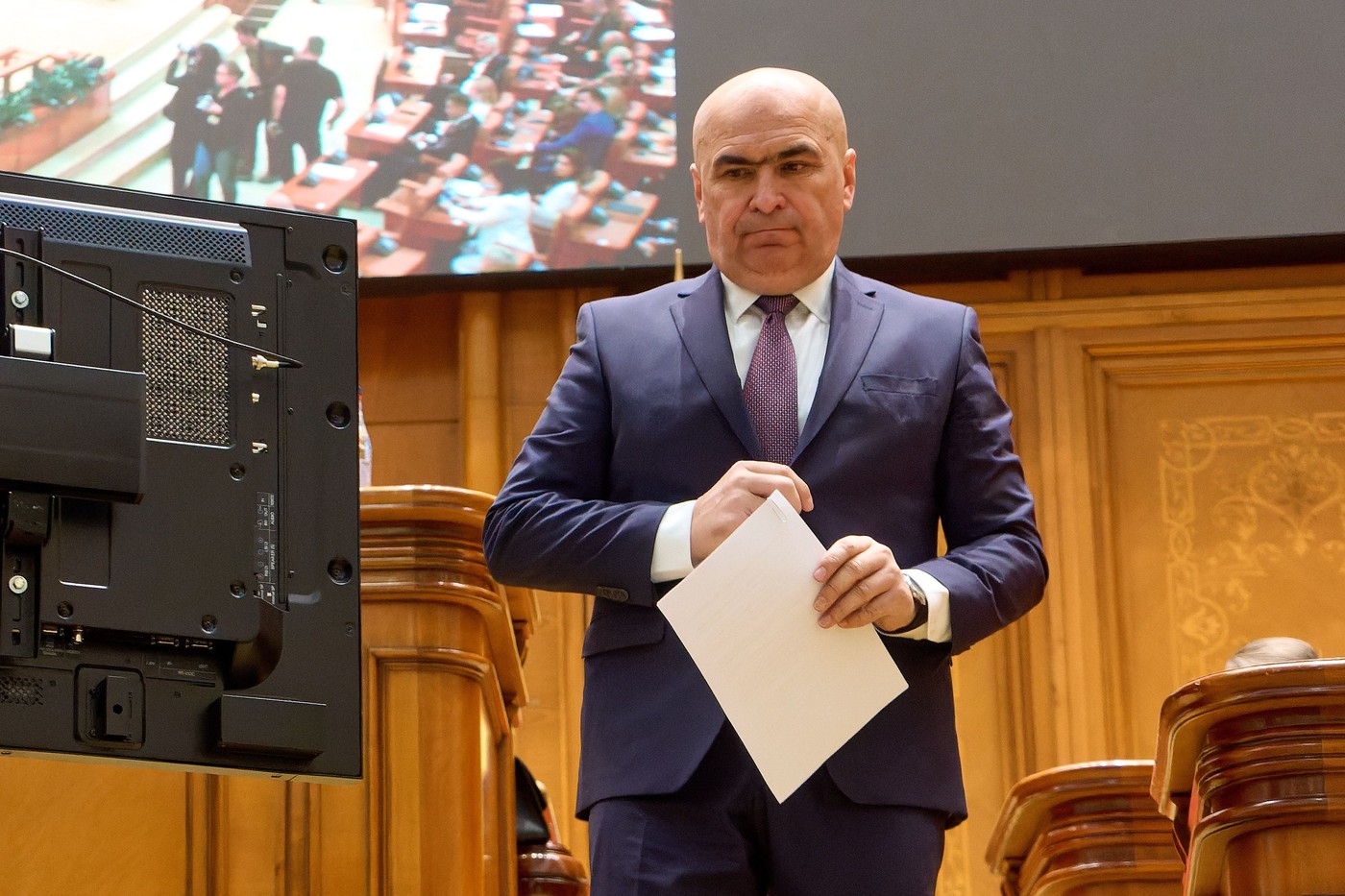
Prime Minister Ilie Bolojan stated, at Euronews, that the discussions at the Cotroceni Palace between the political decision-makers and the representatives of the magistrates regarding the latter's pensions did not even lead to an approach that would be agreed upon by the two parties.
Invited to report how the discussions with the magistrates went, the prime minister did not hide the fact that no common point of view was reached to be the basis of future negotiations.
“We each said our point of view, but we did not reach a solution that would be agreed by both sides, nor did we come close to a variant that seemed to lead to a formula that would lead to a common denominator,” said Ilie Bolojan.
“I do not wish to enter an escalation zone”
The Head of the Government avoided giving additional details about how the discussions proceeded, invoking an agreement in principle with the representatives of the CSM and the ÎCCJ. “We agreed not to make statements that would lead to an area that would potentiate things, and I don't want to enter an area of escalation,” Bolojan explained.
 The first reaction of the CSM, after the failure of negotiations on the subject of magistrates' pensions. The council denies that it proposed an option in which the pension would be higher than the salary
But he emphasized the argument that the retirement age for judges and prosecutors should be increased. “We can no longer support a retirement that is between 48 and 50 years old, it is a reality that we cannot dispute, neither from the point of view of sustainability, nor from the point of view of social justice.
He recalled that, in the 55-64 age range, only 53% of Romanians are active in the economic area. “If we want more money in the budget, this money can only be collected from the people who work in Romania, not from those who do not work (…) There is no turning back. Regardless of who is in government, we must take measures to get more people into the economy”, believes the prime minister, recalling that only Italy has fewer people active on the labor market, compared to the population.
Bolojan admitted that a shorter transition period to the new retirement age may create “inequities” between those who will retire earlier and those who will have a different retirement age, but a shorter transition period will lead to a faster correction.
“The second problem is the amount of the pension compared to the last salary. In the project supported by the Government, I think it is a correct proposal, comparing the data from Europe. Today it is 80% of the gross salary, but not more than the last salary, which means that the pension is as much as the last salary, which is incorrect, whatever one says”, said Ilie Bolojan.
He recalled that an average pension in the judiciary is almost 5,000 euros, while the average national pension is 550-600 euros. “It's a very big difference. Then these things have to be corrected. because it's a question of a fair system, as far as it goes, and a system that will stand for years to come,” commented Bolojan.
According to the intentions of the government he leads, the level of the average pension for magistrates would reach a little over 3,000 euros per month
“If what I proposed was applied, it would be 3,500 euros net, which would have a 10% CASS, that is, 3,200 euros net per month. We can discuss whether it is a suitable pension for the vision of a magistrate, but it is a pension that very few Romanians receive after 35-40 years of work. Anyway, you have a decent old age, to say nothing more than that,” detailed Ilie Bolognese.
Blockage at Cotroceni
Wednesday's talks between the president Nicușor Dan, the representatives of the magistrates and the leaders of the coalition lasted about three hours, but ended without any result. Although the politicians would agree with the increase of the transition period, they do not accept the request of the magistrates to increase the value of the pension compared to the one in the Bolojan Government's project, rejected by the CCR.
 Where the negotiations on magistrates' pensions have stalled. Judges and prosecutors ask for more money, the coalition does not accept: “It's unfair”
The leader of the UDMR deputies, Csoma Botond, spoke on RFI on Thursday about these negotiations, saying that he considers the magistrates' proposals exaggerated.
“As far as I understand, the magistrates had asked for their pension to be 65% of their gross income. Which means that, according to some calculations, it would be 97%-98% of the last net income, which we believe is not fair. We believe that the pension should be somewhere around 70%-75% of the net income (…). I think this complaint of the magistrates that the pension should be 65% of the income is a bit exaggerated gross”, declared the UDMR deputy.
At the discussions on Wednesday evening in Cotroceni, Prime Minister Ilie Bolojan asked the representatives of the Supreme Council of Magistracy if they would still give their opinion in due time for a draft law, one of the political leaders present at the negotiations told HotNews. Those from the CSM said that they could not give him an answer on the spot, without seeing a new project and analyzing it.
The Superior Council of the Magistracy (CSM) confirmed, in a press release, the failure of Wednesday's discussions at the Cotroceni Palace on the reform of the magistrates' pensions, although it claims that the magistrates' representatives showed “openness to solve the problems”.
“The discussions did not lead to a solution agreed upon by all the participants, although the representatives of the Council showed an openness to solving the analyzed problems, so that the optimal solutions could be identified that would ensure a balanced approach and that correspond to the demands constantly emphasized in the jurisprudence of the Constitutional Court”, says the CSM, according to Agerpres.