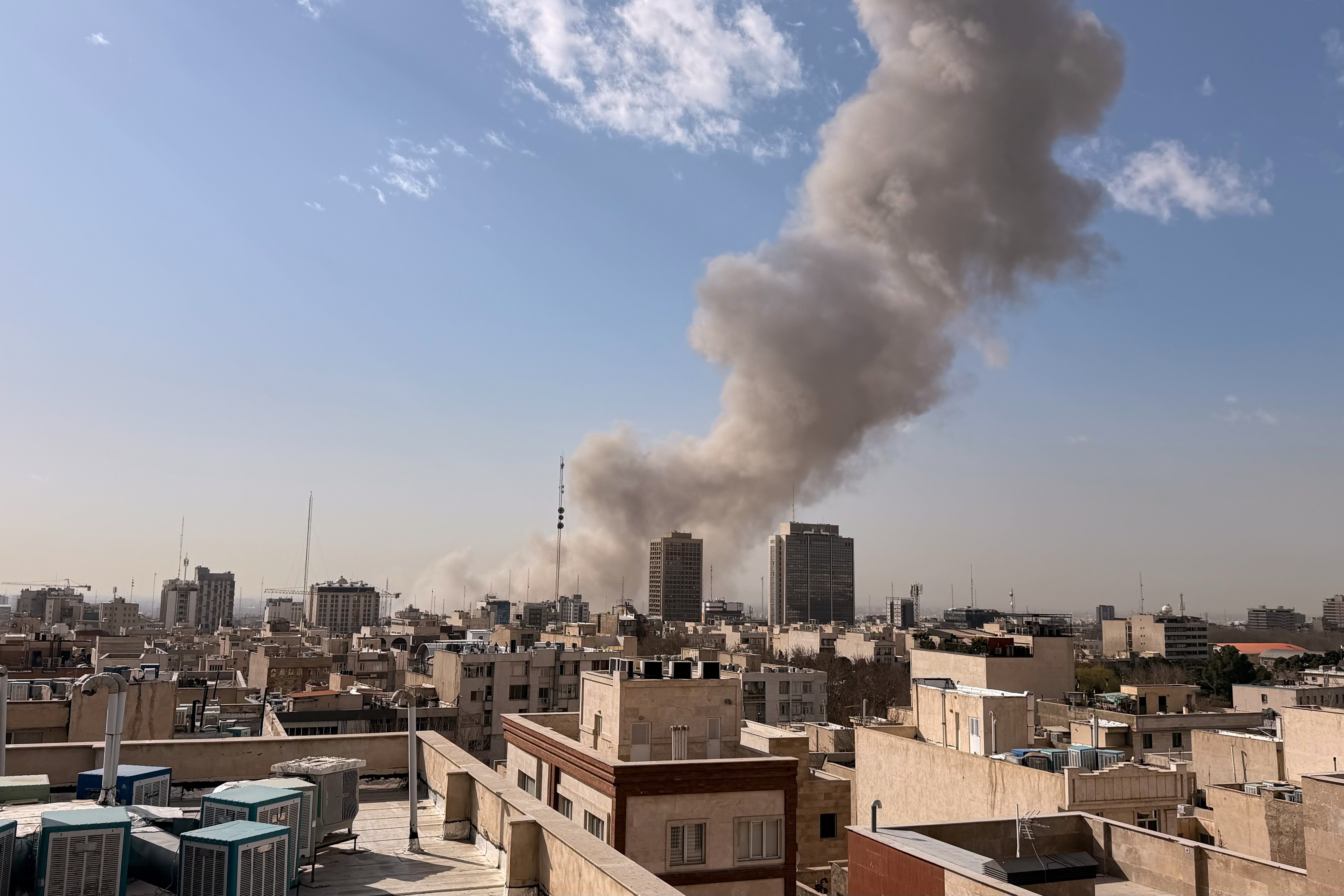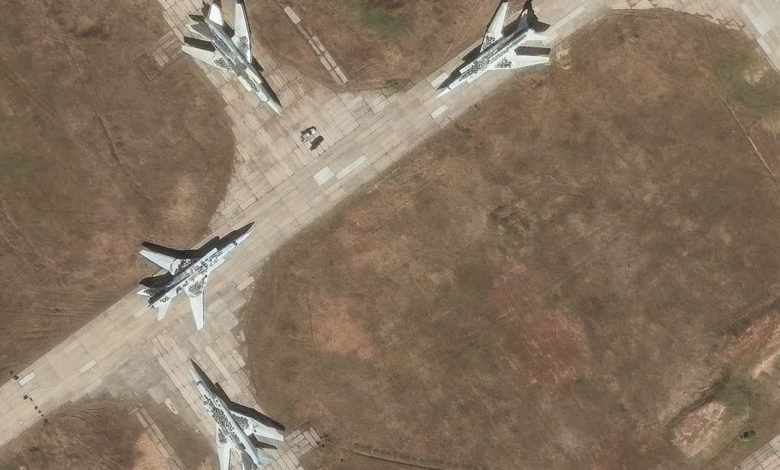
The satellite images from Russian air bases, shortly after Ukraine has made a drone attack in the depth of Russia at the weekend, shows several strategic bombers destroyed and badly damaged, reports Reuters, citing three analysts that interpret data from public sources, Agerpres reports.
Ukraine targeted at least four air bases inside Russia using 117 drones launched from containers near the targets. The images filmed with the drone during the operation, checked by Reuters, show that several planes were hit in at least two sites.
Capella Space, a satellite company, offered Reuters an image of one of these aerodromes, located in the Irkuţk region of Siberia. The image was made on June 2, the day after one of the most complex and efficient operations launched by Ukraine in the over three years of war.
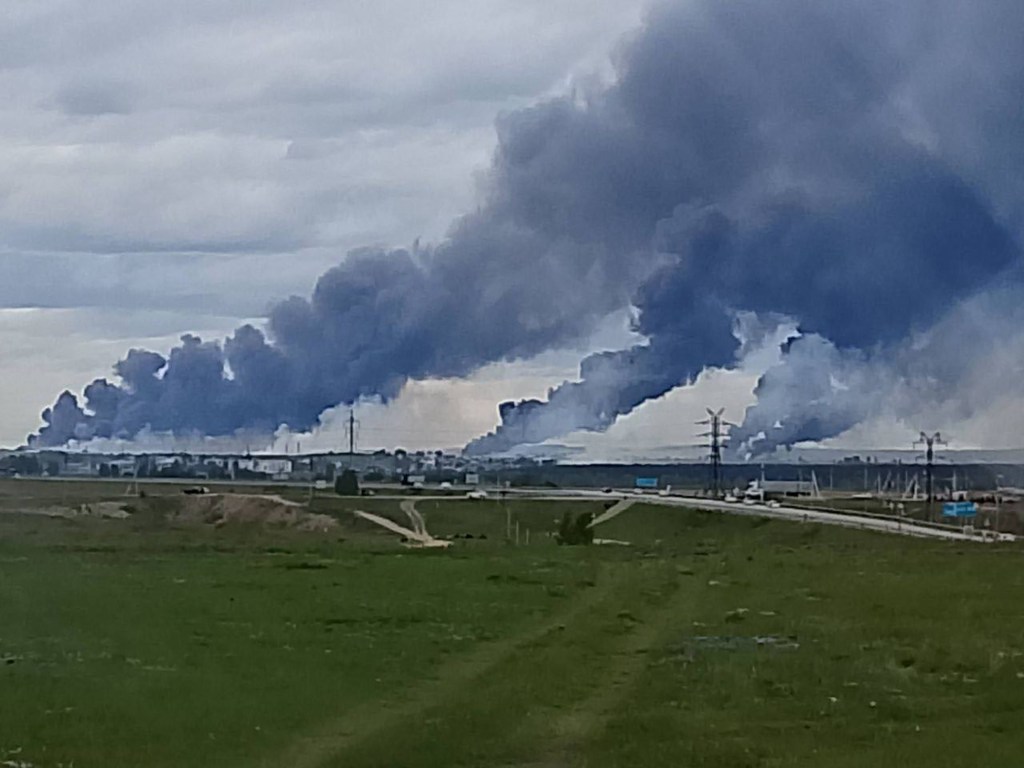 The operation “spider's cloth”. How did Ukraine plan the attacks in which he says he destroyed dozens of Russian bombers
Airplanes destroyed on the bases of the base near Irkuțk
The cloud blanket can mask the conventional satellite images, but the data come from radar satellites with synthetic appetite (SAR), which allow to obtain high resolution images of the Earth's surface even under many clouds or in the dark. This technology directs energy beams to the ground and detects echoes, making it possible to identify small topographic details.
The image seems to show the remains of several planes located along the track on the Belaia aerodrome or parked in nearby protective shelters. “Based on the visible fragments, comparing them with the recent satellite images and the images filmed by Telegram-posted drones on Twitter, I can see several destroyed planes,” said John Ford, associate researcher for the James Martin Center for unproliferation, based in California.
Ford said the SAR images provided by Reuters show what the remnants of two TU-22 Backfires appear-long-range supersonic bombers used countless times by Moscow to launch missiles against Ukraine. The image jumps, as well as the images made with the drone of the consequences of the attacks (posted on social networks) reveal that four heavy strategic bombers TU-95 have been destroyed or badly damaged, he added.
Brady Africk, an open sources information analyst, agreed that the images from the Irkuţk air base shows that several TU-95 and TU-22 were destroyed and damaged, although to properly evaluate the impact would take several images.
“But it is clear that the attack on this air base was very successful,” he concluded. “The planes, targeted by the attack, represented a mixture of TU-22 and TU-95 bombers, both used by Russia to launch blows against Ukraine,” according to him.
Africk added that at the air base Belaia are several flat bait aircraft, which, in his opinion, failed to mislead Ukrainian drones in this case.
Reuters has not yet obtained Sar images of Olenia aerodrome, a base from Murmansk, in the distant northwest of Russia, also targeted by the attack. But the video images filmed with the drone from the base of Olenia, provided by the Ukrainian authorities and checked by Reuters, show two flame bombers that seemed to be by the TU-95 model and a third, also a TU-95, affected by a strong explosion.
 The Kremlin no longer wants to give details about the coordinated attack with Ukrainian drones. “Let's wait for the investigation”
Attacks in five distinct regions
The Russian Ministry of Defense has said that Ukraine has launched drone attacks that targeted military aerodromes in the Murmansk, Irkuţk, Ivanovo, Riazan and Amur regions. The anti -aircraft defense rejected the attacks in three regions, but not in Murmansk and Irkuţk, he said, adding that in the respective places several aircraft caught fire.
The Security Service of Ukraine (SBU) claimed the operation, called the “spider's web”, and said that in total 41 Russian war planes were hit.
Ukrainian President Volodimir Zelenski qualified the attack, which hit targets at a distance of up to 4,300 km from the front line, “absolutely brilliant”. Andrii Kovalenko, an official of the Ukrainian Council for National Security and Defense, said that of the more than 40 planes hit, 13 were destroyed.
The Ukrainian army added 12 aircraft on Tuesday to the current balance of Russia's losses, without giving more details. SBU estimates the damages caused by Moscow by its operation at $ 7 billion, considering that 34% of the strategic aircraft rockets on Russia's main aerodromes were hit. Reuters could not independently verify this information.
Some experts have appreciated that the operation would not be enough to stop Russia to launch rocket attacks on Ukraine using strategic bombers, but it would be difficult, if not impossible, to replace damaged aircraft, because some of them are no longer in production.
Also, the attack could force Russia to reconfigure its anti-aircraft defense, according to the Institute for War Study (ISW). “The operation will force Russian officials to consider the redistribution of Russia's anti -aircraft defense systems to cover a much larger area and, possibly, the development of mobile anti -aircraft defense groups that can react faster to possible attacks with Ukrainian drones in the future,” ISW appreciates.
Moscow would have lost a total of about 20 strategic aircraft, the New York Times newspaper reports, citing sources from American intelligence services. Among the destroyed aircraft would have at least six long-range bombers TU-95, at least four TU-22M, as well as radar A-50 planes worth $ 300 million each, according to the cited publication.