Gold rush in the Apuseni Mountains in the year 2026. 20 years without mining, hundreds of tons of precious metals remain untouched


Two decades after the closure of the gold mines in the Apuseni Mountains, new investments planned in the mineral-rich land have not been as successful as the mining companies expected, although they promised almost 600 tons of gold and impressive silver and copper productions.
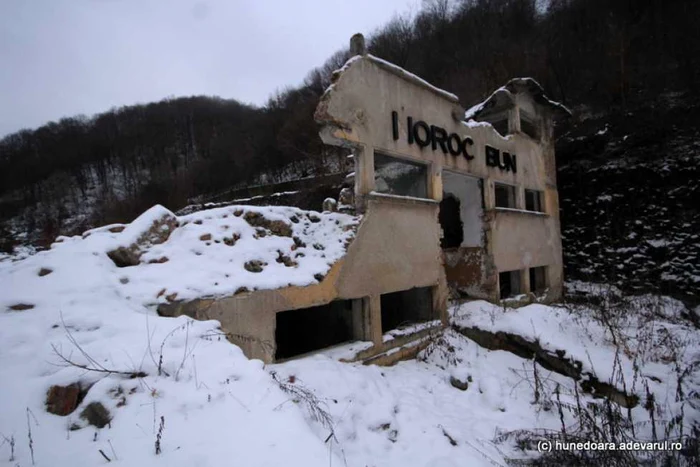
The former mine at Gurabarza remained only a ruin. Photo: Daniel Guță. TRUTH
In 2006, the last large gold mines in Romania were closed: Gurabarza and Certej–Săcărâmb, from Hunedoara County, and Roșia Montană, from Alba County. The former large mining centers in Apuseni joined a long line of metal mines, whose activity was permanently stopped for economic reasons. Among them were the gold mines of Zlatna and Baia de Aries, from Alba, and the perimeters of Baia Mare and Baia Sprie, from Maramureș, closed in the 2000s with the restructuring of the state mining industry.
The story of the Apuseni gold mines began in Antiquity, when the Romans opened the first underground galleries here, some of which have been preserved to this day. In the 18th century, the gold mines were reorganized by the Austrian Empire, and in the 20th century they were nationalized and expanded by the Romanian state, thus operating almost continuously for two and a half centuries, during which they produced hundreds of tons of gold, silver and copper.
Two decades since the closure of the mines
After 1990, the Romanian state considered them economically unviable, opened the way for massive restructuring and layoffs, and finally stopped the activity. The reasons were complex. The mines were no longer re-engineered, they operated with machines and installations that had passed their scrapping date for several years, the funds no longer even covered the insurance of transport, the purchase of mine wood, wagons and tools, lamps and equipment needed by the miners, and improvisations were used to prolong the agony of the mining sections.
“Some end up in the situation of bringing their own chainsaws from home to cut the wood needed to support the galleries. Due to the lack of wagons, there were days when the miners could no longer carry out their work. Most of the horizons and mining works did not have a second way of access. Hot food was no longer offered to the miners at the entrance to the mine, and, in the absence of buses, the transport of the miners was ensured by 16-ton dump trucks”. recounted engineer Nelu Ștefea, from the former Barza mine, in the vicinity of Brad municipality.
The redundancies of the late 1990s and the new pension law of 2001, which stipulated that miners could retire at 45 if they had 20 years underground, hastened the departure of large numbers of wage earners from mining, and by the 2000s most gold, silver and copper mines were operating in a state of disrepair, with insufficient staff and primitive facilities.
In 2005, only one slaughterhouse of the Barza mine was still working, and a year later, in June 2006, its last employees left the last gold mine in Bradului land for good. In April 2006, the Săcărâmb and Certej mines were locked, and at the end of May 2006, the last 400 miners from Roșia Montană were made redundant.
However, the gold, silver and copper deposits were not exhausted, and new geological research outlined valuable mining perimeters. Mining companies have returned to the area with plans to open new mines and quarries. The most important projects started in Roșia Montană, in Certej and in Valea Rovina adjacent to the former mining center Barza. The projects were challenged by environmental organizations, and two decades after the closure of the gold mines in Apuseni, the reopening of new exploitations remains uncertain.
Roșia Montană keeps its gold and silver in the depths
In the 2000s, the company Roșia Montană Gold Corporation (RMGC) began to buy the houses and lands of the locals in Roșia Montană, in order to prepare a large-scale mining project, which aimed to extract more than 300 tons of gold and 1,600 tons of silver.
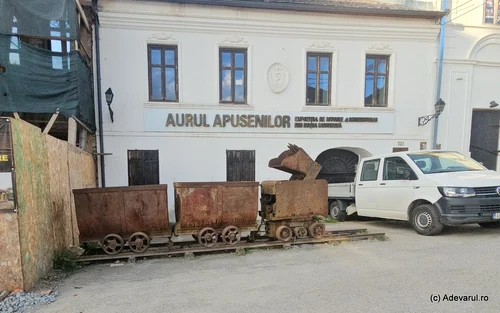
Image 1/10:
Roșia Montană Photo Daniel Guță THE TRUTH (60) JPG
Exploitation, however, meant the destruction of historical settlements, some with valuable ancient vestiges, and the use of cyanide in mining processes, with environmental risks. The mining project divided the community of the picturesque village in the vicinity of Abrudului. Some wanted it, hoping it would bring them jobs and investment, others contested it because of environmental issues or because they did not agree with the transformations the investment would have brought to the village where they lived.
In the end, the Roșia Montană mining project was blocked, and the mining company had to withdraw. In 2021, the Roșia Montană mining landscape was included in the UNESCO World Cultural Heritage, a recognition that changed its situation and increased tourist interest in it.
“There were also a thousand tourists a day at the Roman Galleries”, says a local.
Other former miners see, instead, the problems of the small settlement in the Apuseni Mountains, largely abandoned by its former locals. More than 800 homes out of the approximately 1,200 in the commune, from archaic houses and apartments in communist blocks to historic buildings, were purchased by the company and left in “conservation” for several years, and the passage of time and abandonment hastened their deterioration.
In Hunedoara, two large-scale mining projects, initiated after the closure of the Barza and Certej mines, ran into opposition from environmental organizations and, in turn, divided local communities. Although they benefit from important private financing, they do not yet have the approvals necessary to operate.
The Rovina project, financed with 200 million dollars
In the 2000s, in the Rovina Valley, geological drilling revealed, for the first time, a “mountain” of copper, the core of which is located a few hundred meters from the village of Rovina, located approximately 10 kilometers from the municipality of Brad. The resources of the three deposits outlined here are estimated at around 217 tons of gold and 635,000 tons of copper, according to Euro Sun Mining, which is developing the project on an area of more than 27 square kilometers.
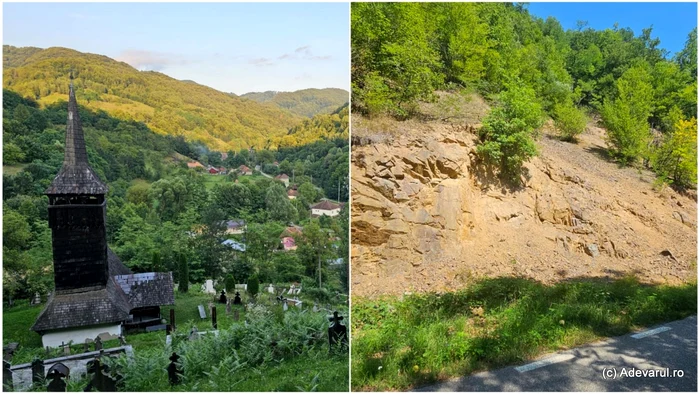
Ruin. Photo: Daniel Guță. TRUTH
Considered of strategic importance, along with two other investments from Romania – the extraction of metallic magnesium at Budureasa (Bihor) and the extraction of graphite at Baia de Fier (Gorj) – the Rovina mining project has been contested by environmental organizations, which claim that it will lead to the devastation of a large area of the Apuseni Mountains. In order to obtain the environmental approval necessary to continue the investment, the mining company is forced to consult the Hungarian authorities regarding the project in Hunedoara county, a step requested by environmental organizations.
Recently, Euro Sun reported that it obtained financing of up to 200 million dollars for the continuation of the project, from the Trafigura group, in exchange for the copper concentrates that would be produced at Rovina.
“Trafigura intends to support the company in raising additional financing once the construction phase of the project is reached,” Euro Sun informed.
The Certej project, in court for license extension
In Certeju de Sus, the mining operation proposed since the 2000s, but currently blocked, aimed to extract, in a period of 16 years, more than 63 tons of gold and almost another 375 tons of silver. The project was run by Deva Gold, majority owned by Eldorado Gold Corporation (about 80 percent) and by the Romanian state, through Minvest Deva (about 20 percent).
Several environmental organizations challenged the project in court and obtained the suspension, then the successive cancellation of the permits and documentation necessary to start mining, which led to the blocking of the entire mining project.
On January 24, 2025, with the expiry of the license to exploit the mining perimeter, it was no longer extended, because the government meeting in which it was on the agenda did not take place one day before the deadline. The mining company sued the Romanian state for the extension of the license, and the case is pending before the Alba Iulia Court of Appeal, with a deadline of February 9.
Recently, Eldorado Gold Corporation withdrew from the mining project, and the majority stake held by the Canadian company was taken over by the investment fund Varvara Development Group (VARDEV).
“The area occupied by the new mining project will be around 250 hectares only in the territory of the Certeju de Sus commune, reduced compared to the original one. We have stopped at concentrates, in order to stop using cyanide in the new project, and we will not produce wet tailings either.” declared Nicolae Stanca, director of Deva Gold, which became a subsidiary of VARDEV.
The investor's representatives claim that the new project will depend on the granting of the exploitation license and environmental approval, procedures that will take at least another year. According to the mining company, the project would involve investments of approximately one billion euros and could create, in the next 15 years from its start, more than 1,000 jobs in the area.