“Criminal Policy Marketing” – Law Professor Says Higher Penalties for Femicide and Lowering Criminal Age Won't Stop Crime


The latest events related to the sphere of crime in Romania have led politicians to come up with proposals for changes to the criminal law, such as the criminal liability of minors, disputed by some experts. Professor Sergiu Bogdan explained why he accuses politicians of “criminal marketing”.
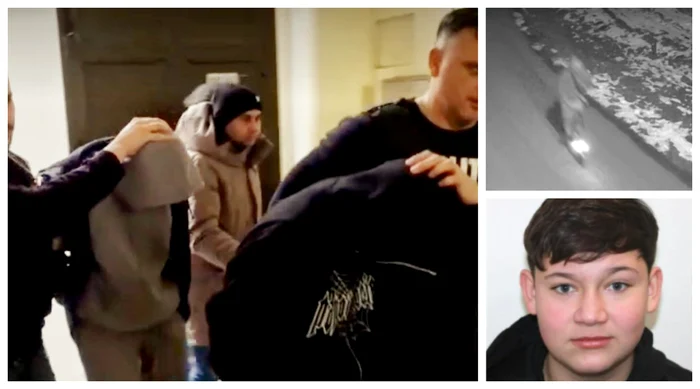
“Mario's Law” is an example of “criminal marketing”, says Bogdan. PHOTO: The Truth Collage
Lawyer Sergiu Bogdan, Professor of Criminal Law at the Babeș-Bolyai University, is one of those who believe that these legislative changes against the background of society's emotions are nothing more than “criminal marketing” and will not solve the situation of aggressive minors.
The case in Cenei – a 15-year-old boy named Mario was killed by three other teenagers, two of the aggressors are 15-year-old teenagers, and a third suspect is only 13 years old – brought to the fore the fact that a 13-year-old child cannot be held criminally responsible, regardless of the brutality of the act, and this caused outrage and debate. The current law provides that children under the age of 14 cannot be held criminally responsible regardless of the seriousness of the act.
After the crime that shocked Romania, a petition known as “Mario's Law” was launched online, requesting: the lowering of the age at which minors can be criminally liable from 14 to 10 years for serious crimes (murder/qualified murder), the elimination of automatic impunity based exclusively on age in such cases, the possibility of applying the maximum penalty including life imprisonment if the minor acted with discernment and premeditation.
This petition gathered tens of thousands of signatures, showing strong social pressure to change the law.
The Minister of Justice, Radu Marinescu, announced the establishment of a working group within the Ministry to analyze the opportunity to change the criteria of criminal responsibility, including possible criminal response below the 14-year threshold, depending on discernment.
Sergiu Bogdan: “The question is if 9 out of 10 minors relapse, is the solution for minors to put them in a penitentiary?”
The proposal to increase the penalties and reduce the age of responsibility is “un criminal policy marketing. It's just like living well. Let's make investments, but not have to pay taxes. It is a populist mechanism. So, in reality, populism in terms of combating a criminal phenomenon is the increase of punishments”.
Why populism? Because these decisions appear following a case that shocked public opinion.
“Deciding whether the age of criminal responsibility starts at 14, 13 or 12 is a super-sophisticated discussion. The problem is that the 12-13-year-old is still a child, even if he is criminally responsible. If he has all the rights as a child, but you make him responsible as an adult what will happen?”, asked the lawyer.
He claims that in Romania, comparisons are always made with systems where the mechanism is different: “The type of criminal liability in the common law system (jurisprudential law is the legal system developed on the basis of the jurisprudence of the courts, the system being practiced among others in the USA and Great Britain-no) is different, but there objects can also answer for committing crimes. I don't want to use this example because it is extreme. Essentially the two systems are different“, explains the lawyer.
He claims that a decrease in the age of minors who are criminally liable has other consequences: “Think of the children who commit crimes other than murder. And for those they can end up in prison. And there is a criminal statistic that says like this, 9 out of 10 minors who end up in prison reoffend. 9 out of 10 minors. This is done in France, not in Romania. So some of those who are good at managing these situations. The question is if 9 out of 10 reoffend, is the solution for minors to are we putting in a penitentiary?”
Arriving in the penitentiary, even if it is a preventive measure, the minor will find that breaking the law is a way of life, an opportunity, he explains.
“The problem is not femicide, but domestic violence”
Another case in which one reacts to the emotion in society is the criminalization of femicide, against the background of horrible crimes in which women fell victim to their husbands, ex-husbands or concubines.
The National Agency for Equal Opportunities between Women and Men (ANES) called for the criminalization of femicide in the Penal Code through an official definition, stressing that “the fight against domestic and gender violence is a national emergency.”
In 2025, legislative initiatives aimed at changing the situation appeared: the Ministry of Justice proposed that the killing of a woman for reasons related to gender be classified as a form of qualified murder, with prison sentences of life or between 15 and 25 years, including on the basis of gender.
The legal committee in the Senate and the special committee “Romania without domestic violence” adopted, in a joint meeting, the other days, the report on the draft law aimed at preventing and combating femicide and the violence that precedes it. The project is to be voted on in the Senate plenary.
The initiative is in line with good practices in countries such as Italy, France, Croatia or Belgium and comes in response to the disturbing statistics of 2025: almost 60 women were killed, most of them in domestic contexts, and the figures at European level remain just as alarming.
“It is an important and necessary moment for Romania”says deputy Alina Gorghiu, president of the “Romania without domestic violence” parliamentary commission.
The projects are still under parliamentary and public debate.
Lawyer Sergiu Bogdan claims that the criminalization of femicide will not have an impact on this type of crime: “The Faculty of Law in Cluj and Bucharest sent a study that shows that the problem of criminalizing femicide is actually an emotional issue. The problem is family violence and we confuse family violence with femicide. I mean, the serious problem in Romania is family violence, indisputable. We don't have a problem here. Criminalizing femicide will not produce any change. The criminal who wants to kill his wife will not be prevented by the amendment punishment.“
Increasing penalties is, he says, “a criminal policy marketing.”
“Tragic subjects are exploited by AUR”
Professor Bogdan complains that many changes come on the background of political pressure which, however, has nothing to do with reality.
“It bothers me that all these tragic issues that we have are exploited by the AUR who is campaigning on them and the other parties jump in to solve the problem. We should stop with this kind of populism. And when there was the death penalty for murder, there were still murders. Yes, so the murder did not appear now, it is not a phenomenon. To put your head under the ground and say that the authorities could have done something, this is a category of populism 2 lei. That's what the authorities have to do? To find that a 13-year-old could become a criminal?“, he claims.