
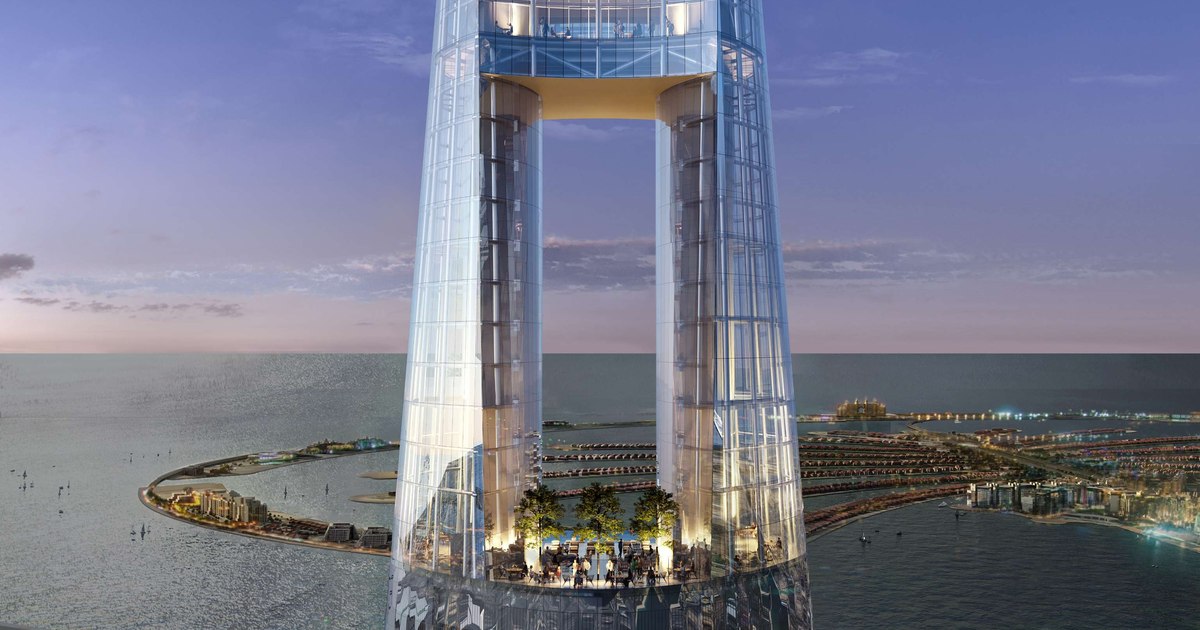
Dubai has added a new landmark to its ever-changing skyline. Ciel Tower, which has just officially opened in Dubai Marina, has become the tallest hotel in the world, standing 377 meters high — a result that, according to the developers, was not intended from the beginning. The project has evolved gradually as plans have been redone several times, CNN reports.
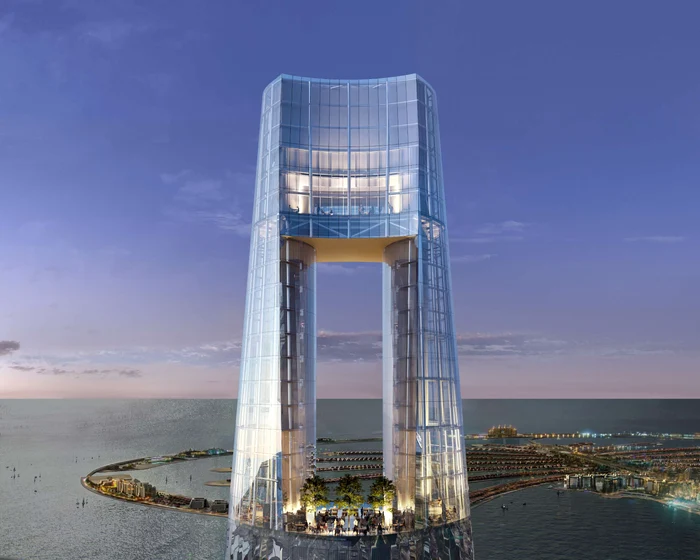
Ciel Tower, the tallest hotel in the world/PHOTO: X
“We wanted to build something spectacular”says Rob Burns, chief executive of The First Group, the company that developed the project. “But we didn't set out to build the tallest hotel in the world.”
Despite its size, the hotel had to adapt to a relatively small site: about 3,600 square meters, just under the size of a professional football field—modest by Dubai standards. For the tower's architect, Yahya Jan, the limited space required a rigorous approach and unusual architectural solutions.
As Jan notes, the challenge influenced every stage of the project. The entrance, for example, is refined but understated. Instead of a grand area, typical of the big hotels in Dubai, the space is organized with curved lines, diffused lights and an aesthetic adapted to the limits of the land.
“Going through the eye of the needle”
The architect describes the process as “going through the eye of the needle”. “The property is irregular in shape, and for a building of this height, it could have been bigger. But sometimes the best results come when you're forced to find solutions.”
As the hotel rises, the spaces become wider and the perspective gradually opens up. Rooms are simple in design, in neutral tones, but panoramic views of Dubai Marina, Palm Jumeirah and the Persian Gulf make up for the more compact dimensions. With 1,004 rooms spread over 82 floors, Ciel enters an already very competitive hotel market.
The defining element of the building is a vertical void, called by the architect the “eye of the needle”, which has both an aesthetic and a structural role. Very tall towers are heavily affected by the wind, and this opening allows airflow to pass through the structure, reducing pressure. Even on a calm day, currents can be felt at height.
Vertical parks
At regular intervals, vegetated spaces—six to eight-story atriums—function as “vertical parks,” designed to create social zones, improve air circulation, and reduce energy consumption. Jan believes that these solutions will become commonplace in future architecture: “Towers will be more porous, they will integrate nature.”
Twelve atriums punctuate the height, spaced six to eight stories apart, filled with trees and plants. They are both aesthetic and practical, providing natural light, coolness and providing guests with a place to gather.
What Jan calls “social community spaces where people can meet” will be used for yoga and fitness sessions or as restaurant expansion areas. “We're vertically creating little parks,” he says – dividing the tower into “smaller neighborhoods.” They also help with cooling and energy consumption by using computer-controlled glass louvres to “bring the sea breeze in”.
“The towers of the future will be different from the towers of 50 years ago”says Jan. “They will be porous, you will bring nature into these towers.”
Disappearing into the sky
The record came about rather as a result of successive expansions. As the team added amenities, the building continued to grow. The architect informed the developers that they were approaching the height of the former record holder, the Gevora Hotel. “We found out we were close and decided to see the project through,” says Burns.
The restaurants and lounge areas are located at the top of the tower. British chain Tattu operates three of them, including a lounge on the 81st floor, where 360-degree views play a central role in the experience.
Hotel Ciel's dining and pool areas follow the same logic as the rest of the tower, making the most of what's available. The hotel shares eight restaurants on the upper floors, with UK-based brand Tattu occupying the most dramatic positions – the Dragon House on the 74th floor, the Koi House surrounding the Skypool on the 76th floor and the Phoenix House located in the Skylounge on the 81st floor, where the 360-degree views do most of the decorative work.
There are three pools, but the one that counts is the infinity pool on level 76, set in the void of the tower, which channels the wind. It's not big, but it doesn't have to be, given that the visual effect makes the water seem to disappear straight into the sky.
Ciel is not the most extravagant hotel in Dubai. It doesn't have the epic lobbies or beachside sprawl of the Palm resorts. But it shows what can happen when a city, more used to living on a grand scale, decides to show a little restraint.
The public spaces are elegant without being excessive. The rooms are comfortable. And the views – especially from the upper floors and from the panoramic pool – give logic to the decision to build a 377-meter hotel on such a small area.
It remains to be seen how long it will retain the title of the tallest hotel in the world. In Dubai, even your own records are seen as invitations to the next competition.


