The stake of billions for Romania's safety: the South Korean K2 tank, the “beast” that can leave the Americans and the Germans in second place

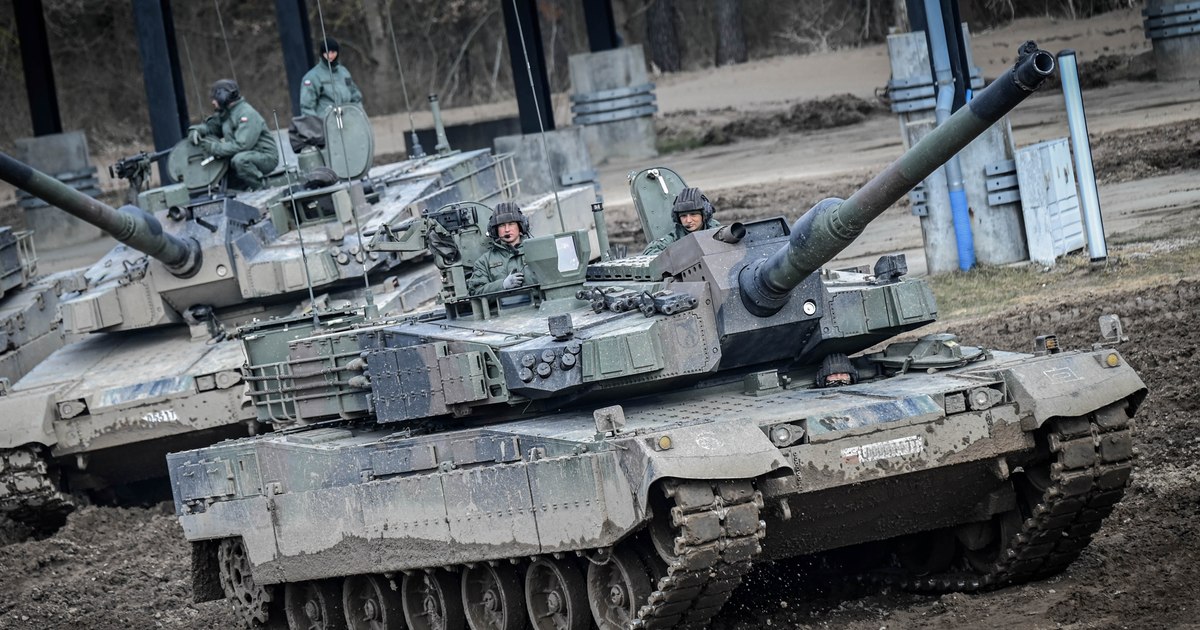
General Alexandru Grumaz explains, in an analysis for “The Truth”, what should be the criteria on the basis of which to decide the purchase of over 200 tanks that will enter the endowment of the Romanian army. The main “candidates” are the Abrams, K2 and Leopard tanks.
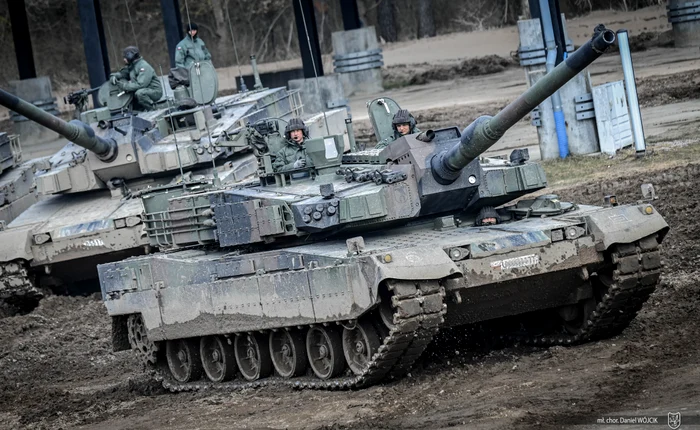
Poland chose South Korean K2 tanks. PHOTO: “Bartoszycka” Mechanized Brigade
Romania has already decided to buy American Abrams tanks, but in the meantime opted for an increase in their number. Concretely, in the near future, Romania could have a choice between the Abrams tanks, the South Korean ones – K2 and the German ones – Leopard. The Ministry of National Defense (MApN) has already received approval for a double purchase. It is about the purchase of 54 American Abrams tanks, worth half a billion euros. The second purchase concerns another 216 tanks and 76 derived vehicles. They would cost approximately 6.5 billion euros.
Advantages and disadvantages of Abrams tanks
The Americans came to the conclusion that the Abrams classics should be reconfigured, taking into account the lessons of the war in Ukraine. Surprisingly, these tanks entered the equipment of the Ukrainian army proved vulnerable to the Russians, just like the German Leopard tanks. This is also one of the reasons why the Americans decided to bring a series of improvements to these tanks. Recently, General Randy George, the Chief of Staff of the US Army, confirmed that the first prototype of the new M1E3 Abrams tank has already been delivered by General Dynamics. The good news is that the delivery happened just ahead of the expected deadline.
As Romania prepares the most ambitious program of equipping the army, the debate about the tanks that should enter the equipment of the armed forces has not been delayed. And the question that now justifiably arises is which tanks would be the most suitable, taking into account a number of factors, including the landforms and defense tactics for our territory.
General (r) Alexandru Grumaz explains, in an analysis for “Adevărul”, how it should be judged and what should normally be the criteria for awarding the contract.
“The debate about the future of Romania's armored forces has moved from the technical area to a strategic one, where the choice of the main tank type reflects not only military performance, but also geopolitical orientation, industrial capacity and operational urgency”,
says General Grrumaz.
There would be mainly three types of tanks under discussion – the well-known American Abrams, the South Korean one, but also at least one produced in Europe. Romania has already announced that it will acquire 54 tanks from the United States of America, but another 200, placed on the “buy” list, remain under discussion.
“In practice, the discussion revolves around three distinct directions: the strategic partnership with the US through the Abrams platform, the efficiency and speed of delivery offered by the South Korean K2 model and the concept of European strategic autonomy, mainly associated with the Leopard 2 family. Romania has already taken concrete steps, not just theoretical ones. The contract for M1A2 SEPv3 Abrams tanks strengthens the military relationship with the United States and brings a high level of interoperability with NATO structures that operate the same platform. The associated package is not just vehicles, but also munitions, support infrastructure and an integrated logistics chain. In a high-intensity conflict scenario, this standardization matters.”explains General Grumaz.
Although Abrams tanks are excellent, they come with a shortcoming in terms of maintenance.

General Alexandru Grumaz. PHOTO: Personal archive
“At the same time, the American platform comes with high operating costs, large mass and a clear dependence on transatlantic supply, which complicates the long-term maintenance side,” says the general.
Advantages and disadvantages for Koreans and Germans
For their part, the Koreans, who propose the K2 Black Panther model, would bring some advantages. Perhaps most importantly, the South Koreans would also come with a technology transfer, which would be an aspect to consider for their maintenance. Poland is among the countries that preferred these tanks, but the South Koreans also sold well in the Middle East.
“In parallel, tests and discussions on the K2 Black Panther tank indicate an orientation towards industrial pragmatism. Hyundai Rotem's offer emphasizes fast delivery times and technology transfer, including the possibility of local production and maintenance. For an army that needs volume and pace, this argument weighs heavily. The platform is lighter than the American and German alternatives, with high mobility and modern sensor and fire control architecture. The industrial cooperation component, promised more flexible than in many offers European, is a major differentiator”, explains General Grumaz.
The German Leopard 2 tank is not to be refused either. The German manufacturer could offer different advantages over the Americans and South Koreans, but it remains to be seen how much it would matter in the choice.
“The European option, represented by the Leopard 2 in its latest versions, remains conceptually attractive. The arguments lie in the geographical proximity of supply chains, standardization between European militaries and potential access to common EU funding mechanisms. From a doctrinal point of view, a homogeneous regional fleet simplifies logistics and training.” points out general Grumaz.
However, there are also some question marks in this regard. General Alexandru Grumaz talks about the fact that large arms manufacturing companies in general are facing a new problem. This depends on their ability to cope with the huge demand that exists during this period.
“But the major problem is production capacity. After the steep increase in European military orders, industrial lines are overloaded and delivery times have extended significantly. For a state on the eastern flank, waiting time becomes a strategic variable, not just a contractual one,” claims General Grumaz.
The Franco-German tank remained at the project stage
At the same time, a fourth and newer generation pan-European tank remains only on paper. Disagreements between the French and German companies, as well as the delay of the project, led the French to reorient, at least for the time being, and rather consider a new Leclerc tank.
“Furthermore, the future next-generation European tank, developed through the Main Ground Combat System program, does not provide a short-term solution. The project is still in the development and industrial negotiation phases, with entry into service expected well beyond this decade. For immediate needs, it remains a prospect, not an acquisition option.”he adds.
Another discussion comes from the fact that Brussels is now promoting European strategic autonomy, enthusiastically embraced by the major French and German arms manufacturers. This raises other questions. General Alexandru Grumaz details:
“Proponents of European strategic autonomy rightly invoke the need for industrial coherence and reduction of external dependencies. However, security reality forces the prioritization of rapid availability and verified capabilities. Romania does not abandon European industrial cooperation — collaborations with groups such as Rheinmetal in the field of ammunition and armored vehicles show the opposite — but pragmatically separates the source of the combat platform from the production and maintenance ecosystem.”
In the opinion of General Alexandru Grumaz, Romania, like the other European states, should show a lot of pragmatism when they make this choice and take into account some essential details.
“The emerging conclusion is one of cold balance: for front-line states, speed of delivery, logistics package and technology transfer may weigh more than the geographical tag of the product. The emerging model is a hybrid one — cutting-edge technology acquired globally, combined with anchoring production and technical support in Europe and, to the extent possible, domestically“, concludes General Alexandru Grumaz.
Who is General Alexandru Grumaz?
General (r) Alexandru Grumaz is a graduate of the US Defense University with a master's degree in Defense Resource Strategy and the Senior Executives program in National and International Security, John F Kennedy School of Government, Harvard University.
Former consul general of Romania in Shanghai, the general held important positions in the Ministry of National Defense as head of the Directorate of Defense Resources Management, director of the Directorate of Integrated Defense Planning or Inspector for Armaments. Grumaz held the position of first assistant to the Director of STS, being a specialist in telecommunications.
He has expertise in strategic planning, international military and civilian relations, and experience in complex budget planning and management for an organization. He is a good connoisseur of political and military life in China and the United States of America where he spent part of his military and diplomatic career. He is currently the president of the Center for Analysis and Security Studies.