“The enemy is intensifying attacks.” Ukraine secretes train routes to confuse Russian drones. Passengers will have to be patient

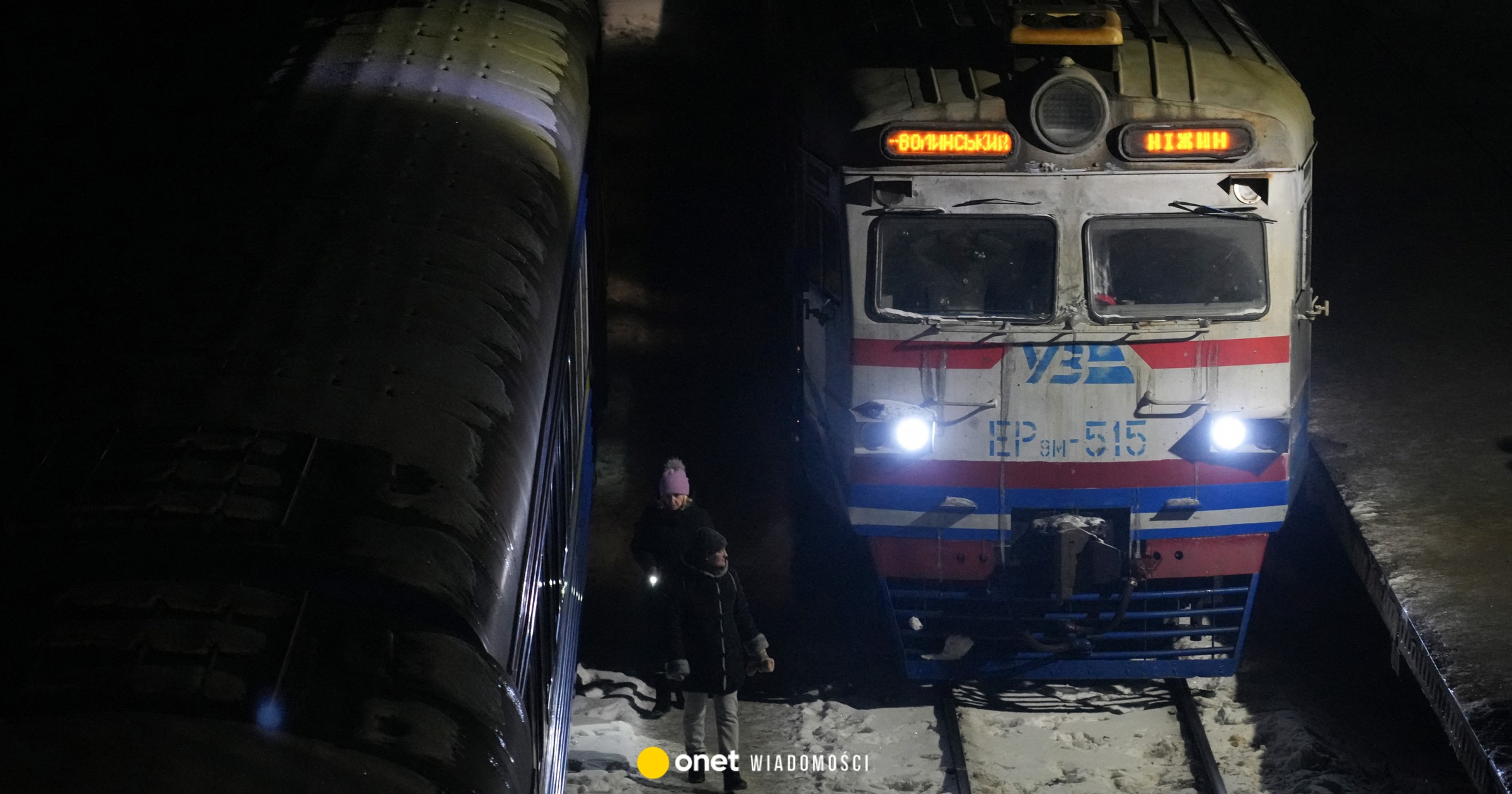
The exact arrival time and means of transport by which train passengers in eastern Ukraine will reach their destinations will be “restricted access” information that will not be published in advance. Additionally, alternative transport may be introduced on some sections of the journey without prior notice.
Security measures they will extend travel times and make arrival times variable. However, these changes are necessary because previous Russian long-range attacks on Ukrainian passenger trains were based on the fact that they usually arrived at a specific station on time, the message to railway passengers emphasized.
“The enemy is intensifying attacks on railways, in particular on rolling stock… Punctuality and speed are important to us, but nothing is more important than safety. Therefore, please do not plan transfers 'at the last minute' and allow additional time for possible delays for safety reasons,” we read in the carrier's warning.
Early on Wednesday, January 28, three Russian Shahid-class kamikaze drones attacked a westbound passenger train in the eastern part of the Kharkiv Oblast. At least one drone hit a sleeper car, killing five passengers and injuring two others who were taken to hospital.
One carriage and a locomotive caught fire, forcing all passengers – 286, most of them women and children, according to reports – to leave the train and remain outdoors in temperatures around 10 degrees below zero. Two other drones nearly hit a train, damaging other vehicles but causing no injuries.
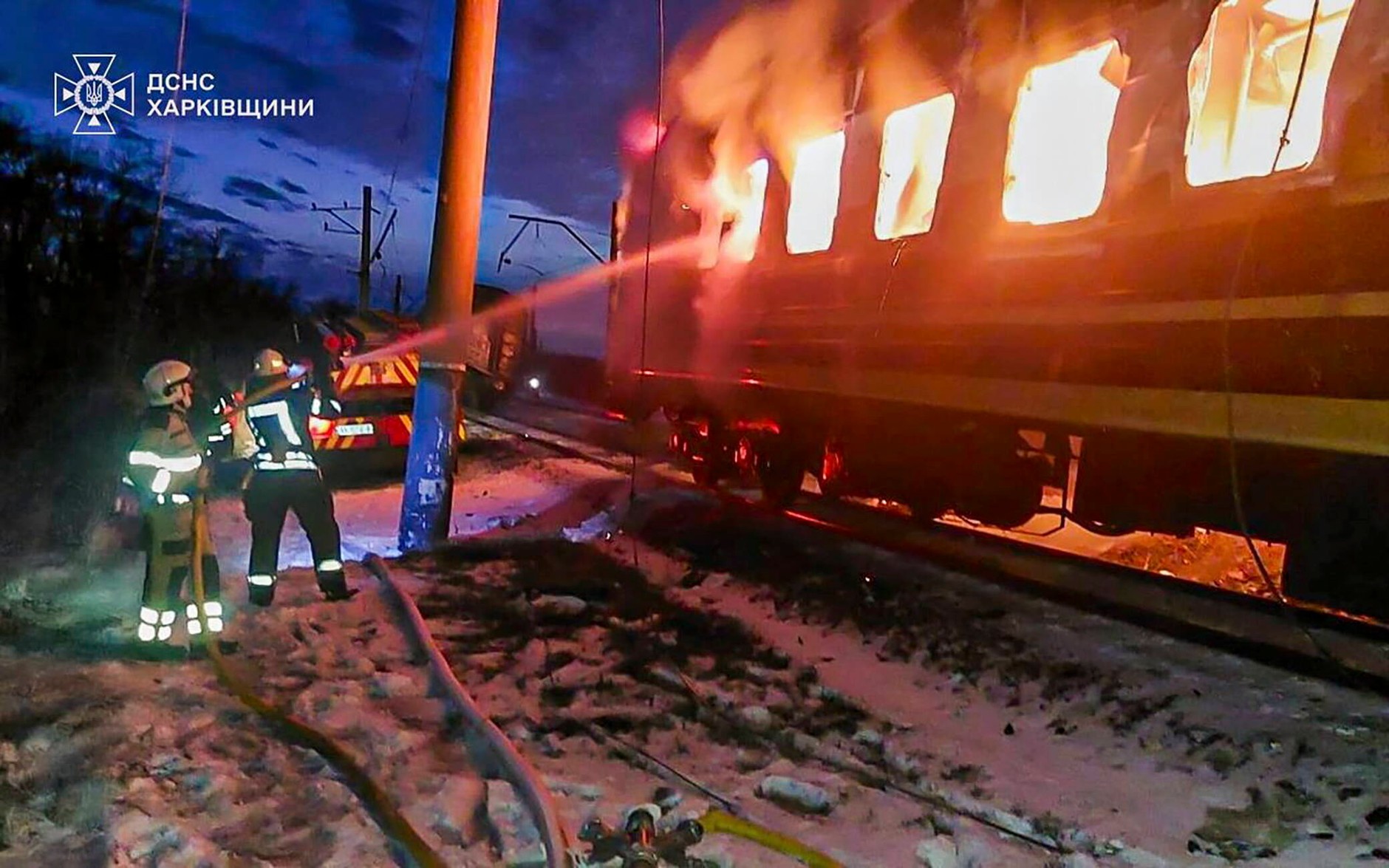
Ukrainian rescuers work at the scene of a Russian drone strike on a passenger train in the Kharkiv region of Ukraine, January 27, 2026.Ukraine State Emergency Service / HANDOUT / PAP
The Russian Shahid drone typically carries 50-75 kg of high-impact explosives, enough to destroy at least one apartment in a concrete and steel building. Some of the heads of these drones are also filled with ball bearings (acting like pellets) to increase the weapon's ability to cause human casualties.
— The attack on the passenger train is a direct act of Russian terror aimed at the civilian population. It has no military significance, Oleksiy Kuleba, deputy prime minister for the reconstruction of Ukraine, told reporters in Kiev.
On Wednesday and Thursday, Kremlin news platforms made no mention of the attack.
In previous statements, representatives of the Russian Federation claimed that Russian forces only attack military targets.
Safety at the expense of punctuality
Ukraine's railway systems are by far the most important means of public transport in the country. In 2025, approximately 28 million passengers were transported by rail, an average of 75-80 thousand. per day for long-distance travel and another 32-40 thousand. passengers on local trains.
The state-owned company is very popular among travelers due to its… punctuality, despite the pressures of warand relatively low ticket prices.
A statement from the Ukrainian carrier indicated that long-haul passengers looking to catch flights outside Ukraine are most at risk of delays, as the actual arrival time will depend on train routes, potential unscheduled stops and possible alternate sections of the journey by bus or local train. And passengers will find out about this only after starting their journey by long-distance train.
Since Russia's full invasion, passenger numbers on Ukrainian trains traveling to and from neighboring countries such as Poland, Hungary, Romania and Moldova have skyrocketed as Russian air forces have attacked civilian aircraft, preventing direct flights to and from Ukraine.
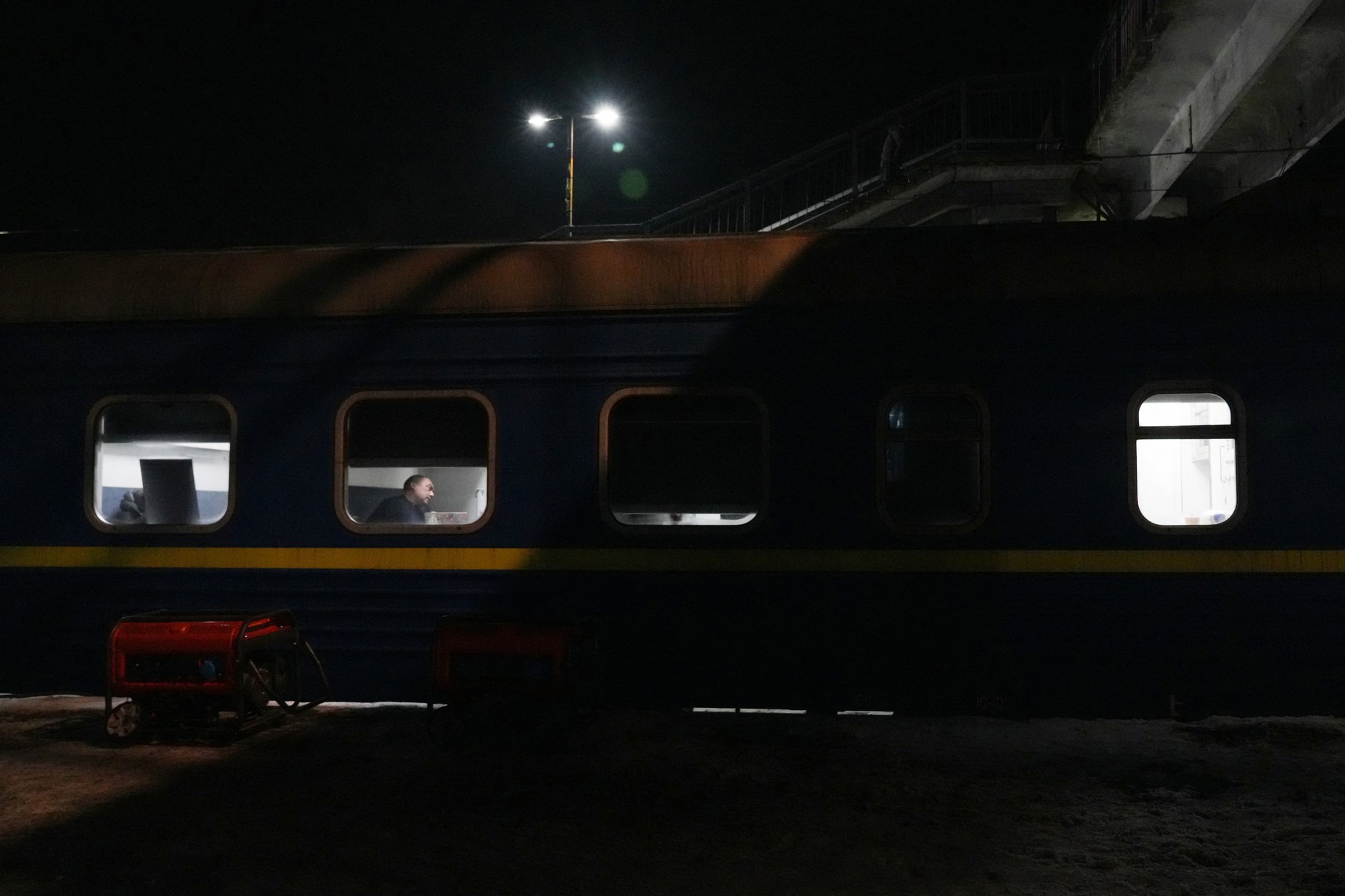
A man sits in a railway carriage temporarily used as a heating point at a railway station in the Kiev Oblast, January 21, 2026.OLEKSII FILIPPOV / AFP / AFP
According to the carrier's announcement, the routes most exposed to unpredictable delays are trains passing through the Kharkiv, Sumy, Zaporozhye and Kherson oblasts to other destinations.
“Please take this fact into account when planning your trip,” the statement warned.
Ukrainian railway management said it had sent heated wagons to the Polish city of Chełm, a transfer point for passenger trains running between Kiev and Warsaw.
Previously, passengers waiting for connections had no choice but to sit on benches on an open train platform, sometimes in freezing winter temperatures. The heated carriages are equipped with sockets for charging devices and hot water for making tea and coffee.
Heated stationary trains were also deployed at eight stations in Ukraine to provide shelter for travelers waiting to connect, the statement said.
Railway target of Kremlin attacks
Since the Kremlin's invasion of Ukraine in February 2022, Russian armed forces have carried out almost constant long-range attacks, sending kamikaze drones and missiles to Ukrainian homes and businesses, but attacks on moving trains are relatively rare.
Before Tuesday, Russia's worst drone attack on Ukrainian train passengers occurred on October 4, when kamikaze drones struck two passenger trains in the Sumy region, killing one person and injuring at least 30.
There were Ukrainian railway stations the Russians' priority target for most of the warand attacks focused on stations closer to the front line and main transfer hubs.
The deadliest Russian attack on Ukrainian rail passengers took place on April 22, 2022, when a Tochka-U surface-to-surface missile directly hit the Kramatorsk train station in eastern Ukraine, which at the time was packed with several thousand civilians trying to escape from advancing Russian troops.
A warhead armed with cluster munitions killed 63 civilians, including nine children, and injured over 150 people, including 34 children.
On December 5–6, 2025, Russian Shahid drones attacked and severely damaged the main Fastiv railway junction in the southern part of Kiev Oblast to disrupt the movement of almost two hundred long-distance and local trains passing through it daily.
The attacks destroyed the station building, adjacent areas and related infrastructure, and also hit a suburban electrical depot, destroying 27 carriages. The railway authority declared the station beyond repair and warned travelers that trains passing through the area may experience “delays of 1-2 hours which may occur depending on traffic volumes”.