Nicușor Dan, the first reaction after Germany began to set up the plan for “Europe with two speeds”

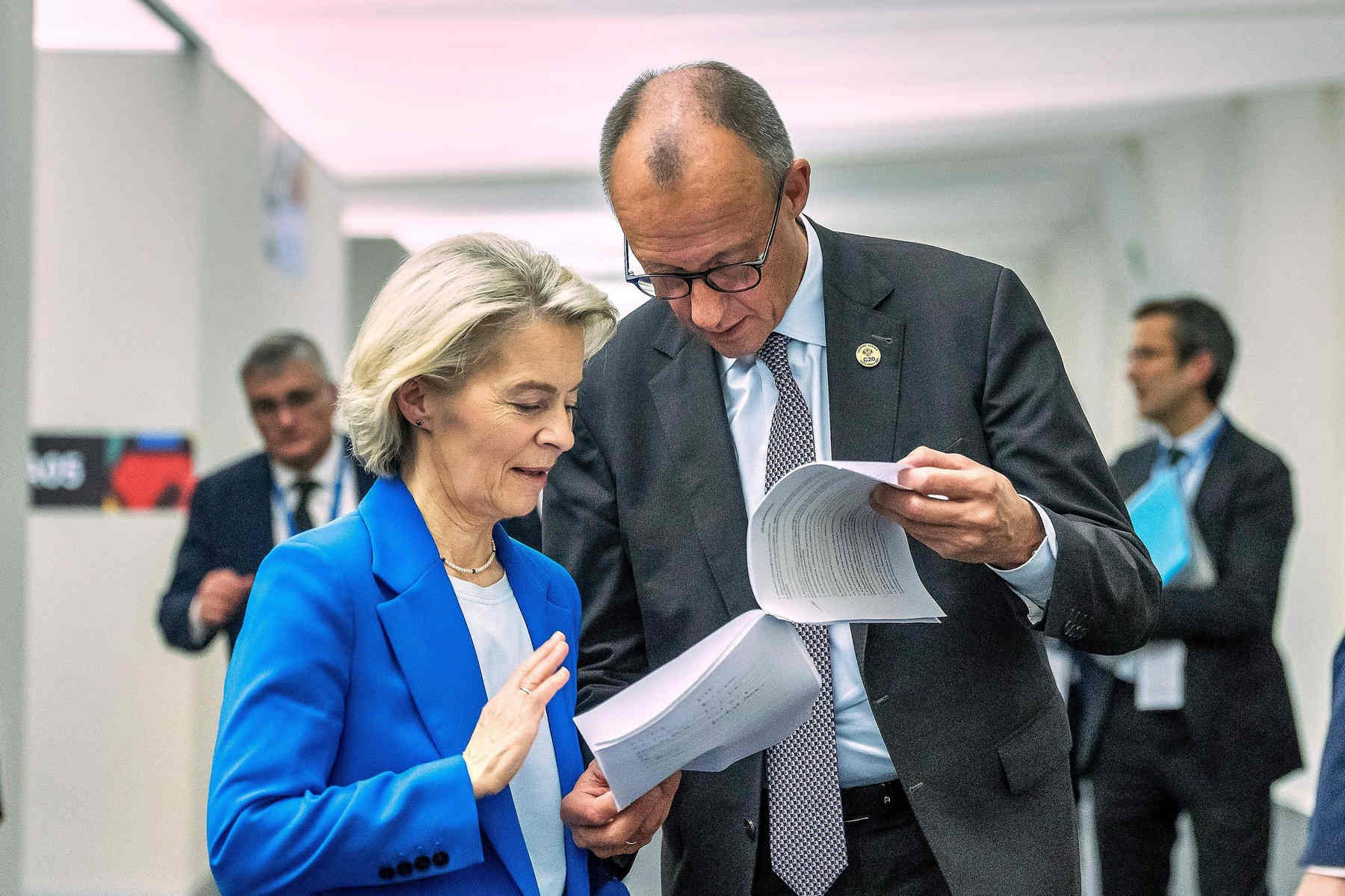
Ursula von der Leyen and Friedrich Merz. PHOTO: Michael Kappeler, Pool/dts Nachrichtenagentur / imago stock and people / Profimedia
“There is no possibility in the immediate time horizon for the European architecture to change,” President Nicușor Dan reacted on Thursday evening, after Germany advanced the scenario for a “two-speed” Europe.
“I read the statement very carefully, it is not as you said it. There is no possibility in the immediate time horizon for the architecture to change. One of the stakes of the EU for the current year and next year is competitiveness. We, Europe, have a gap here with the US, we are losing in attracting investment, our total gross domestic product has fallen, it is 75% of that of the US, and then we need to look carefully at our economy. The six states, the largest economies important, they aim to coordinate so that when we have a Council they harmonize their positions so that what they present to the 27 is a common point of view”, said the head of state, in an interview with Digi24, after the German Finance Minister said that the time has come for “two-speed Europe”
“There are many other groups of countries on other topics with the same goal. We are in a group that aims to harmonize their positions regarding the speed of the green transition. We want to slow down this process and we will meet on February 27 to harmonize our positions to have a common negotiating position. There is a group on migration, there are many other formats,” said President Dan.
Asked if there is a method to make decisions faster at the EU level and to avoid the constant veto of some countries on certain fields of action, the head of state answered: “This is a very complex debate, because the veto is actually the expression of sovereignty. On foreign policy issues there is a lot of reluctance to give up your country's right to oppose a measure. On trade policy, the member states have already given this attribute to the European Commission.”
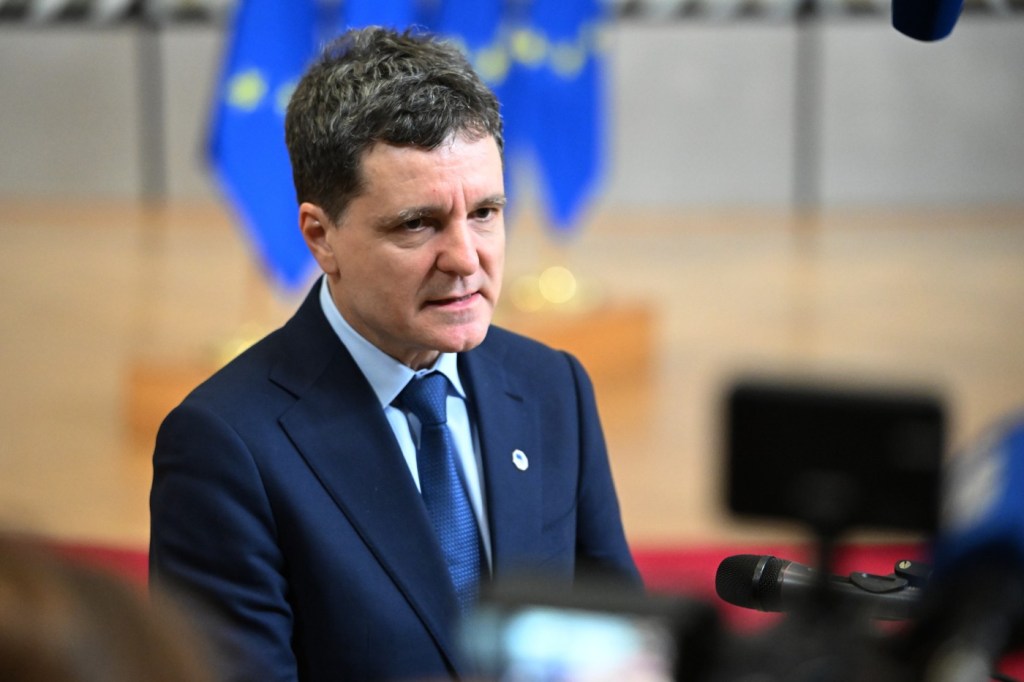 Nicușor Dan: The perception of the coalition is worse than 6 months ago, it can be seen in the investors' concern, but we are moving forward. Now there is no alternative to Bolojan / He hesitates to answer when asked if PSD is blocking reforms, as the prime minister says
Ministers from six major European economies, including Germany and France, discussed plans on Wednesday to continue joint projects without the rest of the EU, in an effort that aims to facilitate quick decision-making at a time of geopolitical turmoil, Reuters reported.
The idea of forming ad hoc coalitions – within a so-called “two-speed” European Union – that would allow some EU countries to carry out projects without the need for the consent of all member states has been tempting some countries for a long time and has already been applied in the case of key projects, including the euro currency.
But the idea has begun to gain new momentum as Europe grapples with growing insecurity, sluggish economic growth and deep political divisions.
“Now is the time for a two-speed Europe,” German Finance Minister Lars Klingbeil said in Berlin on Tuesday.
Germany's plan for 'two-speed Europe'
Klingbeil wants the countries he has invited to talks to establish a concrete program to strengthen Europe's sovereignty and competitiveness, according to a letter seen by Reuters.
“To survive in an increasingly unpredictable geopolitical situation, Europe must become stronger and more resilient,” Klingbeil wrote in the letter to his counterparts dated Monday. Continuing as before in decision-making at the level of the EU bloc can no longer be an option, the German minister added in the letter.
The invitation states that this is meant to be a “start”, with a follow-up meeting to take place face-to-face in the margins of the next Eurogroup meeting.
German Chancellor Friedrich Merz has shown an increasing willingness to push ahead with the idea of a lack of unanimity in decision-making, whether on the Mercosur trade deal or Ukraine.
Germany's letter includes a four-point plan to promote an EU capital markets union, strengthen the euro and better coordinate defense investment and securing raw materials.
Klingbeil said that this coalition must also act more quickly on the savings and investment union to create better financing conditions for European companies.
On the euro, he called for cutting red tape and strengthening payments sovereignty to highlight the currency's role as a safe haven based on predictability and the rule of law.
He called for better defense cooperation, which he said should be firmly enshrined as a priority in the EU's next multi-annual budget.
The resilience of the supply chain of critical minerals must also be strengthened, through stronger strategic engagement with international partners, the German minister said.