The time of the illusions has passed. What is to happen about Russia after Hague NATO Summit

The spectacular air strokes ordered by President Trump against Iran have reaffirmed, dramatically, the symbolic and military value of discouragement. The American attack is a passage of the rubicon and a signal transmitted to those prepared to challenge the international order: the perspective of a nuclear Iran is removed, at least for the years to come, considers the constitutional professor Ioan Stanomir in a text published on the contributors and taken by Hotnews.
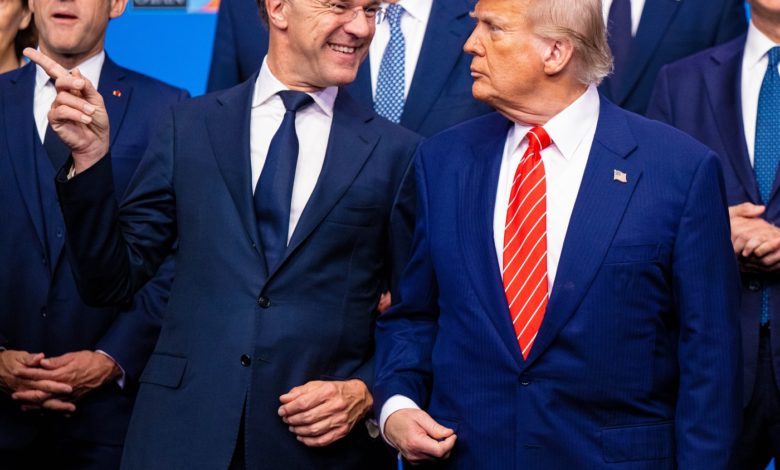
Against this background of the revival of discouragement, the NATO summit in The Hague meant a moment of pragmatism and lucidity. Assuming a 5 percent target for arming, establishing a strategic consolidation plan, indicating Russia as a threat, reiterating collective defense, all are the signs of an orientation based on a salutary realism.
For Europe, NATO is the only organization that can, simultaneously, maintain the Atlantic relationship and organize discouragement: assuming the debts that come to us is the alternative to paralysis and collective transfer. In the conversation with the Trump administration, these days are a turning point. The freedom of the continent depends on the honor of our promises.
The Russian file is, in this context, an essential one. And this is all the more so as Putin's Russia is not ready to accept a cessation of fire in Ukraine. The Russian aggression is the operation of a mafia regime: the attacks that are equivalent to so many crimes against humanity betrays the ambitions of the Moscow regime. Barbaria is now three years ago, the official fighting policy of the Russian Federation.
Vladimir Putin's goals and his accomplices are clear. Peace, in the terms of Russia, means the reduction of Ukraine to a state under the protectorate of Moscow. Territorial ceders would be accompanied by the renunciation of sovereignty, Ukraine being reduced to the unattended status to defend and manifest their independence. Such peace would bring Russia to the borders of Romania, as well as to Poland. Such peace would be, probably the first step towards another war.
How can peace be earned
A lucid interpretation, in line of Raymond Aron's liberalism-conservative, can only start from accepting this strategic reality. Russia is not ready to accept authentic negotiations, because the Russian Federation is confident in its ability to win, on military ground, this fight. And this conviction is irreconcilable with a diplomatic effort. Putin's Russia chose the path of war, and the evocation of peace is imagined in the form of a chapter of the enemy. This time Russia seems determined to no longer accept the existence of a free Ukraine on its borders.
An negotiated peace is impossible under these conditions. As long as Russia is engaged in this effort of total economic mobilization, as long as the economy can maintain this rhythm, peace will be formulated by Moscow as a dictatorship. Putin's Russia has an intact hegemonic ambition, and international sanctions, no matter how intense, cannot change this strategic option.
Finally, only the renunciation of confidence in military victory is the precondition of authentic negotiation. What will allow peace, as a form of diplomatic employment, is the change of landscape on the battlefield. The Russian Federation must accept its inability to achieve its goals by resorting to armed force.
And this is the supreme challenge that the United States and European allies face: the elimination of the Russian hopes of a military triumph, at the same time avoiding the nuclear -evoked climbing by Moscow, as a form of collective blackmail.
And the answer has only one name, discouragement. Only assuming discouragement is the alternative to the victory of Russia: the medium and long -term support of Ukraine must be doubled by the renunciation of pacifism. It is the time that the ethics of arming discouragement be embraced by our nations, since the international society is dominated by a feeling of confrontation and rivalries.
In Aronian spirit, we have a duty to define our victory as a strategy of survival: the Russian Federation is confronted on the only land accepted by it, the military. Maintaining Ukraine as a free nation is the first step. The establishment of a discouragement force, in the way suggested by the Americans, is the second step.
The Russian Federation is an enemy who relies, like the Soviet Union, on a primitive and criminal military policy. In order not to be crushed by the drones and rockets of Moscow, our states have a duty to strengthen the individual defense, as a premise for the collective one. Aronian lucidity can guide us on this road: the edifice of peace has as its foundation to discourage the enemy that threatens us with extermination. The time of the illusions has passed, for history is in motion again.