Less than a minute after takeoff from Cape Canaveral, Florida, flames emerged from the leaking surface of the booster rocket, and shortly thereafter the front part of the shuttle burst into flames. The rocket's disintegration began 73 seconds after launch, at an altitude of 14.6 kilometers. The burning debris of the Challenger fell into the Atlantic.
How long did the Challenger mission last?
Who was the commander of the Challenger mission?
What were the causes of the Challenger disaster?
What changes were made after the Challenger disaster?
40 years since the Challenger space shuttle disaster
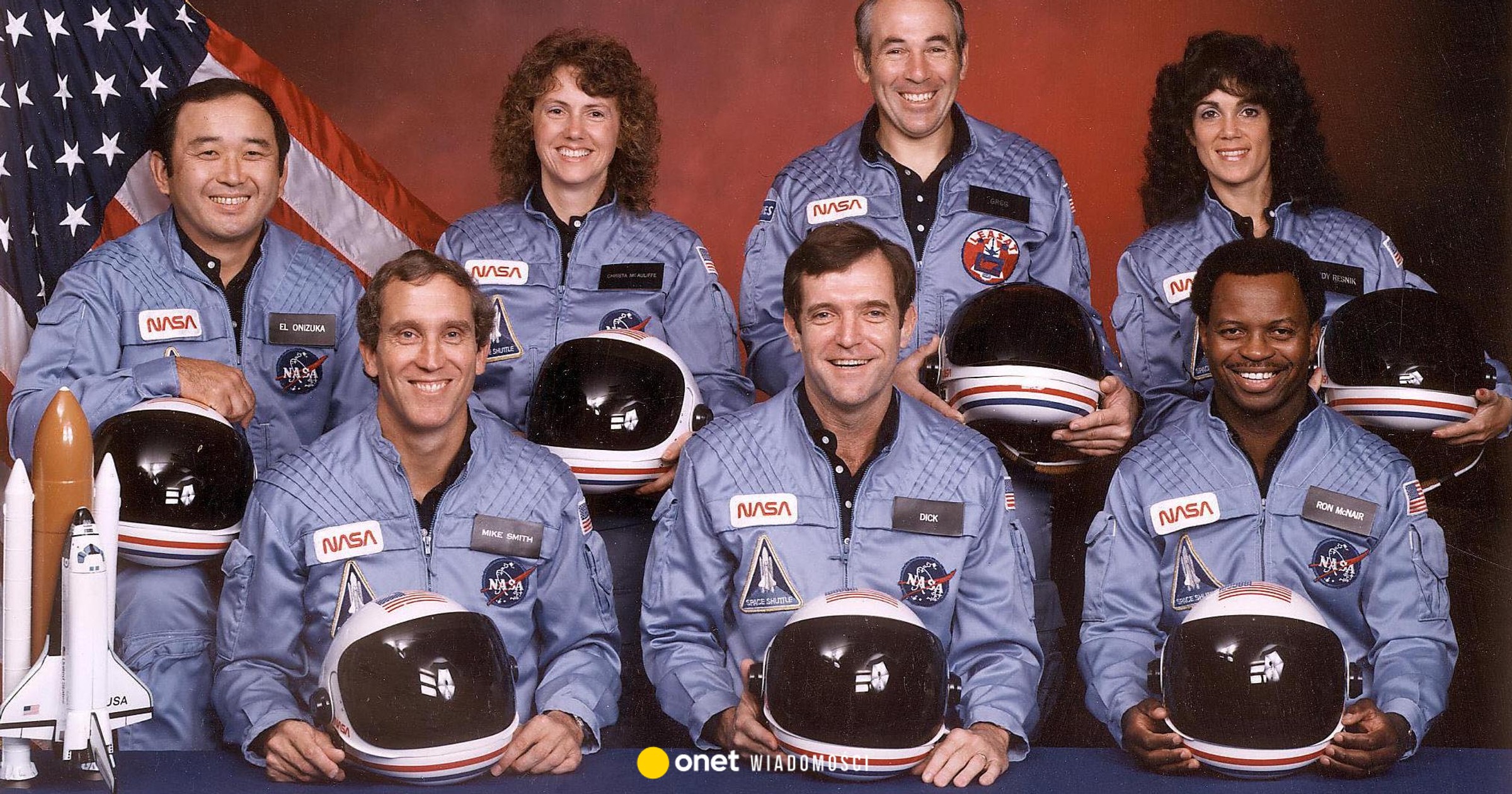
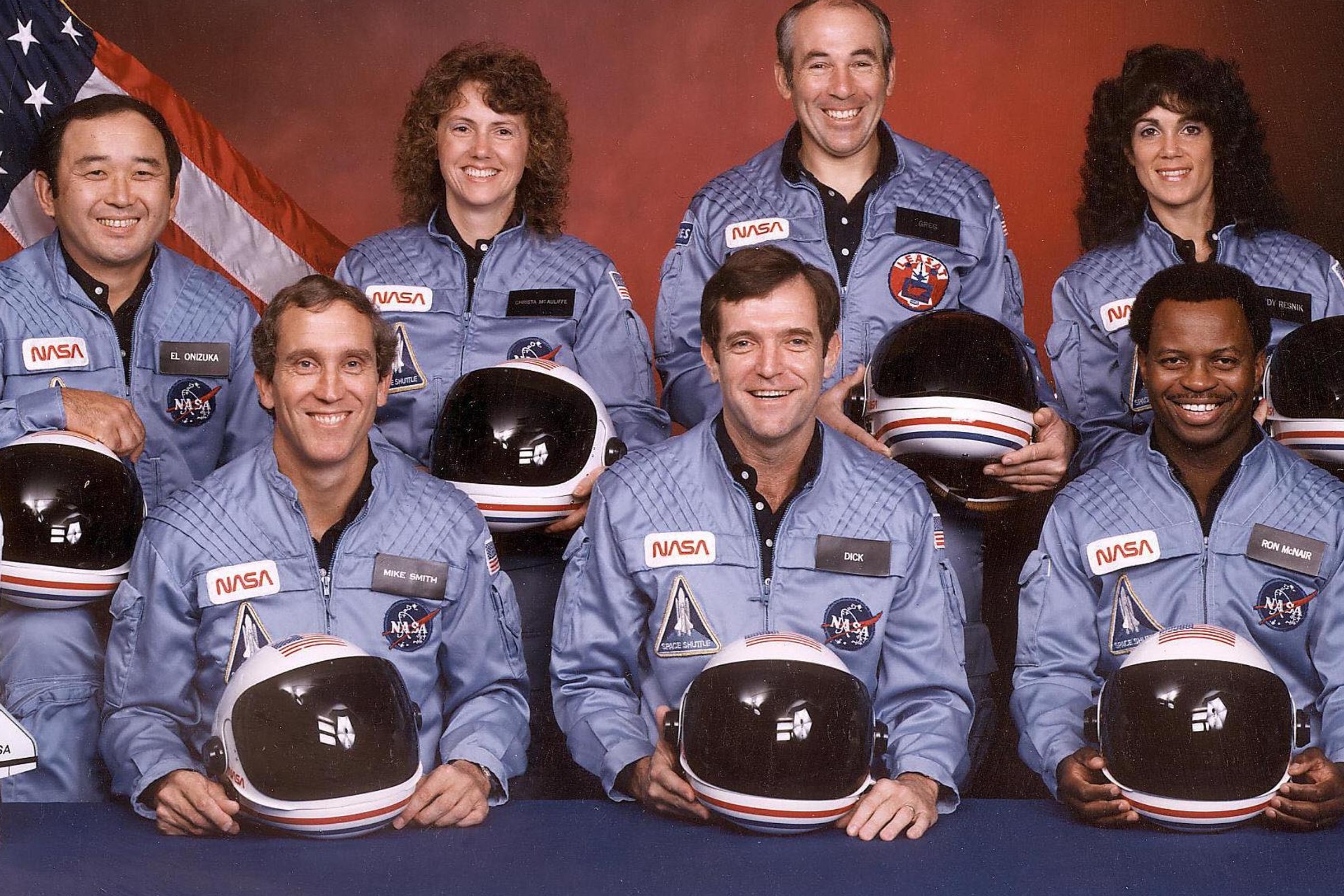
Seven ferry crew members died – five men and two women. The mission commander was Francis “Dick” Scobee, the pilot was Michael J. Smith. Among the victims were also mission specialists – Judith Resnik, Ellison Onizuka, Ronald McNair and Gregory Jarvis, and Christa McAuliffe – a history teacher who was to teach the first lesson from space.
The disaster was caused by damage to the sealing ring in the right booster engine of the ferry. It happened between the first and third seconds of the flight. Photos from the crash show black smoke around the engine. In the 58th second of the flight, a flame appeared outside the engine. It burned a hole in the shuttle's external tank, causing it to disintegrate.
The causes of the disaster were investigated by the so-called Rogers Commission – an independent investigative commission appointed by US President Ronald Reagan. The investigation showed that the reason for the damage to the ring could have been the low temperature at the launch pad at night and in the morning on the day of launch. Many installations on the launch pad were icy, which may have contributed to weakening the materialfrom which the ring was made.
Who is to blame for the Challenger disaster?
Specialists concluded that the blame for the disaster lay primarily with NASA's management and the procedures in force during the mission. The accident was linked to routine (it was another shuttle flight) and excessive savings at the expense of flight safety.
— The key turned out to be not what failed, but why expert warnings were ignored. The launch took place in extremely low temperatures. Engineers warned that the O-ring seals in the booster rockets were not adapted to such conditions. However, their voice was drowned out by the pressure of NASA's schedules and image – says Błażej Roch Żyliński, a science popularizer and doctoral student at the Warsaw University of Technology.
As he points out, the key figure of the commission investigating the circumstances of the disaster was the Nobel Prize winner, American physicist Richard Feynman (1918-1988). — His famous experiment with a piece of rubber gasket immersed in ice water became a symbol of the simplicity and ruthlessness of scientific facts. Feynman showed that the problem was not a lack of knowledge, but an organizational culture that systematically ignored inconvenient facts. His final sentence – that nature cannot be deceived – is still quoted in the context of technological disasters, Żyliński pointed out.
He also gave an interesting fact about the Polish element in the investigation of the causes of the disaster. Well, Donald J. Kutyna – an MIT graduate and US Air Force general whose grandparents came from Poland – worked with Feynman. — He helped us understand that the icing observed on the day of launch was not a harmless detail, but a key clue to the cause of the disaster. Kutyna provided Feynman with critical information outside the official NASA circulation, the popularizer added.
Space missions after the Challenger disaster
After the Challenger disaster, crewed shuttle missions were suspended until 1988. Many corrections and new safeguards were introduced to the shuttle program. However, they did not save NASA from another space shuttle disaster – On February 1, 2003, just before landing, the space shuttle Columbia explodedseven astronauts also died.
Challenger was the second shuttle from the US STS – Space Transportation System program. He made his first flight on April 4, 1983, and made nine flights in total – not counting the last take-off that ended in a disaster. In total, Challenger spent over 62 days in space, orbited the Earth 995 times and flew 41.5 million km.
Its name came from the British scientific ship HMS “Challenger”, which sailed in the Atlantic and Pacific waters in the 1870s.