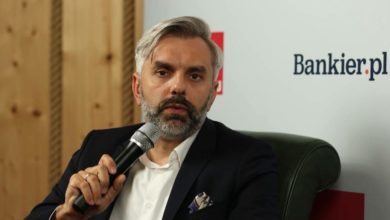
Poland's health care system is full of past history and pathologies. Immediate intervention is needed, or even rearranging it, said economist and management strategist Anna Gołębicka in an interview with PAP. She emphasized that adding money without changing the system will not improve the situation of patients.
PAP: The starting point for our conversation is the specific situation of the patient – refusal to perform simple tests due to the “wrong” referral, issued by a doctor employed in another facility, although both have a contract with the National Health Fund. Is this an isolated case or a symptom of the system?
Anna Gołębicka, economist and management strategist, co-founder of the Human Answer Institute and expert at the Center. Adam Smith: This is absolutely a systemic symptom. Our system is complicated. It operates in three segments (primary care – POZ, outpatient specialist care – AOS and hospital services), and within these segments in additional groups and subgroups that, although they have the same payer logo, but most often do not “see” each other. You could say “everyone scrapes their own turnips”.
If the referral was issued by the primary care physician to whom the patient is registered, it is to be carried out within this primary care facility. If we want to go somewhere else, we have to re-book and go through the procedure from the beginning. In the case of AOS, the issue does not make the patient's life easier, and the main determinant here is settlements with the payer. The devil is in the details here, and there are a lot of details.
PAP: So the problem is how to finance primary health care?
AG: Yes. POZ operates mainly on a capitation basis, which covers visits, specific tests and all patient services. It is in the facility's financial interest to do as little as possible. This distorts the meaning of treatment. Hence, for example, the phenomenon we call “referral treatment”, which involves pushing the patient to a specialist so that he does not burden the primary care center. As long as patients do not consciously choose their family doctor, facilities that operate in accordance with this principle will do well.
PAP: As a result, the patient circulates around the system.
AG: Exactly. The patient goes to a family doctor, then to a specialist, and the National Health Fund pays several times for visits with the same purpose. And this is only the beginning, because tests are often duplicated – in primary care, at a specialist and in a hospital, and this is not always clinically justified.
PAP: Why do hospitals repeat tests that patients already have?
AG: There are many reasons. Lack of trust in the so-called card that the patient comes with, lack of trust in the fact that this attachment will not get lost in the documentation. There is no functioning interpretive system that would make all patient test results available to the doctor. Today, the results are in electronic form, but the systems do not communicate or communicate only fragmentarily. The Patient's Online Account shows that the test was performed, but does not show the results, so the paper version that the patient comes with remains. The doctor prefers to order everything again rather than risk it.
PAP: This means huge costs.
AG: Yes, and not only directly. We are talking about such amounts here that an improvement in efficiency of a few percent is already a huge amount of money. We waste it on duplicate tests and visits, we waste it on bureaucracy, we use doctors' time ineffectively, but we also have indirect costs: the patient is on sick leave, does not work, so he does not pay taxes, and involves the family. We don't know how to count it at all.
PAP: Another issue is the financial instability of institutions.
AG: This is one of the greatest absurdities. For business, financial liquidity is the basis of existence. Meanwhile, the payer often does not pay a significant part of the liabilities for weeks and months. Hospitals and clinics take out expensive working capital loans and payday loans to pay for medicines or materials.
PAP: Which benefits are affected by the most difficult situation?
AG: Unlimited. There is not even a clearly defined payment deadline. This means that doing business is extremely risky. Hence the dramatic situation, especially in district hospitals. Another challenge is services provided beyond the limit, for which the payer may – in accordance with the law – not pay at all. A hospital treats patients beyond their limits at their own risk, whether they will receive anything in return.
PAP: You also talk about wasting doctors' skills.
AG: Huge. Lack of organization, bureaucracy. Doctors perform a lot of administrative tasks. Someone else could do them. Writing out piles of documents, running to buy certain groups of medications because only a doctor can bring them from the hospital pharmacy. Sometimes dealing with a patient who is suitable for discharge but not suitable to return home, ZOL or another facility, and even court cases related to it. These are working hours that should be devoted to treatment.
PAP: What are the consequences of this?
AG: If a doctor only did what required his skills, in some places medical teams could be as much as half the size. Meanwhile, we complain that doctors cost us a lot and at the same time we manage this capital terribly.
PAP: There is also chaos in valuations and settlements.
AG: Yes. Overestimated or extremely underestimated procedures, or even different point prices. A new profession of medical coder has emerged, because the hospital's financial result largely depends on coding.
PAP: What about inflation, increases in energy costs and wages?
AG: They are not automatically included. Corrections are overdue. Facilities do not know when they will receive the money, so they limit benefits. Hence, among others, absurd queues, patients are now being registered with some specialists for as early as 2027.
PAP: In the background we have the liquidation of maternity wards.
AG: And chaos again. Decisions are made without looking down. The procedures are underestimated, too few babies are born, maternity wards are generating losses, so they are suspended, currently it is done on a first-come, first-served basis. Without a plan to protect patients, it is dangerous.
PAP: So there is no view from above?
AG: Exactly. As a strategist, I would say: let's start with the needs. Demography, epidemiology, new technologies. Let's put it together with resources. Additionally, a map of hospitals, outpatient specialist care and primary care. And we are only patching a system that is full of past problems and pathologies. This system is sick, full of pathogens, immediate, deep and comprehensive intervention is needed to heal it. Maybe leaving the box and having a completely new look.
PAP: What about the role of a family doctor?
AG: This is a very important person in the system. He or she should treat the patient in a wide range of basic diseases, be closest to the family, and often act as a triager and issuer of referrals to specialists. This is why we should have electronic triage, where the patient enters symptoms and the system directs him further. This would also reduce duplication of visits.
PAP: The patient also gets lost in this system.
AG: Yes. He wanders around, stands in queues, cannot get through, visits specialists looking for solutions to his problems, sometimes receives conflicting opinions, loses trust, gets angry, looks for his own solutions, and is frustrated. Then he makes judgments too quickly. He releases his emotions on someone who is often not at fault, so the spiral continues. Meanwhile, treatment is cooperation between the patient and the doctor based on understanding and trust. And this trust is the other part of the crisis, apart from money.
PAP: So what is the main disease of the system?
AG: There is no lack of money in itself. It's chaos, lack of strategy and poor management. Mirroring and white spots. As in a chronic disease – adding money without changing the model can only deepen the addiction to a faulty system.
PAP: You are a free marketeer, but you talk about solidarity.
AG: Because in health care you cannot escape from solidarity. Competition may be on the quality of care, the system must be consistent and accessible. We should all contribute to it fairly and honestly, and it should reciprocate with the treatment we consciously agree on as part of this contribution. Today it is a puzzle in a box that someone shakes all the time.