Greece wants to toughen penalties for illegal migration, with life imprisonment and immediate deportations. Dozens of NGOs criticize the project


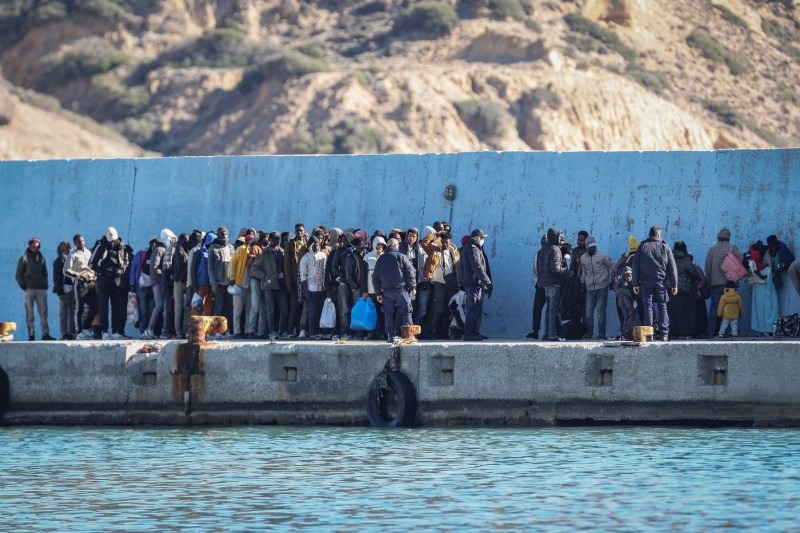
Migrants in Agia Galini Port after being rescued by the Greek Coast Guard in the area of Crete Island on December 19, 2025. Credit: Costas METAXAKIS / AFP / Profimedia
The Greek Ministry of Migration announced on Saturday that it has submitted a bill to parliament through which “sanctions against illegal migrant trafficking will be tightened at all levels”, AFP wrote, according to Agerpres.
The bill introduces life imprisonment for migrant smugglers and also provides for the immediate deportation of migrants convicted of various crimes. In addition, it includes sanctions for assistance given to migrants who have entered the country clandestinely.
Another provision concerns the tightening of sanctions against activists from non-governmental organizations prosecuted for migrant smuggling.
The project, criticized by activists
A number of 56 NGOs, including the Greek branches of the organizations “Doctors of the World” and “Doctors Without Borders”, sent a joint statement demanding the immediate withdrawal of some articles from the project, saying that they turn misdemeanors into crimes punishable by up to ten years in prison and fines of tens of thousands of euros.
The NGOs in question argue that the draft gives too much prerogatives to the Ministry of Migration, which will be able to decide to remove such an organization from the register of NGOs and ban its operations on the ground only on the basis of legal proceedings initiated against one of its members, without a conviction by a judicial decision.
The Ministry claims that it also wants to promote legal immigration through this project, by simplifying recruitment procedures for workers from third countries, creating a new type of visa for employees of companies in the high-tech sector and issuing residence permits for the entire duration of studies for students from third countries.
For asylum seekers and refugees, “vocational training programs in sectors faced with labor shortages, such as construction, agriculture and tourism” will be implemented, with the objective of integrating them into the labor market, according to the ministry.