Divergence at NASA ahead of Moon flight: Critical warnings about launching mission with unresolved technical flaw


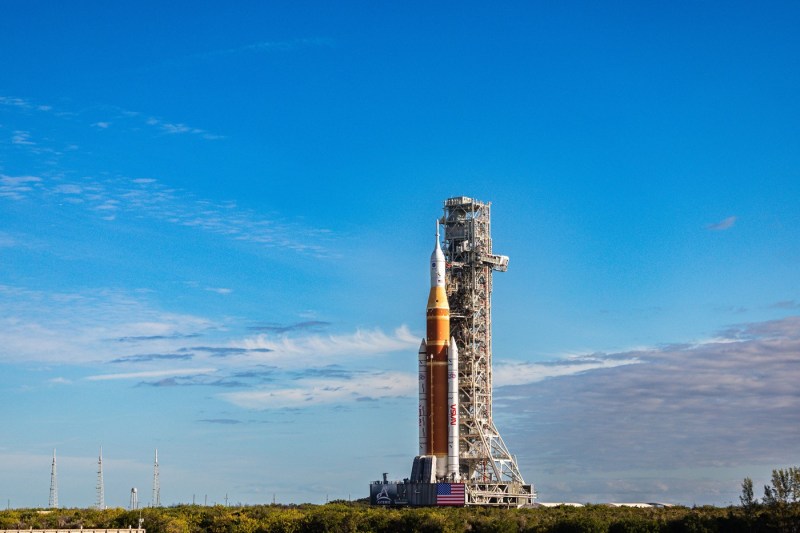
The SLS rocket and Orion spacecraft, pictured on January 17, 2026 during the historic transport to the Cape Canaveral launch pad ahead of the Artemis II mission to the Moon. Credit line: Mauricio Paiz/NurPhoto / Shutterstock Editorial / Profimedia
As NASA pushes for Orion's February 6, 2026 liftoff, a former astronaut and thermal systems expert warns that sending humans aboard with a faulty heat shield is “crazy.” Although the capsule is already on the launch pad, specialists warn that unresolved technical risks endanger the safety of the entire crew, according to CNN.
Four astronauts will set off on a historic journey aboard the Orion spacecraft next month, although the vehicle has a known technical flaw. While some experts are calling for the mission to be delayed for safety reasons, NASA says it is confident that the problem is under control and that the crew will return to Earth safely
The failure affects the heat shield, a vital component located at the base of the capsule that protects astronauts from extreme temperatures upon re-entry into the atmosphere. This piece of hardware is crucial to the crew's survival during the final stage of the Artemis II mission, when the craft descends toward Earth at breakneck speeds
The component is nearly identical to the one used in 2022 on the Artemis I test mission, when the Orion spacecraft returned to Earth with unexpected shield damage, prompting an internal investigation. Although NASA is ready to authorize the flight, even the mission's proponents admit that an unknown risk remains.
“This is a faulty heat shield,” said Dr. Danny Olivas, a former astronaut and member of the team that formally investigated the incident. “There's no question: This is not the heat shield NASA would want to provide its astronauts.”
In a statement to CNN, NASA said it “considered all aspects” of the decision. The agency acknowledged that there are “uncertainties” about manufacturing the protective coating and stressed that risks persist regardless of the course of action chosen.
“In my mind, there's no flight that takes off without a lingering doubt,” Danny Olivas said. “But NASA really knows the importance of the heat shield for the safety of the crew, and I think they've done their job.”
Lakiesha Hawkins, NASA's deputy administrator, confirmed that position, saying the agency has full confidence in risk management. The same certainty is shared by Reid Wiseman, commander of the Artemis II mission, who publicly expressed his support for the technical solutions adopted.
“Investigators discovered the root cause, which was the key” to understanding and solving the heat shield problem, Wiseman told reporters last July. “If we stick to the new reentry trajectory planned by NASA, then this heat shield will be safe for flight.”
“Madness.” The voices calling for the launch to be stopped
However, there are also voices that vehemently dispute the agency's decision. “What they're trying to do is crazy,” said Dr. Charlie Camarda, a heat shield expert, research scientist and former NASA astronaut.
Camarda, a veteran of the first flight after the 2003 space shuttle Columbia disaster, is part of a group of former NASA employees who oppose sending astronauts on this expedition. He claims he tried for months, without success, to get the agency's leadership to heed his warnings
“We could have solved this problem a long time ago,” said Camarda, who worked as a NASA scientist for two decades before becoming an astronaut, referring to the heat shield problem. “Instead, they continue to postpone the issue.”
Now, NASA is preparing to give the go-ahead for the launch of the Artemis II mission as space agency leaders try to reassure the public and crew about the mission's safety.
The Orion spacecraft was already installed on the launch pad on January 17, fixed on top of the SLS rocket. Artemis program leaders are currently meeting for final assessments, a crucial step that will decide whether the mission gets the official go-ahead to lift off with the four astronauts on board.