Shootout, at the end of the trial against Open AI, in which the richest man in the world asked for 150 billion dollars

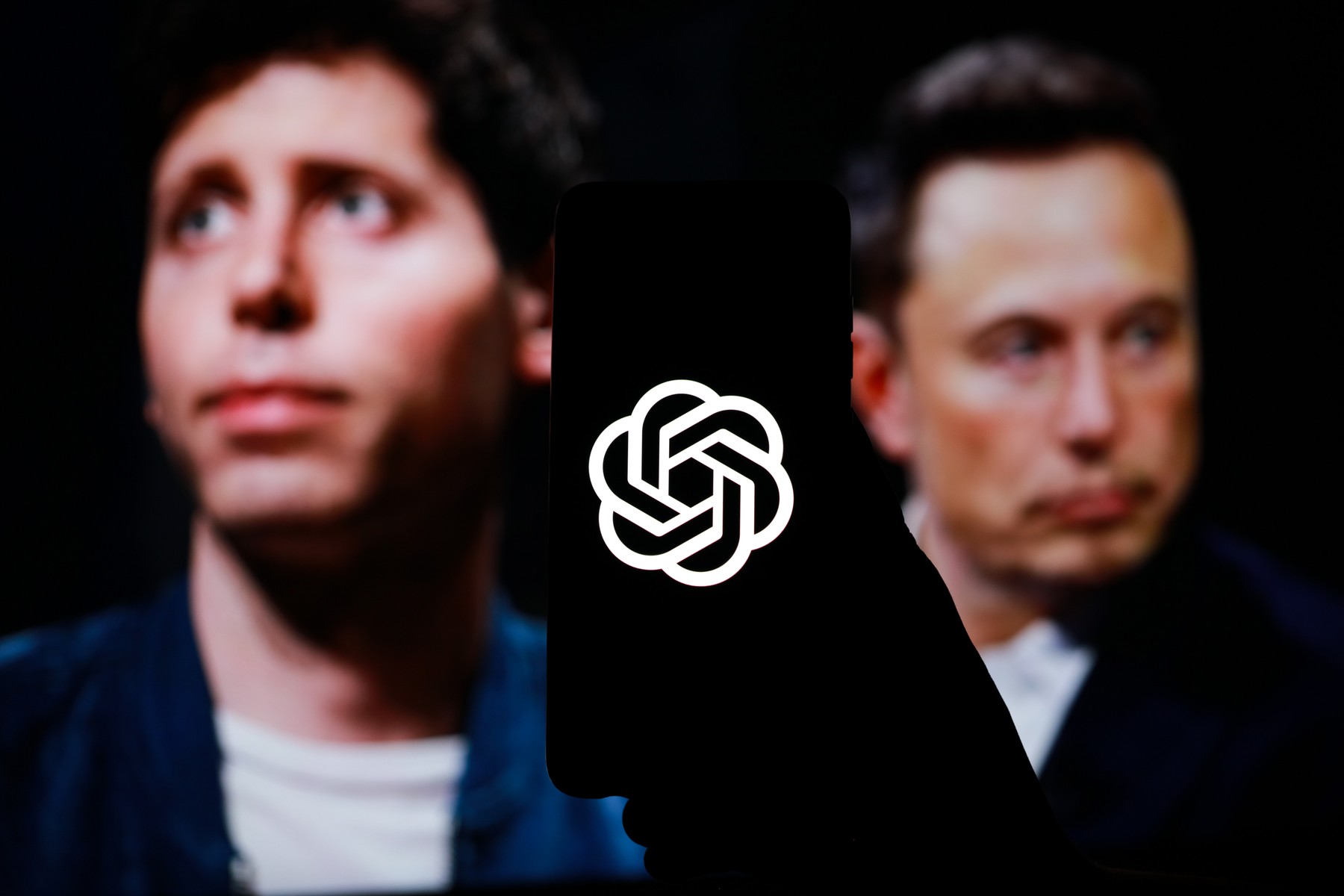
A lawyer for Elon Musk questioned the credibility of OpenAI CEO Sam Altman on Thursday as a trial nears the end of whether the maker of ChatGPT and its management can be held liable for turning the non-profit organization into a means of personal enrichment, Reuters writes.
One of OpenAI's lawyers fired back, arguing that Musk waited too long to charge that OpenAI violated its founding agreement that called for building artificial intelligence that was safe and for the benefit of humanity.
The claims were made during closing arguments in a lawsuit in federal court in Oakland, California.
Musk is suing OpenAI and Altman for misappropriation of a charitable trust and unjust enrichment, accusing them of “stealing a charity” by deviating from OpenAI's founding mission.
He claimed that OpenAI manipulated him into donating $38 million, then went behind his back by attaching a for-profit business to the original non-profit and accepting tens of billions of dollars from Microsoft and other investors to grow.
The world's richest person is seeking about $150 billion in damages from OpenAI and Microsoft, which would be paid to OpenAI's non-profit organization, in his August 2024 lawsuit. He also wants Altman and OpenAI president Greg Brockman fired from their positions.
OpenAI has conveyed that the organization is stronger as a for-profit entity, and Musk simply wants unilateral control in exchange for continued support.
Musk's lawyer criticizes 'arrogance'
In his closing argument, Musk's attorney Steven Molo told jurors that five witnesses, including Musk, former OpenAI board members and former OpenAI chief scientific officer Ilya Sutskever, said Altman was a liar.
Molo also noted that during Tuesday's testimony, Altman did not answer unequivocally in the affirmative when asked if he was completely trustworthy and did not mislead business people.
“Sam Altman's credibility is directly at issue in this case,” Molo said. “If you don't believe him, they can't win.”
Molo accused OpenAI of improperly trying to enrich investors and insiders at the nonprofit's expense, and of failing to prioritize AI safety.
He also disputed Brockman's goals for the company, citing Brockman's statement that his own stake in OpenAI was worth nearly $30 billion.
“The arrogance, the insensitivity, the failure to consider simple decency is really, really outrageous,” the lawyer argued.
OpenAI's lawyer says Musk wanted control
Sarah Eddy, the attorney for the OpenAI defendants, accused Musk's legal team in its final pleading of using “trigger phrases and false, irrelevant allegations” to distract from the absence of “real claims” in Musk's case.
“Mr. Musk is the one whose testimony is contradicted by all the other witnesses and all the documents,” Eddy said.
Eddy said that by 2017, everyone associated with OpenAI — including Musk, who was still on the board — knew the organization needed more money to fulfill its mission than it could raise as a non-profit.
“Mr. Musk wanted to turn OpenAI into a for-profit company that he could control,” she said. “But the other founders refused to hand over control of AGI (artificial general intelligence) to one person, let alone Elon Musk.”
She also said that if Musk truly believed that AI should serve humanity, he would not have insisted on integrating OpenAI into his electric car company Tesla, nor would he have launched xAI, a competing AI company, in 2023 with the goal of making a profit.
The lawsuit also accuses Microsoft, which has invested $1 billion in OpenAI in 2019 and $10 billion in 2023, of complicity in OpenAI's illegal conduct.
“Microsoft was aware of what OpenAI was doing every step of the way,” Molo said.
Altman and Brockman were present in court for closing arguments. Musk is accompanying US President Donald Trump to China.
The next step in the process
The trial comes amid public concerns about artificial intelligence as it increasingly permeates society.
People use AI for a multitude of purposes, such as facial recognition, financial advice, journalism, medical diagnosis and harmful online fakes ('deep-fakes').
Many people express distrust of this technology and fear that it could lead to job losses.
OpenAI is competing with artificial intelligence companies such as Anthropic and xAI and is preparing for a possible initial public offering (IPO) that could value the business at $1 trillion.
Microsoft has spent more than $100 billion on its partnership with OpenAI, a Microsoft executive said.
Musk's xAI is now part of his space and rocket company, SpaceX, which is also preparing for a potentially successful initial public offering.
It is unclear when the nine-person jury will begin deliberations.
If no verdict is reached by Monday, federal judge Yvonne Gonzalez Rogers and lawyers will return to court that day to discuss how OpenAI should be restructured and what compensation should be paid if Musk wins. The judge won't award damages if Musk loses.
Altman, Musk and several others founded OpenAI in 2015.
Musk left the board in 2018. His effort last year to buy OpenAI through a consortium led by xAI was also challenged in the lawsuit, with OpenAI arguing it was inconsistent with Musk's lawsuit.
Testimony was also presented regarding the brief episode in 2023 in which Altman was removed from OpenAI's board of directors, as well as potential conflicts of interest arising from his involvement in companies collaborating with OpenAI. Altman said he has no direct stake in OpenAI, although he does have a stake in a fund that has invested in the company.