The Kremlin School of Journalism. How Russia exports propaganda under the guise of “fighting disinformation”


Russia is quietly but systematically expanding its infrastructure of media influence in Southeast Asia, Africa, China and India, using journalist training programs as a vehicle to promote a pro-Kremlin agenda. Under the guise of building an “alternative narrative” and combating fake news, state broadcaster RT (formerly Russia Today) is cultivating a new generation of content creators familiar with the logic of Russian propaganda.
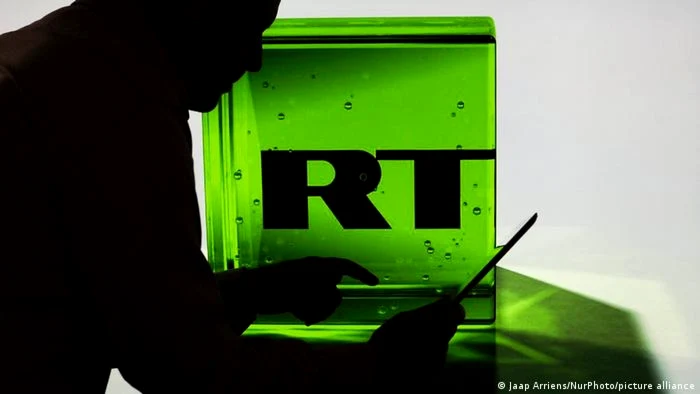
RT, the Kremlin's disinformation vector
In December 2025, RT organized a three-day event in Jakarta – RT Academy – attended by more than 250 journalists, journalism students and content creators from Indonesia, Malaysia, South Korea, Cambodia, Thailand and the Philippines. The courses, offered free of charge, were held at the Russian Cultural Center, at the RT office for Indonesia and ASEAN, but also at a local partner university.
Officially, the program was presented as a neutral educational approach, focused on universal themes such as the verification of digital sources, journalistic ethics in social media or the risks generated by disinformation and content created with the help of artificial intelligence. In the public speech, RT spoke about the role of the media in a democratic society and the need to combat information manipulation.
In reality, RT's reputation — documented for years for disseminating disinformation and pro-Kremlin narratives — casts a heavy shadow over these stated intentions. For critics, the RT Academy is not a journalism school, but a “soft power” tool, designed to expand Russia's influence in states that Moscow considers increasingly politically receptive.
Lessons on “disinformation”, taught by propagandists
The training in Jakarta was supported by well-known figures from RT's media apparatus: Anna Kovtunova, head of the RT Academy, Maria Zeleranskaya from the international newsroom, Dmitry Leontev, senior producer, and Oksana Boyko, producer of the show Worlds Apart, a controversial talk show for its radical pro-Kremlin positions.
The agenda also included a panel with members of Rusfluence, a so-called Russia-Indonesia influencer club, presented as a cultural exchange initiative for young people. But the group gained notoriety after sending handmade matryoshka dolls to Russian soldiers fighting in Ukraine, accompanied by messages of support for Russia's “heroes”. Rusfluence founder Anastasha Vibisono told Russian state media that the gesture symbolized support for Moscow's “just cause”. The group's activities are closely coordinated with Russian diplomatic missions in Indonesia.
Volodymyr Solovian, coordinator of the Ukrainian Crisis Media Center's Hybrid Threat Analysis Group, points out the close ties between RT Academy and other Russian state-funded initiatives abroad. Many of the academy's events take place in so-called “Russian Houses” – cultural centers under Moscow's control, increasingly accused of propaganda and even espionage activities. While in the West these centers have been closed or limited, their presence is growing in Asia and Africa.
“Beyond direct interaction with RT Academy, participants are exposed to the entire Russian soft power propaganda ecosystem“, warns Solovian.
“Fact-Checking,” Reinterpreted
RT Academy promotes courses on “content verification” and “combating fake news”, encouraging participants to “question dominant narratives”. In practice, experts say, these courses reinforce the Kremlin's messages, giving them the appearance of journalistic professionalism.
Stephen Hutchings, professor of Russian studies at the University of Manchester, points out that the lessons are built on artificial contrasts with the Western press. Examples of “bad journalism” are frequently drawn from BBC, Deutsche Welle or CNN reporting on Russian war crimes in Ukraine.
The same strategy was identified by BBC journalists who, in 2024, attended an RT Academy online course for African journalists. The analyzed materials contained explicit propaganda narratives. An exercise on “breaking news” featured a report from occupied Mariupol in which captured Ukrainian soldiers were labeled “neo-Nazis”. In another seminar, dedicated to “unmasking fakes”, an RT presenter denied the Bucea massacre, describing it as “the most famous fake”.
The documented reality directly contradicts these claims: over 1,400 civilians killed in the Bucea district, including 37 children, according to the General Prosecutor's Office of Ukraine.
The Global South, Moscow's new media front
After many Western states restricted or banned RT for its role in justifying Russian aggression, the Kremlin reoriented its media strategy toward Asia, Africa, the Middle East, and Latin America. RT recently started broadcasting in India and is planning a major hub in South Africa.
Launched in 2023, RT Academy has already reached around 7,000 participants, offering free courses fully funded by the Russian state. For young journalists from the Global South, the appeal is obvious: free access, international connections and the presence of RT stars.
“In regions with a history of resentment towards Western hegemony, anti-colonial and anti-American narratives promoted by Russia easily take root,” Hutchings explained.
Influence, not education
At the launch of the RT channel in India, Vladimir Putin declared that the goal was not propaganda, but “the transmission of the truth”. In reality, this “truth” is strictly calibrated to Moscow's geopolitical interests.
“This is highly unlikely to be a genuine journalism course”says Joseph Siegle, director of research at the Africa Center for Strategic Studies. “It is yet another attempt by Russia to cultivate favorable voices and replicate its views.”
In the long term, experts warn, RT Academy represents an increasingly serious threat to the information space in the Global South, where Russian narratives tend to align more and more with China's, in an authoritarian axis that openly challenges democratic values and independent media.